Overview
Few animals capture the imagination quite like the gray wolf. Known scientifically as Canis lupus, the wolf is one of the most studied, celebrated, and debated large carnivores on the planet. From the dense boreal forests of northern Minnesota to the remote tundra of Alaska and the rugged mountain ranges of the American West, wolves have shaped ecosystems and human culture for thousands of years. Their haunting howls, their complex social structures, and their undeniable role as apex predators have made them a cornerstone of ecological science and wildlife management alike.
In Minnesota — a state famously known as the "Land of 10,000 Lakes" and home to more than 14,420 lakes — the wolf holds a place of particular significance. As one of the few contiguous U.S. states outside of Alaska with a robust, self-sustaining wolf population, Minnesota offers a unique window into what it means to coexist with one of North America's most iconic predators. Understanding the gray wolf means understanding not just the animal itself, but the broader web of life it supports and the landscape it calls home.
Biological Traits
The gray wolf, Canis lupus, is the largest wild member of the family Canidae, which also includes domestic dogs, coyotes, foxes, and jackals. In fact, the domestic dog (Canis lupus familiaris) is widely recognized as a subspecies of the gray wolf, a testament to the deep evolutionary relationship between wolves and humans.
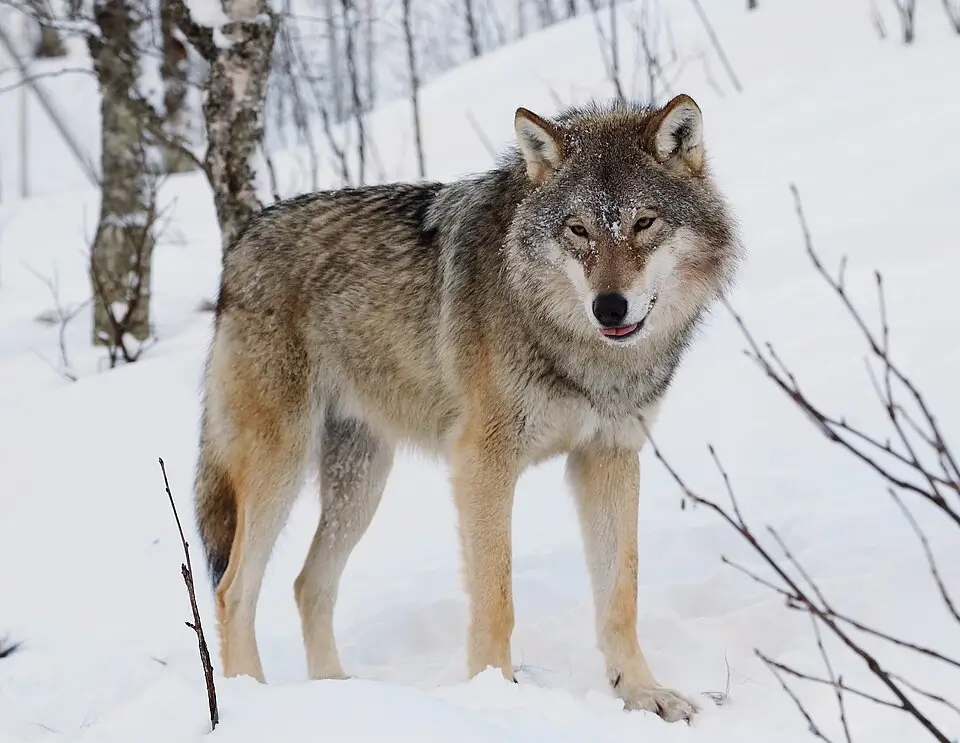
Wolves are built for endurance and power. Adults typically display a broad, deep muzzle, a wide forehead, and large, powerful teeth designed for gripping and processing prey. Their legs are long relative to their body size, giving them an efficient, ground-covering gait that allows them to travel vast distances in search of food. Their large paws act almost like natural snowshoes, distributing weight effectively across soft terrain — an especially useful adaptation in the snowy landscapes of northern Minnesota.
Coat coloration in gray wolves is highly variable. Despite the name, gray wolves can range from nearly pure white in Arctic populations to jet black, with many individuals displaying shades of tawny brown, reddish-gray, and classic grizzled gray. This variation is not merely cosmetic — coat color can play a role in thermoregulation and may also have social significance within packs.
Wolves are highly social animals that live and hunt in family groups called packs. A typical pack is organized around a breeding pair — historically referred to as the "alpha" male and female — along with their offspring from current and previous years. Pack sizes can vary considerably depending on prey availability and habitat conditions, but generally range from a handful of individuals to larger groups in prey-rich environments. This social structure is central to the wolf's success as a predator, enabling cooperative hunting strategies that allow packs to take down prey many times larger than any single wolf.
Communication among wolves is rich and multifaceted. Howling serves as a long-distance communication tool, helping pack members locate one another and advertising territory to rival packs. Wolves also use body language, facial expressions, vocalizations such as growling and whining, and scent marking to convey information about social status, reproductive condition, and territorial boundaries.
The reproductive cycle of gray wolves is closely tied to the seasons. Wolves typically breed once a year, with mating occurring in late winter. After a gestation period of approximately 63 days, females give birth to a litter of pups, usually in a den site chosen for its seclusion and protection. The entire pack participates in raising the young, with adults regurgitating food for pups and acting as caregivers and educators. Pups grow rapidly and begin accompanying the pack on hunts as they mature through their first year of life.
As apex predators, wolves occupy the top of the food chain in the ecosystems they inhabit. Their primary prey typically includes large ungulates such as white-tailed deer, moose, elk, and caribou, depending on geographic location. In Minnesota, white-tailed deer and moose are the most significant prey species. Wolves hunt by pursuing prey over long distances, testing individuals for signs of weakness, injury, or disease. This selective predation pressure plays a critical ecological role, helping to maintain the health and genetic fitness of prey populations.
Habitat & Range
The gray wolf was once one of the most widely distributed mammals on Earth, ranging across much of the Northern Hemisphere from North America to Europe, Asia, and the Middle East. Extensive persecution and habitat loss through the 19th and 20th centuries dramatically reduced this range, leading to local extinctions across large portions of the wolf's historic territory in the contiguous United States.
Wolves are habitat generalists in the sense that they can thrive in a wide variety of environments — from arctic tundra and boreal forest to grasslands, deciduous forests, and mountainous terrain — as long as sufficient prey and adequate space are available. The key requirements for wolf habitat are large expanses of relatively undisturbed land, healthy populations of large prey animals, and access to suitable denning areas.
Minnesota's landscape makes it one of the most important wolf habitats in the contiguous United States. The state's northern regions, characterized by vast boreal and mixed forests, countless lakes and wetlands, and relatively low human population density, provide ideal conditions for wolf packs to establish and maintain territories. The state's ecological character — shaped by glaciation, abundant freshwater, and a rich mosaic of forest types — supports the deer and moose populations that wolves depend upon.
Beyond Minnesota, gray wolves in the contiguous United States are found in portions of the Great Lakes region (including Wisconsin and Michigan), the Northern Rockies (Idaho, Montana, Wyoming), and the Pacific Northwest (Washington and Oregon). In Canada and Alaska, wolf populations are considerably more widespread and numerous.
Hunting Information
Hunting regulations for wolves are among the most closely watched and legally complex in all of wildlife management, and this is especially true in Minnesota. The status of gray wolves under the federal Endangered Species Act has fluctuated significantly over the decades, with wolves being listed, delisted, and relisted based on population assessments and ongoing legal challenges. These federal protections have a direct and immediate impact on what hunting activity, if any, is permissible in a given state at any given time.
As of the information available for this article, specific current season dates and licensing requirements for wolf hunting in Minnesota are not available. Hunters and outdoor enthusiasts interested in pursuing wolves in Minnesota are strongly encouraged to consult the Minnesota Department of Natural Resources (DNR) directly for the most current and accurate regulatory information. Wolf regulations in Minnesota have historically been subject to change on relatively short notice due to the interplay between state wildlife management objectives and federal legal proceedings.
What can be said with confidence is that Minnesota has a long history of wolf management, and the state's DNR has at various times implemented regulated hunting and trapping seasons when the wolf population was not under federal protection. Minnesota's wolf population — one of the largest in the lower 48 states — has been a focal point for ongoing debates about the appropriate balance between conservation goals and the interests of hunters, livestock producers, and local communities.
Anyone interested in the hunting or trapping of wolves in Minnesota should verify the current legal status of wolves in the state, obtain all required licenses and permits as mandated by state and federal law, and familiarize themselves with all applicable regulations before engaging in any hunting activity.
Conservation
The conservation story of the gray wolf in North America is one of the most dramatic in the history of wildlife management. Wolves were systematically hunted, trapped, and poisoned throughout the 19th and early 20th centuries, driven by a combination of fear, livestock protection interests, and government-sponsored predator eradication programs. By the mid-20th century, wolves had been effectively extirpated from most of the contiguous United States, with Minnesota representing one of the last remaining strongholds.
The passage of the Endangered Species Act in 1973 marked a turning point for wolf conservation in the United States. Federal protections gave recovering wolf populations in Minnesota and elsewhere the legal framework they needed to grow. Over the following decades, wolf numbers in Minnesota increased substantially, and animals from Minnesota's population eventually dispersed into Wisconsin and Michigan, helping to reestablish wolf packs in those states as well.
One of the most celebrated conservation milestones came in the 1990s with the reintroduction of gray wolves into Yellowstone National Park and central Idaho. These reintroductions, which drew on wolves from Canadian populations, are widely regarded as one of the great success stories of modern conservation biology. The return of wolves to Yellowstone in particular has been extensively studied, revealing the profound ecological effects — sometimes called "trophic cascades" — that apex predators can have on entire ecosystems, influencing everything from elk behavior to streamside vegetation and riverbank stability.
Today, the gray wolf remains a species whose management involves careful balancing of ecological science, legal frameworks, and the interests of diverse stakeholders. In Minnesota, the wolf's story is ongoing — a living example of what large carnivore conservation looks like in a working landscape shared by wildlife and people. The state's vast forests, abundant lakes, and strong wildlife management tradition make it one of the most important places in North America for the long-term future of this iconic species.