Overview
Few animals capture the spirit of North American wilderness quite like the white-tailed deer. Graceful, adaptable, and endlessly fascinating, the white-tailed deer (Odocoileus virginianus) is one of the most iconic and widely recognized mammals on the continent. Whether you're an experienced hunter, a passionate naturalist, or simply someone who has caught a glimpse of a white flag disappearing into the tree line at dusk, the white-tailed deer holds a special place in the hearts of people who spend time outdoors.
In Minnesota — a state renowned for its sprawling forests, vast wetlands, and more than 14,000 lakes — white-tailed deer are a cornerstone of the natural ecosystem and one of the most cherished game animals in the region. Minnesota's unique geography, stretching from the open prairies of the southwest to the dense boreal forests of the northeast, provides an extraordinary mosaic of habitats that white-tailed deer have learned to exploit with remarkable success. For hunters and wildlife watchers alike, understanding the biology, behavior, and habitat preferences of this remarkable species is the first step toward a deeper appreciation of the natural world.
This comprehensive guide explores everything you need to know about white-tailed deer — from their remarkable biological traits and wide-ranging habitat to their role in Minnesota's hunting culture and the conservation efforts that ensure healthy populations for generations to come.
Biological Traits
The white-tailed deer, Odocoileus virginianus, belongs to the family Cervidae and is the smallest of the three deer species in the genus Odocoileus found in North America. The species name virginianus refers to Virginia, where early European naturalists first formally described the animal. Today, numerous subspecies have been identified across the Americas, reflecting the deer's incredible adaptability across a wide range of environments.
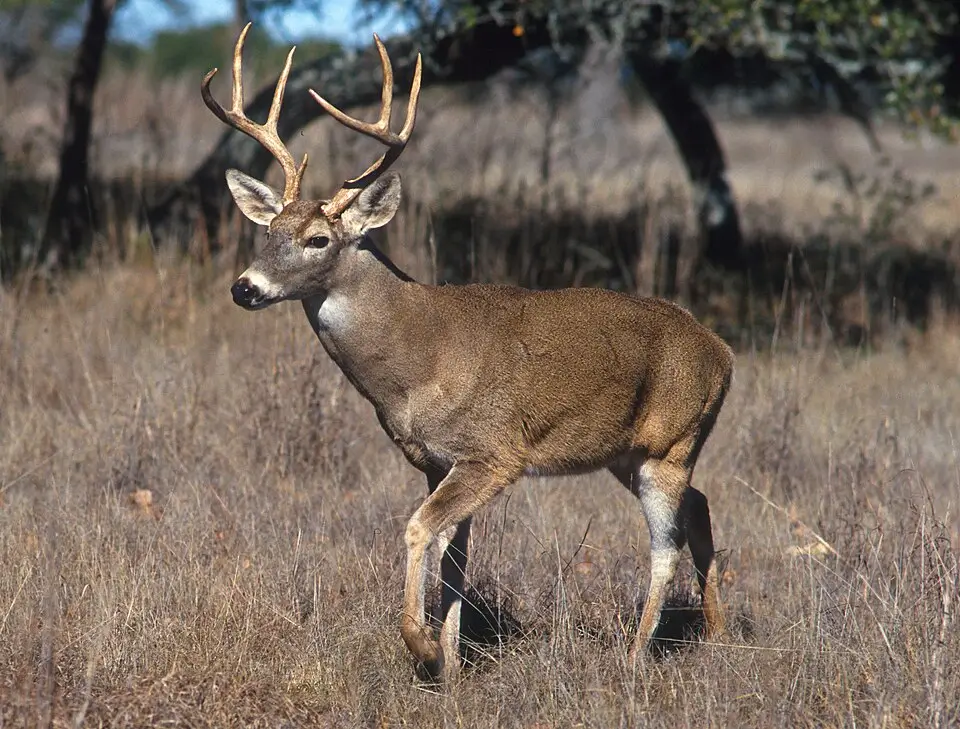
One of the most distinctive features of the white-tailed deer is the namesake white underside of its tail, which the animal raises like a flag when alarmed — a behavior that serves as a visual warning signal to other deer nearby. This tail-raising display, combined with a snorting alarm call, is a behavior well-known to any hunter or hiker who has startled a deer in the woods.
White-tailed deer exhibit notable sexual dimorphism. Males, known as bucks, are generally larger than females, known as does. Bucks are distinguished by their antlers, which are shed and regrown annually. Antler growth begins in spring, driven by increasing daylight and elevated testosterone levels, and the growing antlers are covered in a soft, blood-vessel-rich tissue called velvet. By late summer and early fall, the velvet dries up and is rubbed off as bucks prepare for the breeding season, known as the rut. Mature bucks can carry impressive antler racks, and in Minnesota's productive habitat, it is not uncommon to encounter animals with large, well-developed antlers.
Does typically give birth to one to three fawns in late spring or early summer, usually in May or June across the Upper Midwest. Newborn fawns are covered in white spots that provide effective camouflage against dappled forest floors and sunlit meadows. These spots fade as the fawn matures through its first summer. Fawns are capable of standing within hours of birth, though they spend their earliest days lying still while their mother forages nearby, relying on their lack of scent and cryptic coloration for protection against predators.
White-tailed deer are herbivores with a highly varied diet that shifts with the seasons. In spring and summer, they favor tender grasses, forbs, and leafy vegetation. As autumn arrives, mast crops such as acorns and other hard nuts become a critical food source that helps deer build fat reserves for winter. During Minnesota's harsh winters, deer rely heavily on woody browse — the twigs and buds of shrubs and young trees — to sustain themselves through months of deep snow and cold temperatures.
The white-tailed deer's senses are finely tuned for survival. Their large, mobile ears can detect sounds across a wide range of frequencies, and their eyes are positioned on the sides of their head, providing a broad field of view ideal for detecting movement and potential threats. Perhaps most formidable is their sense of smell. A deer's nose contains an extraordinary number of scent receptors, making their olfactory ability many times more powerful than that of a human — a fact that any deer hunter knows intimately from experience.
Habitat & Range
Odocoileus virginianus boasts one of the broadest distributions of any large mammal in the Western Hemisphere. The species ranges from the southern reaches of Canada through the entire continental United States and deep into Central and South America. This enormous range speaks to the white-tailed deer's remarkable capacity to thrive in a variety of ecosystems — from tropical forests and coastal marshes to arid deserts and northern boreal woodlands.
In Minnesota, white-tailed deer are found throughout virtually the entire state, though population densities vary considerably from region to region. The heavily forested landscapes of northern and northeastern Minnesota, including the Boundary Waters Canoe Area Wilderness region, support deer populations that must contend with deep snowpack and cold winters, which can significantly affect survival rates from year to year. In contrast, the agricultural landscapes of southern and central Minnesota — where corn and soybean fields provide rich food sources and patches of woodland offer cover — tend to support higher deer densities.
White-tailed deer are classic edge-habitat species, meaning they thrive along the transitional zones between different habitat types. The intersection of forest and open field, woodlot and wetland, or riparian corridor and upland meadow creates the diverse mix of cover and forage that deer need throughout the year. Minnesota's landscape, shaped by glaciation and characterized by a mosaic of forests, wetlands, lakes, rivers, prairies, and farmland, is ideally suited to support robust deer populations.
Seasonal movements play an important role in white-tailed deer behavior. Deer generally maintain relatively small home ranges — often just a few square miles — but these ranges shift with the seasons as food availability and weather conditions change. During the rut in autumn, bucks may expand their movements considerably in search of receptive does. In winter, deer in northern Minnesota often form loose aggregations in areas known as deer yards, typically dense conifer stands that provide thermal cover and reduce the energy costs of moving through deep snow.
Hunting Information
White-tailed deer hunting is deeply woven into Minnesota's outdoor heritage and culture. The state's diverse landscapes and historically strong deer populations have made it one of the most popular destinations for deer hunters in the Upper Midwest. Hunting the white-tailed deer represents not only a beloved recreational pursuit but also an important wildlife management tool that helps maintain deer populations at levels compatible with habitat health and agricultural interests.
Minnesota offers a variety of deer hunting seasons and methods, typically including archery, firearms, and muzzleloader opportunities that span from early fall through late autumn and into early winter. The timing of these seasons is generally designed to align with key periods in the deer's annual cycle, including the rut, when bucks are actively moving and more visible during daylight hours, providing hunters with increased opportunities for encounters.
Hunters in Minnesota are required to obtain the appropriate licenses and tags before pursuing white-tailed deer. Regulations, including season dates, legal shooting hours, bag limits, and zone-specific rules, are established and managed by the Minnesota Department of Natural Resources (DNR). Prospective hunters are strongly encouraged to consult the most current Minnesota DNR hunting regulations handbook for specific, up-to-date information, as rules can change from year to year based on population surveys and management objectives.
Minnesota's hunting community is supported by a strong network of public land opportunities. The state's extensive system of state forests, wildlife management areas, and national forests provides accessible hunting ground for residents and visitors alike. Private land hunting is also widely practiced, with many landowners and hunters building long-standing relationships built on mutual respect for the land and the resource.
Deer hunting in Minnesota carries with it a rich tradition of camaraderie and family heritage. Many hunters speak of deer season not only as a time to pursue game but as an annual gathering of family and friends, a time to reconnect with wild places and pass down outdoor skills and ethics to younger generations.
Conservation
The white-tailed deer's conservation story is one of the great wildlife recovery successes in North American history. By the late 19th and early 20th centuries, unregulated market hunting and extensive habitat loss had dramatically reduced deer populations across much of their range. Through the implementation of science-based wildlife management, regulated hunting seasons, and habitat restoration efforts, white-tailed deer populations rebounded remarkably throughout the 20th century.
Today, white-tailed deer are managed as a sustained resource in Minnesota and across North America. State wildlife agencies, including the Minnesota DNR, conduct regular population surveys using methods such as aerial counts, harvest data analysis, and trail camera monitoring to track deer numbers and population trends. This data informs annual harvest regulations, ensuring that hunting pressure remains sustainable and that populations stay within the carrying capacity of the habitat.
Hunting license fees and excise taxes on sporting equipment, collected through the Federal Aid in Wildlife Restoration Act (commonly known as the Pittman-Robertson Act), generate hundreds of millions of dollars annually that are directed toward wildlife conservation and habitat management across the country. In this way, hunters themselves are among the most significant financial contributors to deer conservation and the broader protection of wild habitats.
Habitat conservation remains a priority for deer managers in Minnesota. Maintaining and enhancing the diverse mix of forests, wetlands, and open lands that deer depend upon is essential not only for deer but for the entire community of wildlife species that share these ecosystems. Organizations ranging from state agencies to private conservation groups and hunting associations work collaboratively to protect and restore critical habitats across the landscape.