Overview
Few animals in North America are as instantly recognizable — or as universally respected — as the striped skunk (Mephitis mephitis). With its bold black-and-white coloration and legendary chemical defense, the striped skunk occupies a unique place in both the natural ecosystem and in popular culture. From the forests of Canada to the grasslands of Mexico, this fascinating omnivore has adapted remarkably well to a wide variety of environments, including suburban and urban landscapes. In Minnesota, the striped skunk is a familiar resident, thriving in the state's diverse mix of forests, wetlands, farmlands, and prairie edges that make up the "Land of 10,000 Lakes."
Despite its reputation, the striped skunk is far more than just an animal to be avoided. It is an ecologically important predator of insects, rodents, and other small creatures, playing a meaningful role in keeping pest populations in check. Understanding the biology, behavior, and habitat requirements of this iconic mammal can deepen appreciation for one of North America's most distinctive wildlife species. Whether you are a naturalist, a curious outdoorsperson, or a hunter looking to learn more about the furbearing animals of the upper Midwest, the striped skunk is well worth a closer look.
Biological Traits
The striped skunk (Mephitis mephitis) belongs to the family Mephitidae, a group of mammals commonly known as skunks. The genus name Mephitis is derived from a Latin word meaning "bad odor" or "noxious vapor," a direct reference to the animal's most famous defense mechanism. The species name mephitis repeats this reference, essentially doubling down on the creature's aromatic identity.
Striped skunks are medium-sized mammals, typically ranging from about 20 to 30 inches in total length, including their bushy, plumed tail. Adults generally weigh between 6 and 14 pounds, though weight can vary significantly depending on the time of year, as skunks accumulate substantial fat reserves before winter. Males tend to be slightly larger than females on average.
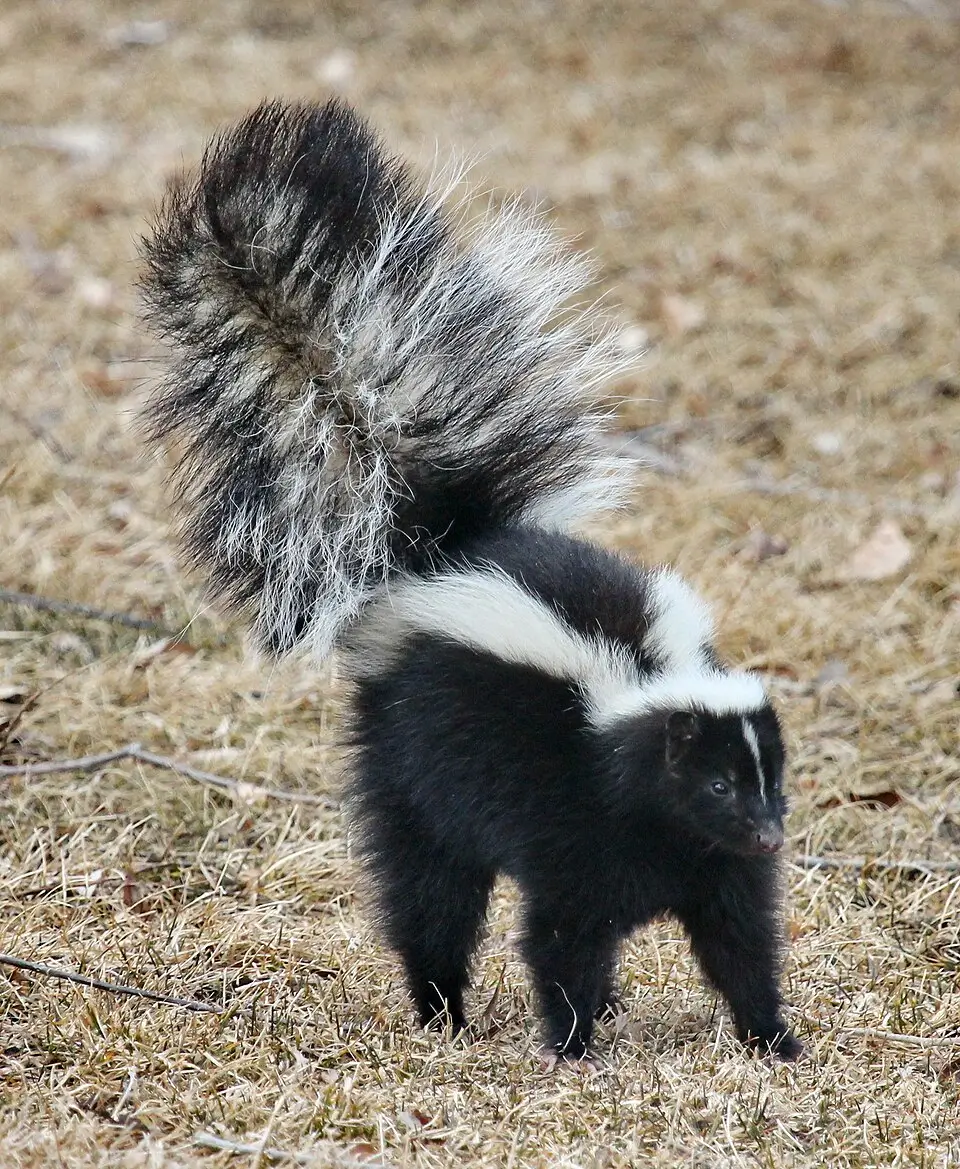
The coloration of the striped skunk is one of the most striking in the animal kingdom. Its base coat is jet black, contrasted by a bold white stripe that begins at the top of the head, splits into two stripes along the back, and often converges again near the base of the tail. The tail itself is typically a mix of black and white fur. This high-contrast pattern is a classic example of aposematism — a biological strategy in which an animal advertises its ability to defend itself through vivid, warning coloration. Predators that have encountered a skunk's spray quickly learn to associate the black-and-white pattern with an unpleasant experience, giving the skunk a powerful deterrent without the animal having to deploy its chemical spray at all.
That spray, produced by a pair of anal scent glands located beneath the tail, is composed primarily of sulfur-containing chemicals called thiols (specifically n-butyl mercaptan and related compounds). The skunk can spray this potent mixture with remarkable accuracy at distances of up to 10 feet, and the odor can be detected by humans at much greater distances. Before spraying, a skunk typically provides several warning signals — stamping its front feet, raising its tail, and performing a short bluff charge — giving potential threats ample opportunity to retreat.
Striped skunks are omnivores with a highly flexible diet. Depending on the season and available food sources, they consume insects (including grubs and beetles), earthworms, small rodents, frogs, bird eggs, berries, nuts, corn, and carrion. Their strong, curved front claws are well adapted for digging, allowing them to excavate burrows and root through soil in search of beetle larvae and earthworms — a behavior that makes them enormously valuable as natural pest controllers in gardens and agricultural fields.
One of the most interesting aspects of striped skunk biology is their relationship with winter. Striped skunks do not hibernate in the true sense of the word, but they do enter a state of torpor — a period of reduced metabolic activity — during the coldest months. During this time, they rely on fat stores built up in the late summer and fall, and they may remain in their dens for weeks at a time during cold snaps. In milder winters or during warm spells, skunks may become briefly active, and it is not uncommon to spot them foraging even in January or February in states like Minnesota.
Breeding typically occurs in late winter, often between February and March. After a gestation period of roughly 60 to 75 days, females give birth to litters that typically contain four to seven kits, though litters of up to ten have been recorded. The kits are born blind and helpless, but develop rapidly. Their distinctive coloration is visible almost immediately after birth, even before their eyes open. Young skunks are weaned at around two months of age and often remain with their mother through the first summer before dispersing in the fall to establish their own territories.
Striped skunks are generally solitary animals outside of the breeding season. They are primarily nocturnal, spending the daylight hours resting in underground dens, hollow logs, brush piles, or even beneath buildings and decks. Home ranges vary but can extend from 0.5 to 5 miles in diameter depending on habitat quality and food availability.
Habitat & Range
The striped skunk is one of the most widely distributed mammals in North America. Its range stretches from southern Canada through most of the contiguous United States and into northern Mexico. It is absent only from desert regions of the extreme Southwest, parts of the Rocky Mountains, and some Pacific coastal areas where other skunk species dominate.
In Minnesota, the striped skunk finds an exceptionally hospitable environment. The state's rich mosaic of habitats — including mixed deciduous and coniferous forests, expansive wetlands, rolling farmlands, river bottoms, and prairie remnants — provides the skunk with everything it needs: abundant food, suitable denning sites, and cover from predators. Minnesota's 14,420 lakes and extensive river systems also support productive wetland edges, which are particularly favored skunk habitats due to the abundance of frogs, insects, and invertebrates found there.
Skunks in Minnesota are most commonly encountered in transitional zones between forest and open land, along agricultural field edges, near wetlands, and increasingly in suburban and even urban environments. Their adaptability to human-modified landscapes has made them one of the more commonly observed wild mammals in residential areas throughout the state.
Their denning behavior is flexible and opportunistic. Striped skunks prefer to use dens excavated by other animals — groundhogs and foxes are frequent den donors — but are capable of digging their own burrows when necessary. They also readily take advantage of human-made structures such as sheds, decks, and crawl spaces for shelter, particularly during the winter torpor period.
Natural predators of the striped skunk include the great horned owl, which has a poorly developed sense of smell and is therefore one of the few predators that regularly preys on skunks. Coyotes, bobcats, foxes, and large raptors may occasionally prey on skunks as well, particularly young or inexperienced animals that have not yet mastered their defensive techniques.
Hunting Information
In many parts of North America, the striped skunk has historically been classified as a furbearing animal and has been legally harvested through trapping and hunting. Skunk fur, while not among the most commercially valuable of furbearers, has been traded in North American fur markets for generations.
For hunters and trappers in Minnesota, it is important to consult the most current regulations provided by the Minnesota Department of Natural Resources (DNR). Specific season dates, licensing requirements, and methods of take for furbearing animals including the striped skunk can change from year to year and vary by zone or region. Based on the source data available for this article, specific current season dates and license requirements for striped skunk in Minnesota were not listed, and readers are strongly encouraged to check the official Minnesota DNR website or contact a regional wildlife office directly for the most accurate and up-to-date regulatory information before pursuing any harvest activity.
Trappers who target striped skunks should be aware of the animal's nocturnal habits, preference for wetland edges and agricultural field margins, and tendency to follow predictable travel corridors. Cage traps are a commonly used and effective method for capturing skunks without risk of being sprayed, as an enclosed trap often allows the trapper to approach and dispatch the animal with less risk of triggering a spray response. Knowledge of the local landscape, including den sites, water sources, and food availability, greatly improves success in the field.
Beyond regulated harvest, many landowners and wildlife managers in Minnesota view striped skunks as beneficial animals due to their appetite for crop-damaging insects and rodents. Maintaining a healthy skunk population on a property can provide meaningful pest control services, making them a welcome, if aromatic, neighbor.
Conservation
The striped skunk is currently listed as a species of Least Concern by the International Union for Conservation of Nature (IUCN), reflecting its wide distribution, large population size, and strong adaptability to human-altered environments. Unlike many wildlife species that have struggled in the face of habitat loss and urban expansion, the striped skunk has generally maintained or even expanded its range in the modern era.
One of the most significant conservation considerations for the striped skunk is its role as a primary wildlife reservoir for rabies in North America. Striped skunks are among the most important vectors for terrestrial rabies in the United States, and wildlife managers pay close attention to skunk population dynamics and rabies transmission patterns. Oral rabies vaccination programs have been implemented in certain regions to reduce rabies prevalence in skunk and raccoon populations, representing an important intersection of wildlife conservation and public health management.
In Minnesota and across the broader range of the species, habitat preservation — particularly the maintenance of wetland edges, agricultural buffer strips, and brushy transitional zones — supports healthy skunk populations. Responsible land management that balances human activities with the needs of native wildlife ensures that species like the striped skunk continue to fulfill their ecological roles as pest controllers, prey for raptors, and contributors to the rich biodiversity of North American landscapes.
For wildlife enthusiasts and hunters in Minnesota, the striped skunk is a reminder of the remarkable diversity of the state's natural heritage. Respected for its bold defenses, valued for its ecological contributions, and recognized as one of the continent's most distinctive mammals, Mephitis mephitis is truly a species worthy of appreciation.