Overview
Deep within the shadowy corridors of North America's boreal forests, a bird moves quietly through the undergrowth, unbothered by the world around it. The spruce grouse (Canachites canadensis) is one of the continent's most fascinating upland game birds — a compact, beautifully plumaged species that has adapted brilliantly to life in some of the coldest, most remote forests on the planet. Known colloquially as the "fool hen" for its seemingly fearless disposition around humans, the spruce grouse is simultaneously admired by wildlife enthusiasts and pursued by hunters who relish the challenge of exploring the wild landscapes this bird calls home.
For residents of Minnesota — a state bordered by Canada to the north and defined by its remarkable natural heritage, including over 14,000 lakes and vast stretches of boreal and mixed conifer forest — the spruce grouse represents a uniquely northern connection to wilderness. Minnesota's position in the Upper Midwestern region of the United States, sharing borders with the Canadian provinces of Manitoba and Ontario, places a significant portion of the state firmly within the ecological zone where spruce grouse thrive. Whether you are a dedicated upland hunter, a birdwatcher, or simply a lover of the outdoors, understanding this remarkable bird is a rewarding pursuit in its own right.
This article explores the biology, behavior, habitat, and hunting traditions associated with the spruce grouse, with special attention to its presence in Minnesota's northern landscapes.
Biological Traits
The spruce grouse is a medium-sized member of the family Phasianidae, the broad family that includes pheasants, quail, turkeys, and other grouse species. Classified under the genus Canachites, the spruce grouse is scientifically designated as Canachites canadensis, a name that directly references its deep association with Canada and the boreal regions of the continent.
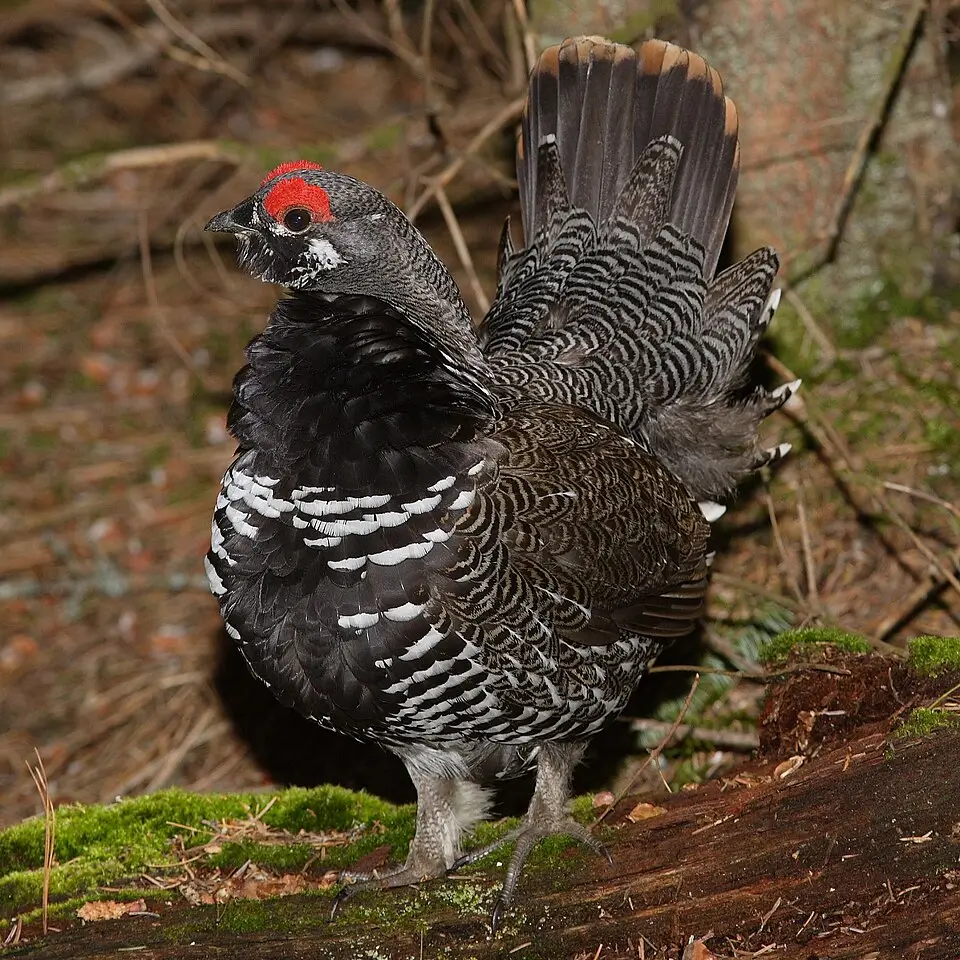
Like other grouse species, the spruce grouse displays pronounced sexual dimorphism — meaning males and females look notably different from one another. Male spruce grouse are striking birds, featuring bold black-and-white patterning on the breast and throat, rich brown-and-black barring across the back and wings, and a vivid red comb above each eye that becomes especially prominent during the breeding season. The tail is dark, often tipped with chestnut or rufous coloring depending on the subspecies. Females, by contrast, are cryptically colored in shades of brown, buff, and black, providing exceptional camouflage against the forest floor and low vegetation — an essential adaptation for a bird that nests and roosts on or near the ground.
One of the most well-documented behavioral traits of the spruce grouse is its extraordinary tameness in the presence of humans. Unlike many wild birds that flush wildly at the first hint of danger, spruce grouse often allow people to approach within a few feet before reacting. This behavior — which has earned them the enduring nickname "fool hen" — likely evolved in the relatively predator-limited environments of the deep boreal forest, where avoidance of large mammalian predators may have historically been less critical. Rather than relying on explosive flight as a primary escape mechanism, spruce grouse tend to freeze, rely on their camouflage, or simply walk away at a leisurely pace.
The diet of the spruce grouse is highly specialized and changes significantly with the seasons. During the warmer months, these birds consume a variety of foods including berries, green plant material, mushrooms, and insects. However, as winter descends and food options become scarce, spruce grouse shift almost entirely to a diet of conifer needles — primarily spruce and fir. This adaptation is remarkable, as conifer needles are highly resinous and offer relatively low nutritional value compared to other food sources. To cope with this challenging winter diet, spruce grouse have evolved a longer and more muscular digestive tract during the colder months, allowing them to process these tough plant materials more effectively. Their crops and digestive systems literally change in size and function as winter approaches, a physiological feat that underscores just how well-adapted this species is to its environment.
Spruce grouse are largely non-migratory birds, remaining within relatively small home ranges throughout the year. During the breeding season, males perform elaborate courtship displays that include strutting, tail fanning, drumming with their wings, and short aerial flights designed to attract females. These displays take place in forest clearings and along trails or edges within their boreal habitat.
Habitat & Range
The spruce grouse is, as its name implies, closely associated with spruce-dominated boreal forests, though it also inhabits a range of other coniferous forest types including jack pine, fir, larch, and mixed conifer-hardwood stands. Across its range, this species shows a strong preference for dense, mature coniferous forest with abundant understory cover — the kind of habitat that provides both food and shelter from aerial predators such as hawks and owls.
The range of the spruce grouse extends in a broad arc across the northern portions of North America, from Alaska and western Canada through the boreal forests of the eastern provinces and into the northeastern United States. Within the contiguous United States, populations are found in the northern Great Lakes states, the Adirondack region of New York, and portions of New England and the northern Rocky Mountains.
In Minnesota, the spruce grouse occupies the northeastern corner of the state — a region known for its rugged terrain, dense conifer forests, and proximity to the Canadian border. This area, sometimes referred to as the Arrowhead Region, encompasses the Boundary Waters Canoe Area Wilderness, Superior National Forest, and a mosaic of public and private lands characterized by black spruce bogs, jack pine plains, and mixed boreal forest. It is precisely this type of landscape — remote, cold, and dominated by conifers — that spruce grouse require to survive and reproduce successfully. Minnesota's northeastern corner shares a water boundary with Michigan and borders the Canadian provinces of Ontario, positioning it at the heart of the Great Lakes boreal ecosystem where spruce grouse populations remain relatively stable.
The species is generally considered a habitat specialist, meaning that significant changes to its boreal forest environment — such as large-scale timber harvesting, forest succession, or climate-related shifts in tree species composition — can have meaningful impacts on local populations. However, within suitable habitat, spruce grouse can be reasonably common, and their low-profile behavior means they are often overlooked by casual observers.
Hunting Information
The spruce grouse holds a cherished place in the traditions of upland bird hunting across its range. For hunters willing to venture into the remote boreal forests of northern Minnesota and beyond, pursuing spruce grouse offers a distinctive and rewarding experience that differs markedly from hunting more popular upland species like pheasant or ruffed grouse.
Perhaps no characteristic defines the spruce grouse hunting experience more than the bird's famous tameness. Unlike the heart-pounding flushes associated with ruffed grouse or woodcock hunting, spruce grouse frequently present close, deliberate shooting opportunities. This behavior has made the species accessible to hunters of all experience levels and has contributed to its longstanding reputation as a "camp bird" — a bonus bird encountered while traveling through the woods in pursuit of other game or simply exploring remote backcountry areas.
Hunters typically pursue spruce grouse on foot, walking slowly through suitable coniferous habitat and scanning the forest floor and low branches carefully. Because these birds tend to sit tight and rely on camouflage rather than flight, sharp eyes and patience are often more important than a pointing dog, though a well-trained bird dog can certainly be a valuable asset in denser cover. When flushed, spruce grouse typically fly short distances before landing again, often in a nearby tree where they may be relocated.
For hunters in Minnesota, the spruce grouse season and specific regulations are managed by the Minnesota Department of Natural Resources (DNR). Hunters planning to pursue spruce grouse in the state should consult the most current Minnesota Hunting and Trapping Regulations Handbook for up-to-date information on season dates, bag limits, licensing requirements, and any area-specific restrictions. Regulations can change from year to year, and it is always the hunter's responsibility to be fully informed before heading afield. Given the species' relatively limited range within Minnesota — concentrated in the far northeast — hunters should focus their efforts on the appropriate habitat zones and respect all land access requirements, particularly in wilderness areas like the Boundary Waters Canoe Area.
The meat of the spruce grouse is another topic of note among hunters. Due to the bird's heavy winter diet of spruce and fir needles, birds harvested late in the season may carry a distinctly resinous or piney flavor that some hunters find strong. Birds taken earlier in the fall, when diets are more varied, are generally considered to have milder, more palatable meat. Regardless of the season, proper field care — including prompt cooling and thoughtful preparation — goes a long way toward maximizing the table quality of any spruce grouse.
Conservation
The spruce grouse is currently classified as a species of Least Concern by global conservation assessments, reflecting the fact that its overall population across the boreal regions of North America remains substantial. The vast boreal forest ecosystem that the species depends upon is one of the largest intact forest systems remaining on Earth, and within this landscape, spruce grouse populations are generally considered stable.
That said, spruce grouse are recognized as a habitat specialist, and their long-term conservation is closely tied to the health and extent of boreal and northern coniferous forests. In the southern portions of their range — including states like Minnesota — populations may be more vulnerable to habitat changes driven by forest management practices, development pressure, and the gradual northward shifts in forest composition associated with a changing climate. As the southern boundary of the boreal forest ecosystem shifts, the availability of suitable spruce grouse habitat in places like northeastern Minnesota may be affected over the coming decades.
Conservation efforts that support the maintenance of mature coniferous forests, protect large wilderness areas, and promote sustainable forestry practices are directly beneficial to spruce grouse and the broader community of boreal wildlife that depends on the same habitat. In Minnesota, the protection of lands such as the Boundary Waters Canoe Area Wilderness and Superior National Forest plays an essential role in preserving the ecological conditions that spruce grouse require.
Hunters, birdwatchers, and naturalists all serve as important ambassadors for spruce grouse conservation. By fostering an appreciation for this unique bird and the wild landscapes it inhabits, the outdoor community contributes meaningfully to the broader effort to protect and celebrate North America's boreal heritage.