Overview
Few animals embody the spirit of the northern wilderness quite like the snowshoe hare (Lepus americanus). A creature of remarkable resilience and biological ingenuity, the snowshoe hare has captured the imagination of naturalists, wildlife biologists, hunters, and outdoor enthusiasts for generations. Named for its distinctively large hind feet that function much like natural snowshoes, this species has evolved a suite of extraordinary adaptations that allow it to thrive in some of North America's most demanding environments. From the boreal forests of Canada to the northern reaches of the contiguous United States — including the lake-studded forests of Minnesota — the snowshoe hare plays a vital role in the ecological web of the northern landscape.
Whether you are a hunter in pursuit of this quick, elusive quarry, a wildlife photographer hoping to capture the hare's famous winter-white coat, or simply a nature lover curious about the animals that share the forests and wetland edges of the Upper Midwest, the snowshoe hare has a story worth knowing. It is a story of cycles, camouflage, survival, and the intricate balance of predator and prey that defines so much of life in wild places.
Biological Traits
The snowshoe hare (Lepus americanus) belongs to the family Leporidae and the order Lagomorpha, placing it alongside rabbits and pikas in a group of small herbivorous mammals that are distinct from rodents despite a superficial resemblance. As a true hare — rather than a rabbit — the snowshoe hare is born fully furred and with its eyes open, a condition known as precocial development. This is in contrast to rabbits, whose young (called kittens or kits) are born hairless and blind.
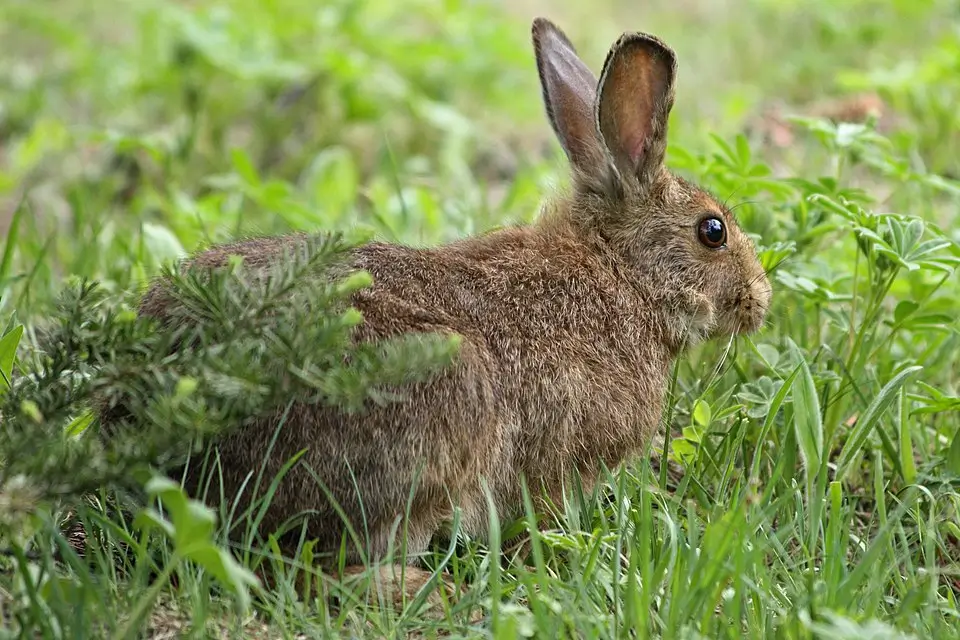
One of the most celebrated biological features of the snowshoe hare is its seasonal coat change. Twice each year, the hare undergoes a dramatic molt driven by changes in day length (photoperiod). During the warmer months, its coat is a rich brown, providing excellent camouflage against the forest floor of leaf litter, bark, and earth. As autumn progresses and days grow shorter, the hare's fur transitions to a brilliant white — a transformation that renders it nearly invisible against snow-covered terrain. This seasonal camouflage is one of nature's most elegant survival mechanisms, offering the hare critical protection from an impressive list of predators including Canada lynx, great horned owls, red foxes, coyotes, bobcats, and various hawks.
The hare's hind feet are exceptionally large relative to its body size, and the toes can be spread wide to distribute the animal's weight across soft snow. This adaptation, which gives the species its common name, allows the snowshoe hare to run with agility and speed across deep, powdery snow that would cause other animals to flounder. Snowshoe hares are also known for their remarkable speed and their tendency to zigzag when fleeing a predator — a behavior that makes them challenging quarry for both wildlife and hunters alike.
Like all members of the Lagomorpha order, snowshoe hares practice cecotrophy — the consumption of special nutrient-rich fecal pellets called cecotropes. This behavior allows the hare to extract maximum nutrition from its plant-based diet by passing food through its digestive system twice, an especially important adaptation during the nutrient-poor winter months when food sources are limited.
Snowshoe hares are prolific breeders. Females, known as does, can produce multiple litters per season, with litters typically ranging from one to eight leverets. This high reproductive rate is closely tied to one of the most fascinating ecological phenomena in North American wildlife science: the population cycle.
The snowshoe hare is famous for its roughly 8-to-11-year population boom-and-bust cycle, particularly well-documented in Canada's boreal forests. Populations can explode to remarkable densities before crashing dramatically, with the cycle driven largely by the interplay between hare numbers and predator populations — most famously the Canada lynx. When hares are abundant, lynx populations rise in response. As lynx predation increases and vegetation is overbrowsed, hare numbers collapse, followed by a subsequent decline in lynx. This classic predator-prey relationship is one of the most studied and iconic examples in all of ecology, and it illustrates just how central the snowshoe hare is to the health and function of northern forest ecosystems.
Habitat and Range
The snowshoe hare is a creature of the northern forests. Its range sweeps across the boreal forests of Canada from coast to coast and extends southward into portions of the northern contiguous United States, including New England, the Rocky Mountain states, and the Great Lakes region. In many areas, the species' range follows the distribution of coniferous and mixed forest habitats, as these environments provide both the dense cover the hare requires and the woody browse it depends on for winter forage.
Within this broad range, snowshoe hares show a strong preference for habitats that offer dense understory cover — thickets of young conifers, shrubby wetland edges, alder swales, and brushy regenerating clearcuts are all classic snowshoe hare haunts. Dense cover serves the dual purpose of concealment from predators and a readily available food source, as hares browse heavily on the twigs, buds, and bark of willows, alders, birches, and a variety of other shrubs and young trees.
Minnesota sits at the southern edge of prime snowshoe hare range in the eastern United States. The state's northeastern corner — often referred to as the Arrowhead region — is particularly well-suited to snowshoe hares, featuring vast tracts of boreal and mixed forest habitat interspersed with wetlands, streams, and bogs. This is the same region that harbors the state's resident Canada lynx population, reinforcing the ecological connection between predator and prey. Minnesota's identity as the "Land of 10,000 Lakes" — with its 14,420 documented lakes — speaks to the abundance of wetland edge habitat that snowshoe hares favor throughout the state's northern forests.
Hunting Information
Snowshoe hare hunting is a beloved tradition across much of their northern range, offering an accessible, exciting, and rewarding small game experience for hunters of all ages and experience levels. The sport carries a certain classic charm — whether pursued with beagles and other rabbit hounds, walked up in dense alder thickets, or tracked through fresh snow on quiet winter mornings, hare hunting connects participants deeply with the rhythms of the northern forest.
For hunters in Minnesota, the snowshoe hare represents a wonderful small game opportunity in the forests of the northern and northeastern parts of the state. The landscape of Minnesota's boreal north — with its second-growth forests, wetland edges, and conifer thickets — is precisely the type of habitat where hares thrive. Because specific season dates, bag limits, and license requirements for snowshoe hare hunting in Minnesota can change from year to year, hunters are strongly encouraged to consult the Minnesota Department of Natural Resources (DNR) directly for the most current and accurate regulations before heading afield.
In general terms across their range, snowshoe hares are typically pursued during the late fall and winter months, when snow is on the ground and the hare's white coat, ironically, can make it visible against shadows and brush edges. Hunters often use small-caliber rimfire rifles, such as the .22 LR, or shotguns loaded with small shot sizes. Hunting over trained rabbit dogs — particularly beagles — is a time-honored method that capitalizes on the hare's instinctive tendency to circle back to its starting area when pursued, eventually presenting the hunter with a shot opportunity.
The snowshoe hare is considered excellent table fare by many who pursue it. The lean, mild meat is versatile in the kitchen and has sustained northern communities — both Indigenous and settler — for centuries.
Conservation
The snowshoe hare is currently listed as a species of least concern by conservation authorities, and its populations remain robust across the vast majority of its range. The species' prolific reproductive capacity and adaptability have helped it weather considerable ecological pressure over time. However, like all wildlife, snowshoe hares are sensitive to changes in their environment, particularly habitat alterations that reduce the dense early-successional and shrubby cover they depend upon.
Climate change represents a growing area of scientific concern for snowshoe hares. Research has highlighted the mismatch that can occur when the timing of the hare's coat color change — driven by photoperiod — does not align with actual snowfall conditions. A hare wearing a white coat against a brown, snowless landscape is far more visible to predators, and studies have shown that this "color mismatch" can increase predation rates. As winters become shorter and snowfall patterns become less predictable, this mismatch may become more frequent in portions of the species' range.
Conservation of snowshoe hare habitat — particularly the maintenance of young, shrubby forest conditions through sustainable forestry practices and natural disturbance processes — remains important for the long-term health of hare populations. Healthy hare populations, in turn, support the full suite of predators that depend on them, from Canada lynx and great horned owls to foxes, fishers, and northern goshawks. In this way, conserving the snowshoe hare is an investment in the broader health and biodiversity of the northern forest ecosystem.
Hunters who pursue snowshoe hares contribute meaningfully to conservation efforts through the purchase of licenses and the participation in harvest reporting programs, helping wildlife managers gather data necessary to monitor and manage populations effectively over time.