Overview
Few birds capture the spirit of American grasslands and farm country quite like the Northern bobwhite (Colinus virginianus). Known affectionately as simply "the bobwhite" or "bobwhite quail," this small, plump game bird is named for its distinctive and cheerful whistled call — a clear, ascending "bob-WHITE!" that has long been a hallmark sound of summer mornings across the eastern and central United States. Whether flushed from a brushy fence line by a pointing dog or heard calling from a hayfield at dawn, the Northern bobwhite has earned an iconic place in American sporting tradition, wildlife photography, and rural folklore.
As a member of the New World quail family (Odontophoridae), the Northern bobwhite represents one of North America's most studied and most cherished upland game birds. Generations of hunters, conservationists, biologists, and bird enthusiasts have devoted themselves to understanding and protecting this species. Though small in stature, the bobwhite plays an outsized role in the ecology of grasslands, brushy edges, and early-successional habitats, and it serves as a flagship species for the conservation of those same habitats.
This article explores the biology, habitat, and conservation of the Northern bobwhite, as well as relevant context for hunters interested in this species — including specific information for those living in or visiting Minnesota.
Biological Traits
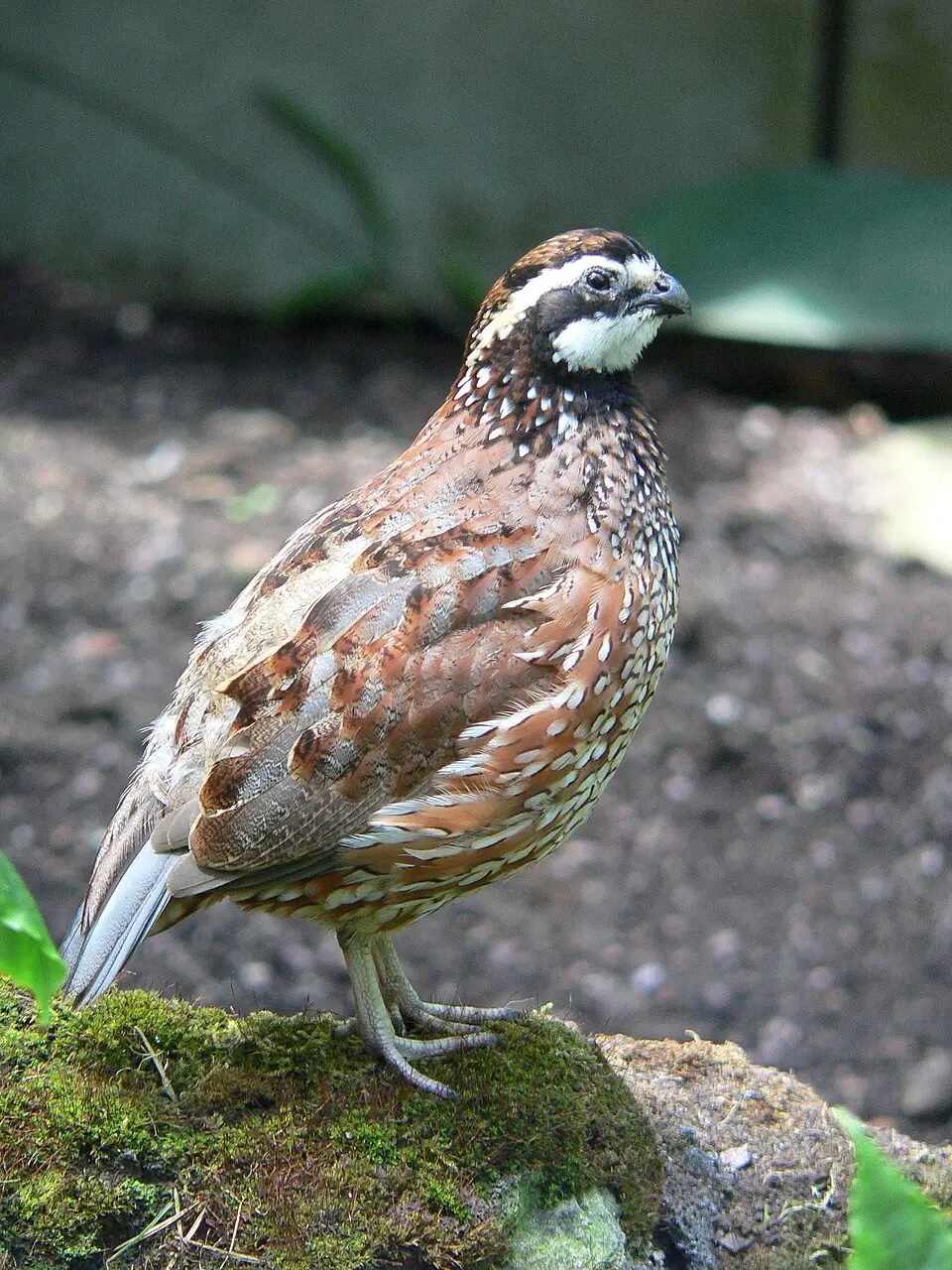
The Northern bobwhite is a small, ground-dwelling bird, typically weighing between five and six ounces as an adult and measuring roughly 8 to 11 inches in length. Its compact, rounded body, short tail, and small head give it a characteristic silhouette that is easily recognized when flushed from cover or perched briefly on a fence post.
Bobwhites display clear sexual dimorphism in their plumage. Males are particularly striking, with bold black-and-white patterning on the face and throat: a white throat patch and white eyebrow stripe are framed by black bands that contrast with rich chestnut and brown body feathers. Females share the same general body coloration of mottled brown, buff, and chestnut tones — excellent camouflage in their preferred grassy and brushy habitats — but their throat and eyebrow markings are buff or tan rather than crisp white. Both sexes share a mottled, scaly pattern on the belly and flanks that breaks up their outline against leaf litter and grass stems.
Like other quail, bobwhites have short, stout, slightly curved bills well suited for picking up seeds, and strong legs adapted for running rather than long-distance flight. They are capable of explosive, short-burst flights when alarmed, but they generally prefer to walk, run, or hide rather than take wing.
Bobwhites are highly social outside the breeding season, forming groups called "coveys." A covey typically includes a dozen or more birds and serves as a defensive unit — coveys roost together in a tight circle, tails inward and heads facing outward, providing both warmth and 360-degree vigilance against predators. When threatened, an entire covey may flush simultaneously in a startling burst of wingbeats, a behavior thought to confuse predators.
Their diet is varied and shifts with the seasons. Seeds from grasses, legumes, and forbs make up the bulk of an adult bobwhite's intake, supplemented by waste grain in agricultural settings. Insects — including grasshoppers, beetles, and caterpillars — are especially important for chicks, which require high-protein food during their rapid early growth. Adults also consume insects readily during the warm months.
Breeding season brings dramatic behavioral changes. Males whistle their famous "bob-WHITE" call from elevated perches to attract mates and advertise territories. Bobwhites are well known for their high reproductive potential: pairs may nest more than once in a season, and both parents often participate in incubation and brood-rearing. Nests are simple scrapes on the ground, lined with grass and concealed beneath overhanging vegetation. Clutches typically contain a dozen or more eggs, and chicks are precocial, leaving the nest within hours of hatching and following their parents to feed.
Habitat & Range
The Northern bobwhite is historically associated with a broad swath of the eastern, southern, and central United States, extending into parts of Mexico and the Caribbean. Its range covers much of the southeastern U.S., the southern Great Plains, the lower Midwest, and parts of the mid-Atlantic.
Bobwhites thrive in early-successional habitats: native grasslands, pine savannas, brushy field edges, fallow agricultural fields, prairie remnants, and the patchy mosaic of cover types that historically characterized much of rural America. The ideal bobwhite landscape includes:
- Nesting cover, typically bunchgrasses such as little bluestem and broomsedge that grow in clumps with bare ground between them.
- Brood-rearing cover, where forbs and weedy plants attract abundant insects and provide overhead concealment for chicks.
- Escape cover, in the form of shrubby thickets, brambles, plum thickets, or briar patches.
- Food sources, including native seed-producing plants and adjacent agricultural grains.
A bobwhite's entire annual life cycle often plays out within a relatively small home range, making the proximity and interspersion of these habitat types crucial. Landscapes that have become uniformly forested, intensively row-cropped, or fragmented by development tend to support fewer bobwhites.
Minnesota lies at the far northern fringe of the species' historic range. The bobwhite is primarily a bird of warmer climates, and Minnesota's long, snowy winters present a significant challenge. Deep snow can cover food sources and impair the birds' ability to move, feed, and avoid predators. Where bobwhites do occur in Minnesota, they tend to be found in the southern portion of the state, in habitats associated with prairie remnants, restored grasslands, and brushy farm country. Populations are limited and localized compared to those in core states farther south.
Hunting Information
The Northern bobwhite has long been considered one of America's premier upland game birds. In its core range, bobwhite hunting is a beloved tradition rich in heritage — celebrated for the artistry of pointing dogs, the camaraderie of the field, and the exhilarating flush of a covey rising from cover.
A classic bobwhite hunt involves walking through fields, brushy edges, and grasslands behind pointing dogs such as English setters, English pointers, German shorthaired pointers, or Brittanys. When a dog scents a covey, it freezes on point, allowing hunters to approach and prepare for the flush. Bobwhites typically rise in a rapid burst of wingbeats, then scatter to nearby cover, where singles can sometimes be pursued.
Light, fast-handling shotguns — often 20- and 28-gauge — are traditional, paired with open chokes and small shot sizes appropriate for close-range shooting. Brush pants, blaze orange, and sturdy boots are standard gear, along with plenty of water for both hunters and dogs.
For hunters interested in pursuing Northern bobwhite in Minnesota, it is essential to understand that the state sits at the edge of the species' range and that bobwhite populations there are limited. Specific season dates, license requirements, bag limits, and any open or closed status for Northern bobwhite in Minnesota are set by the Minnesota Department of Natural Resources, and detailed regulatory information was not included in the source data for this article. Hunters should always consult the most current Minnesota DNR hunting regulations and small game synopsis before heading afield, and verify whether bobwhite is a legally huntable species in their chosen area during the season they plan to hunt. Hunters seeking more abundant bobwhite opportunities often travel to states in the southern Great Plains or the Southeast, where habitat and populations are more robust.
Regardless of location, ethical hunting practices — including respecting private property, identifying targets clearly, following bag limits, and helping support habitat — are foundational to the continued tradition of bobwhite hunting.
Conservation
Conservation of the Northern bobwhite has become one of the most important issues in North American upland bird management. While bobwhites were once tremendously abundant across much of the eastern United States, long-term changes in land use — including the loss of small, diversified farms, the conversion of grasslands and brushy edges to intensive monocultures or closed-canopy forests, and the suppression of fire in fire-dependent ecosystems — have reduced the quality and quantity of suitable habitat in many regions.
In response, a broad coalition of state wildlife agencies, conservation groups, private landowners, and hunters has rallied around bobwhite recovery. Initiatives such as the National Bobwhite Conservation Initiative (NBCI) work across state lines to coordinate habitat restoration, research, and outreach. Practices that benefit bobwhites include:
- Prescribed fire to maintain native grasslands and pine savannas.
- Native warm-season grass and forb plantings.
- Edge feathering, hedgerow restoration, and the creation of brushy field borders.
- Conservation programs that allow landowners to set aside cropland for habitat.
- Predator management and integrated habitat improvement where appropriate.
Because bobwhites respond rapidly to good habitat management — thanks to their high reproductive potential — well-targeted conservation efforts can produce measurable results within just a few years. The species also serves as a useful indicator: where bobwhites thrive, so do many other grassland-dependent birds, pollinators, and small mammals.
In northern-fringe states like Minnesota, conservation efforts often focus more broadly on grassland and prairie restoration that benefits a suite of native species, including pheasants, sharp-tailed grouse, meadowlarks, and pollinators, with any bobwhite presence considered a welcome bonus.
The Northern bobwhite's future depends on continued partnerships between hunters, landowners, biologists, and the broader public — all working together to keep the iconic "bob-WHITE!" whistle ringing across America's grasslands for generations to come.