Overview
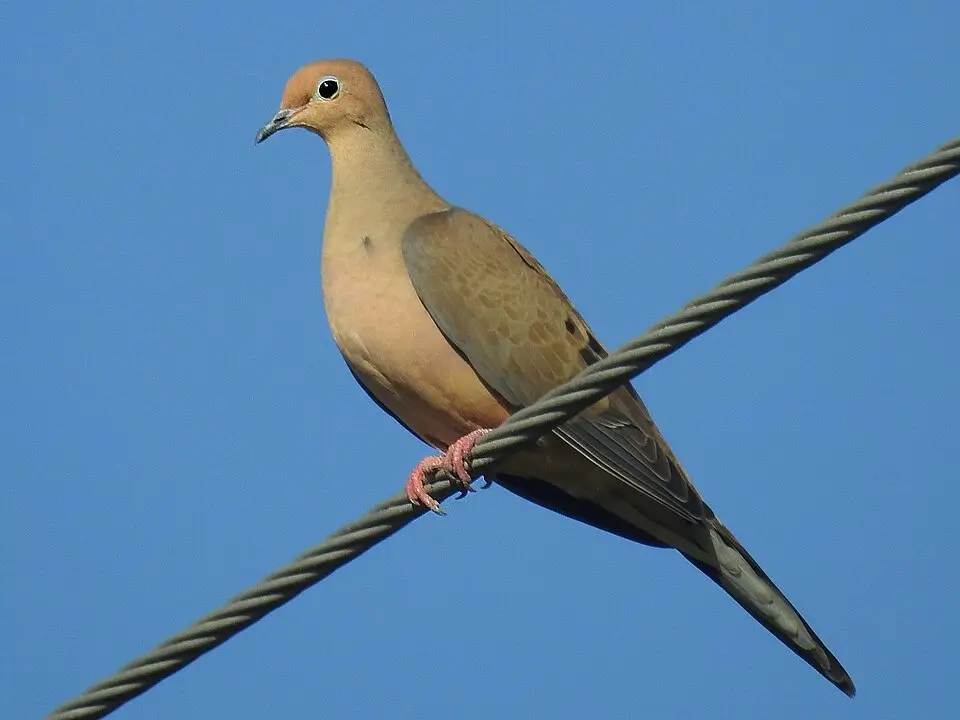
Few birds are as widely recognized across North America as the Mourning Dove (Zenaida macroura). Its soft, mournful cooing — a sound that gives the species its name — drifts across backyards, farm fields, woodlots, and open prairies from the Atlantic to the Pacific. To the casual observer, the Mourning Dove is a familiar visitor at backyard feeders and a graceful silhouette perched on telephone wires. To hunters, it is one of the most pursued game birds on the continent, prized for its speed, agility in flight, and abundance.
In Minnesota, the "Land of 10,000 Lakes," the Mourning Dove holds a special place among the state's diverse bird life. While Minnesota is more often celebrated for its waterfowl, ruffed grouse, and pheasant hunting traditions, the Mourning Dove provides early-season wingshooting opportunities that bridge the warm days of late summer and the cooler hunts of fall. Understanding this bird — its biology, its habitats, and its role in North American ecosystems — can enhance both the casual observer's appreciation and the experienced hunter's success in the field.
This guide takes a closer look at the Mourning Dove, covering its biological traits, habitat preferences, range, hunting considerations, and conservation status, with particular attention to its presence in Minnesota's varied landscape.
Biological Traits
The Mourning Dove belongs to the family Columbidae, the same family that includes pigeons and other doves. Its scientific name, Zenaida macroura, honors Princess Zénaïde Bonaparte (wife of ornithologist Charles Lucien Bonaparte), while the species epithet macroura derives from Greek words meaning "long-tailed" — an apt description of one of the bird's most recognizable features.
Appearance: The Mourning Dove is a slender, medium-sized bird with a small, rounded head, a long pointed tail, and a graceful, streamlined body. Plumage is generally soft buff-tan to grayish-brown on the back and wings, with a paler, pinkish hue on the breast. Distinctive black spots dot the wings, and the long, tapered tail is bordered with white, especially noticeable when the bird takes flight. The eyes are dark, often surrounded by a thin ring of pale blue skin, and the bill is small, slender, and dark. Males and females are similar in appearance, though males tend to display slightly more iridescence on the neck and a subtle pinkish wash on the breast.
Size: Adults typically measure around 9 to 13 inches in length, with a wingspan that can approach 18 inches. Despite their delicate appearance, Mourning Doves are remarkably strong fliers, capable of reaching speeds in excess of 40 miles per hour, with rapid wingbeats that produce a characteristic whistling sound on takeoff.
Voice: The bird's namesake call — a soft, drawn-out "coo-OO-oo, coo, coo, coo" — is most often given by males advertising territory or attracting mates. The whistling wing sound produced during takeoff and flight is not vocal but mechanical, generated by air rushing through specialized flight feathers, and likely functions as a warning to other doves of potential danger.
Diet: Mourning Doves are primarily granivorous, feeding almost exclusively on seeds. Their diet includes a wide variety of cultivated grains and wild seeds, such as those from grasses, weeds, and agricultural crops like corn, millet, sunflower, and wheat. They typically feed on the ground, walking with a distinctive bobbing gait as they search for fallen seeds. The species swallows seeds whole and stores them in a crop before digestion, often consuming grit or small stones to aid in grinding the seeds.
Reproduction: Mourning Doves are prolific breeders, often raising multiple broods in a single year. They typically construct flimsy nests of twigs in trees, shrubs, or even on man-made structures. A typical clutch consists of two white eggs, which both parents incubate. Like other doves and pigeons, Mourning Dove parents feed their young "crop milk" — a nutrient-rich secretion produced in the crop of both adults — during the first days of life.
Habitat & Range
The Mourning Dove is one of the most widely distributed and adaptable birds in North America. Its range extends from southern Canada through the United States and Mexico, reaching into parts of Central America and the Caribbean. The species thrives in open and semi-open habitats, including farmland, prairies, grasslands, woodland edges, suburban yards, parks, and roadsides.
Preferred habitats: Mourning Doves favor areas where open ground for foraging is combined with scattered trees or shrubs for perching, nesting, and roosting. Agricultural landscapes are especially attractive because they provide abundant waste grain and weed seeds. They also frequent areas around grain elevators, livestock feeding sites, and freshly tilled fields. Access to water is important, as doves drink daily, often visiting ponds, stock tanks, puddles, and stream edges.
Range in Minnesota: Minnesota's diverse landscape — from the prairies and farmlands of the southern and western regions to the mixed forests and lake country of the north — provides ample habitat for Mourning Doves. They are most abundant in the agricultural and edge habitats of southern and central Minnesota, where grain fields, weedy fence lines, and small woodlots create ideal foraging and nesting conditions. The species is migratory in the northern portion of its range, and most Mourning Doves leave Minnesota by late autumn, moving south to milder wintering grounds, though some individuals may linger into early winter where food and shelter remain available.
Hunting Information
The Mourning Dove is one of the most popular game birds in North America. Its swift, erratic flight challenges even experienced wingshooters, and its abundance allows for liberal hunting opportunities in many states. Dove hunting traditionally marks the opening of the fall hunting season in much of the country, providing a warm-weather introduction to the year's wingshooting calendar.
Hunting in Minnesota: Hunters interested in pursuing Mourning Doves in Minnesota should consult the Minnesota Department of Natural Resources (DNR) for the most current and accurate information on season dates, daily and possession bag limits, shooting hours, licensing requirements, and any special regulations. Because hunting regulations are set annually and may change from year to year, always verify current rules before heading afield.
Typical hunting techniques:
- Pass shooting: Hunters often position themselves along flight paths between roosting areas, feeding fields, and water sources, taking doves as they fly past.
- Field hunting: Setting up near harvested grain fields — particularly those with sunflower, wheat, corn, or millet stubble — is a productive method, as doves frequently flock to such areas to feed.
- Water hole hunting: In dry conditions, hunters may set up near stock tanks, ponds, or other water sources where doves come to drink, typically in the morning and evening.
Recommended gear: Most dove hunters favor a light, fast-handling shotgun in 20 or 12 gauge with an open choke (improved cylinder or modified). Small shot sizes — typically 7½, 8, or 9 — are standard. Because dove hunting often takes place in warm early-season weather, lightweight, breathable clothing in camouflage or muted earth tones helps hunters blend with their surroundings. Decoys placed on fence lines or dead branches can be very effective at drawing passing birds within range.
Ethics and safety: As with any hunt, ethical hunters take only clean, well-considered shots within effective range, respect property boundaries, and make every effort to retrieve downed birds. A trained retriever can be invaluable in dove hunting, particularly in cover where downed birds may be difficult to locate.
Conservation
The Mourning Dove is currently one of the most abundant native bird species in North America, with a continental population estimated in the hundreds of millions. Its adaptability to human-altered landscapes, high reproductive rate, and broad diet have allowed it to thrive even as other species have declined.
Population management: Mourning Doves are managed cooperatively across their range, with population surveys and harvest data collected to inform sustainable management practices. Despite being one of the most heavily harvested game birds in North America, populations have remained stable or, in some regions, increased over time, demonstrating the resilience of the species under sound management.
Threats: While the Mourning Dove is not currently considered a species of conservation concern, ongoing challenges include habitat loss due to development, exposure to pesticides, and ingestion of lead shot in areas where it persists in the environment. Conservation efforts that maintain diverse agricultural landscapes, brushy edges, and access to water benefit Mourning Doves alongside many other wildlife species.
The bird-watcher's perspective: Beyond its value as a game bird, the Mourning Dove is appreciated by countless bird enthusiasts. Its gentle call, graceful flight, and willingness to visit backyard feeders make it one of the most accessible and beloved birds in North America. For Minnesota residents, encountering Mourning Doves — whether from a deer stand, a backyard porch, or a quiet country road — offers a daily reminder of the rich avian diversity that defines the region.