Overview
Few animals embody the wild spirit of the northern forests quite like the moose. Towering, powerful, and remarkably adapted to some of the harshest climates on Earth, the moose (Alces alces) is the largest living member of the deer family, Cervidae. With its long legs, palmate antlers, and distinctive bell-shaped dewlap, the moose is instantly recognizable and has become a symbol of wilderness across the boreal regions of North America, Europe, and Asia.
For residents of Minnesota — the "Land of 10,000 Lakes" — the moose holds a particularly special place in the state's natural heritage. The northern reaches of Minnesota, with their cold winters, dense forests, and abundant wetlands, represent one of the few areas in the contiguous United States where these magnificent animals can still be found. Whether glimpsed wading through a bog, browsing along a forest edge, or crossing a remote backcountry road, encountering a moose is an unforgettable experience for outdoor enthusiasts.
This article explores the biology, habitat, hunting context, and conservation of the moose, with a particular eye toward Minnesota and the broader northern wilderness this remarkable species calls home.
Biological Traits
The moose's scientific name, Alces alces, places it within the deer family, Cervidae, and the subfamily Capreolinae, which also includes elk (wapiti), caribou, and white-tailed deer. However, the moose stands apart from its relatives in nearly every physical dimension. Mature bulls are among the tallest land mammals in North America, with shoulder heights that rival those of a horse, and weights that can place them firmly in the category of megafauna.
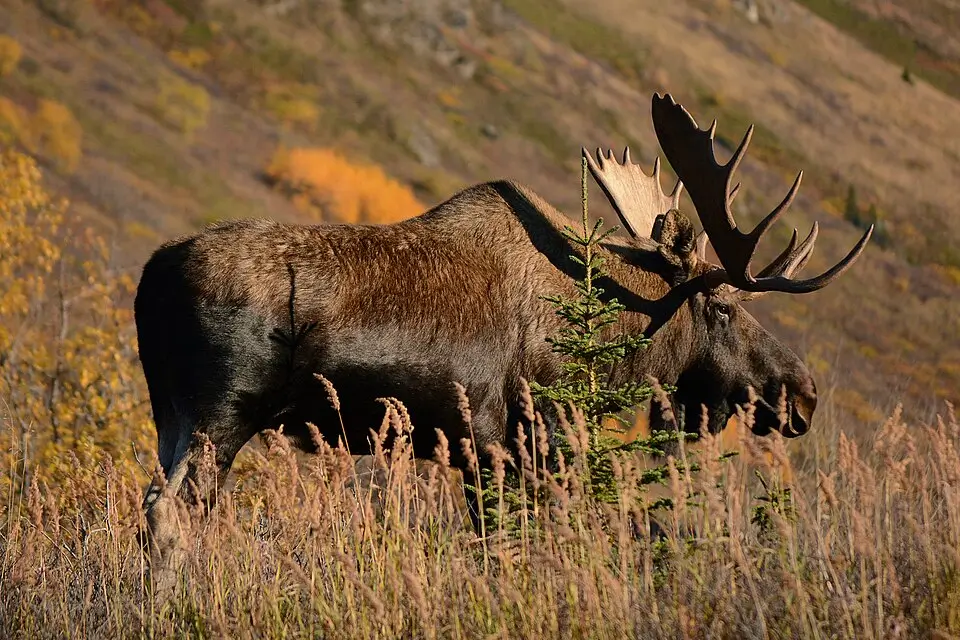
Antlers. The most iconic feature of the bull moose is its massive set of palmate antlers. Unlike the branched, tined antlers of elk or deer, moose antlers are broad and paddle-shaped, with points (called tines) protruding from the outer edges. Bulls grow and shed these antlers annually, with new growth covered in a velvety skin that supplies blood and nutrients during the summer months. By autumn — coinciding with the breeding season, or rut — the velvet is rubbed off, revealing the hardened bone beneath. After the rut, bulls eventually drop their antlers, beginning the cycle again in spring.
Body and coat. Moose have long, powerful legs that allow them to navigate deep snow, dense undergrowth, and waterlogged terrain with surprising ease. Their bodies are covered in coarse, dark brown to nearly black hair, with hollow guard hairs that provide excellent insulation in subzero temperatures. A loose flap of skin and hair called the "bell" or dewlap dangles beneath the throat, particularly prominent in bulls.
Senses and behavior. Although moose have relatively poor eyesight, their senses of smell and hearing are exceptionally keen. Their large, mobile ears can swivel independently to detect sound from multiple directions. Moose are generally solitary animals, in contrast to the herd-oriented elk or caribou, though cows are commonly seen with their calves. During the autumn rut, bulls become more active and vocal, producing deep grunts, while cows emit long, plaintive calls to attract mates.
Diet. Moose are browsers rather than grazers. Their diet consists primarily of woody vegetation — twigs, bark, and the leaves of willow, birch, aspen, and balsam fir — as well as aquatic plants during summer months. Their long legs and prehensile upper lip are well suited for feeding on tall shrubs and reaching submerged vegetation in lakes and ponds. Moose are strong swimmers and divers, and can plunge their heads beneath the surface to feed on nutrient-rich aquatic plants.
Habitat & Range
Globally, Alces alces is distributed across the circumpolar boreal and subarctic regions of the Northern Hemisphere. In North America, moose populations range from Alaska and the Yukon across the Canadian provinces and into the northern tier of the United States — including parts of New England, the Rocky Mountain states, the Upper Great Lakes region, and, of course, northern Minnesota.
Preferred habitat. Moose thrive in mixed forest landscapes that combine dense cover for shelter with abundant browse and wetlands for feeding. Boreal and subboreal forests dominated by spruce, fir, birch, aspen, and willow provide ideal habitat. Wetlands — including bogs, fens, beaver ponds, lakeshores, and slow rivers — are essential, both as feeding grounds and as a means of escaping summer heat and biting insects.
Minnesota's role. Minnesota's geography makes it a natural southern outpost for moose in the central United States. The state's northeastern Arrowhead region, with its expansive Superior National Forest, the Boundary Waters Canoe Area Wilderness, and countless lakes, rivers, and bogs, provides the kind of cold-climate, forest-and-water mosaic that moose require. The state's location along the Canadian border — sharing boundaries with Manitoba and Ontario — places it within the natural southern fringe of the species' continental range.
Minnesota is the 12th-largest U.S. state by area, and its northern forests represent some of the most extensive wild country in the Midwest. The combination of cool summers, deep winters, and abundant wetland habitat creates conditions where moose can persist, even though they live at the climatic edge of their range here.
Hunting Information
The moose has long been a culturally significant game animal across its range, valued by Indigenous peoples, subsistence hunters, and sport hunters alike. A single moose can provide a substantial amount of meat — often several hundred pounds — making it a prized harvest for those fortunate enough to draw a tag in jurisdictions where hunting is permitted.
General hunting context. Where moose hunting is allowed, it is typically tightly regulated. Many jurisdictions use limited-entry lottery systems to allocate a small number of permits each year, with separate tags for bulls, cows, and sometimes calves. Hunters are often required to complete species-specific orientation courses, and successful hunters may be obligated to register their harvest and submit biological samples for population monitoring.
Hunting methods vary by region and regulation but generally include spot-and-stalk hunting, calling (mimicking the vocalizations of cows or bulls during the rut), and still-hunting along travel corridors and feeding areas. Because of the moose's size, hunters must be prepared for the substantial logistical challenge of field-dressing, quartering, and packing out an animal that may weigh several hundred to over a thousand pounds.
Minnesota-specific note. Specific season dates, license requirements, and regulations for moose hunting in Minnesota were not available in the source data used for this article. Moose management in Minnesota has historically been responsive to changes in the state's moose population, and policies have been adjusted over time. Anyone interested in hunting moose in Minnesota should consult the Minnesota Department of Natural Resources (DNR) for the most current and authoritative information on permit availability, eligibility, seasons, and bag limits.
Ethical and safety considerations. Regardless of where moose are pursued, ethical hunters emphasize fair chase, accurate shot placement, full utilization of the harvest, and respect for the animal and its habitat. Safety is also paramount: bull moose during the rut and cow moose protecting calves can be dangerously defensive, and hunters should always maintain situational awareness in moose country.
Conservation
Moose populations vary considerably across their range. In some regions, populations have remained stable or even expanded, while in others — particularly along the southern edge of the species' range — populations have faced significant pressures.
General conservation factors. Researchers studying moose populations across North America have identified several factors that can influence local numbers, including habitat changes, predator-prey dynamics involving wolves and bears, parasites such as winter ticks and brainworm, and the effects of warmer winters on a cold-adapted species. Vehicle collisions in areas where roads bisect moose habitat also pose a risk to both animals and humans.
Management approaches. Wildlife agencies use a combination of population surveys (often aerial), harvest data, calf-survival studies, and habitat assessments to inform management decisions. Where populations are robust, regulated hunting is one of several tools used to maintain healthy numbers. Where populations are reduced or vulnerable, hunting opportunities may be limited or suspended, and management focuses on research and habitat protection.
Habitat stewardship. Maintaining the mosaic of mature forest, regenerating young forest, and wetlands that moose depend on is central to long-term conservation. Practices such as managed timber harvest, prescribed burning, and wetland protection can all contribute to high-quality moose habitat. Public lands like Minnesota's national and state forests play a vital role in providing the large, connected landscapes that this wide-ranging species needs.
A continuing legacy. The moose remains one of the most awe-inspiring wildlife species on the continent — a living link to the great northern forests and a reminder of the wild character of places like northern Minnesota. Through science-based management, habitat conservation, and the support of hunters, anglers, and outdoor enthusiasts, the moose continues to inspire generations of people who value wild places and the creatures that live there.