Overview
Few birds are as universally recognized as the Mallard (Anas platyrhynchos). With its iridescent green head, chestnut breast, and distinctive quack, the male Mallard is a familiar sight on ponds, lakes, rivers, and wetlands across much of the Northern Hemisphere. Whether you've watched them paddle across a city park pond, encountered them while hiking a wilderness trail, or pursued them as a hunter in a backwater marsh, the Mallard occupies a unique place in our collective experience of nature.
The Mallard is more than just a common duck — it is the ancestor of nearly all domestic duck breeds, a centerpiece of waterfowl hunting traditions, and a symbol of wetland health across continents. In states like Minnesota, the "Land of 10,000 Lakes," Mallards are particularly abundant and culturally significant, drawing hunters and birdwatchers alike to the state's vast network of lakes, marshes, and prairie potholes each year.
This article explores the biology, habitat, hunting context, and conservation status of the Mallard, with a particular emphasis on its relationship to Minnesota's rich waterfowl tradition.
Biological Traits
The Mallard is classified within the family Anatidae, which encompasses ducks, geese, and swans. Its scientific name, Anas platyrhynchos, derives from Latin and Greek roots meaning "duck" and "flat-billed," a reference to the broad, flattened bill characteristic of dabbling ducks.
Physical Description
Mallards are medium-to-large dabbling ducks, generally weighing between 1.5 and 3.5 pounds, with body lengths typically ranging from 20 to 26 inches and wingspans approaching three feet. The species exhibits pronounced sexual dimorphism, particularly during the breeding season.
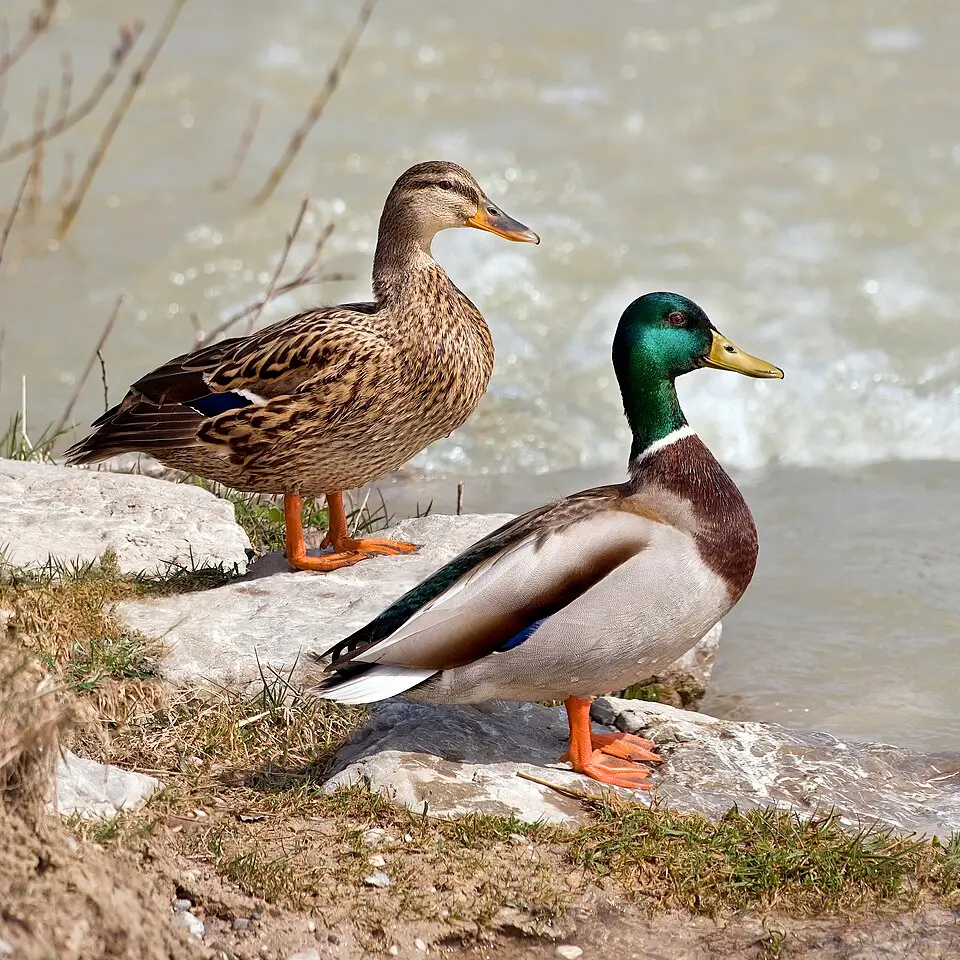
Drakes (males) in breeding plumage are unmistakable. They display a glossy, iridescent green head, a narrow white neck ring, a chestnut-brown breast, and pale gray flanks. The tail features curled black central feathers — a distinctive identifying mark — while the bill is yellow-olive.
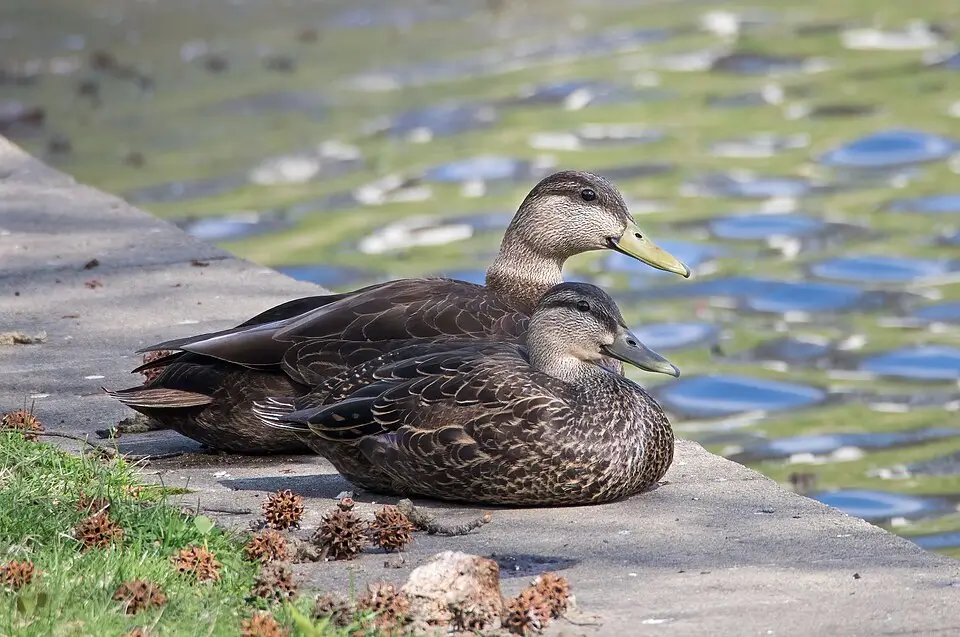
Hens (females) are more cryptically colored, with mottled brown plumage that provides excellent camouflage during nesting. Their bills are typically orange with dark markings. Both sexes share a striking purple-blue speculum (wing patch) bordered by white bars, which is one of the most reliable field marks for identifying the species in flight.
During the late summer "eclipse" molt, drakes temporarily lose their colorful plumage and resemble hens, becoming flightless for several weeks while they replace their flight feathers.
Behavior and Diet
Mallards are classified as "dabbling ducks," meaning they feed primarily at or near the water's surface by tipping forward with their tails in the air to reach submerged vegetation. They also forage on land, particularly in agricultural fields where they consume waste grains such as corn, wheat, and barley.
Their omnivorous diet includes:
- Aquatic plants and seeds
- Grasses and grains
- Aquatic insects and larvae
- Crustaceans, snails, and small fish
- Amphibians on occasion
Mallards are highly social birds outside the breeding season, often forming large flocks during migration and winter. They are also exceptionally vocal — the iconic "quack" most people associate with ducks is actually the call of the female Mallard. Males produce a quieter, raspier sound.
Reproduction
Pair bonds typically form during fall and winter, well before the spring breeding season. Hens select nest sites on the ground, usually in concealed locations near water, though they have been documented nesting in surprising places, including elevated platforms and even rooftop planters in urban areas.
A typical clutch consists of around 8 to 13 eggs, which the hen incubates alone for roughly four weeks. Ducklings are precocial — they leave the nest within a day of hatching and are capable of swimming and feeding themselves, though they remain under the hen's protection until they fledge at approximately 50 to 60 days of age.
Habitat & Range
The Mallard is one of the most widely distributed ducks in the world. Its native range spans North America, Europe, Asia, and parts of North Africa, and it has been introduced to Australia, New Zealand, and other regions. This remarkable distribution reflects the Mallard's adaptability to an enormous variety of wetland habitats.
Preferred Habitats
Mallards thrive in nearly any freshwater environment, including:
- Shallow lakes and ponds
- Marshes and wetlands
- Slow-moving rivers and streams
- Flooded agricultural fields
- Prairie potholes
- Urban parks and reservoirs
They are particularly fond of shallow water with abundant emergent vegetation, which provides both food and cover. In coastal regions, they may also be found in brackish estuaries and tidal marshes.
Mallards in Minnesota
Minnesota's nickname — the "Land of 10,000 Lakes" — undersells the state's true aquatic abundance, as the state actually contains over 14,000 lakes, along with countless rivers, streams, and wetland complexes. This watery landscape makes Minnesota one of the most important Mallard production states in the country.
The prairie pothole region of western Minnesota is especially productive Mallard breeding habitat. These shallow, glacially formed depressions fill with snowmelt and spring rain, creating ideal nesting and brood-rearing conditions. Northern Minnesota's forested wetlands, beaver ponds, and rice lakes also support healthy populations.
During fall migration, Mallards from across the Canadian prairies and the boreal forest funnel through Minnesota on their way to wintering grounds farther south, swelling the state's already substantial resident population.
Hunting Information
The Mallard is arguably the most pursued duck species in North America, and Minnesota's hunting tradition reflects this. The combination of abundant water, productive nesting habitat, and the state's position along major migration corridors makes Minnesota a premier destination for waterfowl hunters.
General Hunting Context
Mallards are typically hunted using a combination of decoys, calls, and concealment. Because Mallards are dabblers that frequent shallow water, hunters often set up in marshes, flooded timber, sloughs, or small ponds. Both jump-shooting (walking up on ducks in cover) and pass-shooting are also common techniques, though decoying remains the most traditional and productive approach.
Common gear and methods include:
- Spreads of floating decoys, sometimes accompanied by motion decoys
- Mallard hen calls used to mimic feeding chuckles, greeting calls, and comeback calls
- Layout blinds, A-frame blinds, or natural vegetation for concealment
- Non-toxic shot, which is federally required for all waterfowl hunting in the United States
- Retrievers, particularly Labrador Retrievers, which are well suited to the cold-water retrieves common in Minnesota's late-season hunts
Regulations
Specific season dates, bag limits, shooting hours, and zone boundaries for Mallard hunting in Minnesota are set annually by the Minnesota Department of Natural Resources in coordination with federal frameworks established by the U.S. Fish and Wildlife Service. Hunters are required to possess a valid Minnesota small game license, a state waterfowl stamp, and a federal duck stamp, along with HIP (Harvest Information Program) registration.
Because regulations change each year and may include sex-specific bag limits, hunters should always consult the most recent Minnesota DNR waterfowl regulations before heading afield. The source data for this article does not include specific season dates or bag limits, and hunters should rely on official state publications for current rules.
Conservation
The Mallard is currently classified as a species of Least Concern by the International Union for Conservation of Nature (IUCN), reflecting its enormous global population and broad distribution. Mallards have benefited substantially from decades of wetland conservation work funded largely through hunter contributions.
Conservation Tools and Partnerships
A number of programs and organizations have contributed to Mallard population stability:
- The Federal Duck Stamp Program, in which revenue from duck stamp sales is used almost entirely to acquire and protect wetland habitat within the National Wildlife Refuge System.
- The North American Waterfowl Management Plan, an international cooperative effort among the United States, Canada, and Mexico.
- Organizations like Ducks Unlimited and Delta Waterfowl, which restore and protect breeding, migration, and wintering habitat.
- State-level conservation programs, including Minnesota's Reinvest in Minnesota (RIM) program and various wetland easement initiatives.
Ongoing Challenges
Despite their abundance, Mallards face ongoing challenges, including the loss of prairie pothole habitat to agricultural conversion, wetland drainage, and shifting weather patterns that affect water availability during the breeding season. Continued investment in habitat conservation — much of it directly supported by hunters through licenses, stamps, and excise taxes on sporting equipment — remains essential for sustaining healthy populations into the future.
The Mallard's success story is in many ways a model of how hunting, science, and conservation can work together. In Minnesota, where waterfowl traditions run deep and wetlands define much of the landscape, the Mallard remains a living symbol of that partnership.