Overview
Few animals in North America have captured the public imagination quite like the groundhog. Known colloquially as the woodchuck, whistle-pig, or land beaver, the groundhog (Marmota monax) is one of the most recognizable and ecologically significant mammals on the continent. Every February, millions of Americans tune in to watch whether a captive groundhog in Punxsutawney, Pennsylvania will see its shadow — a quirky cultural tradition that has elevated this otherwise unassuming rodent to national celebrity status. Yet beyond the folklore and fanfare, the groundhog is a fascinating creature with a rich biology, a widespread geographic range, and a meaningful role in the ecosystems it inhabits.
Whether you are a naturalist curious about the animal's behavior, a hunter seeking a new small-game quarry, or simply an outdoor enthusiast who has spotted one grazing at the edge of a meadow, the groundhog deserves a closer look. This guide explores the biology, habitat, behavior, and hunting considerations for Marmota monax, with particular attention to the Upper Midwest and the state of Minnesota.
Biological Traits
The groundhog is a member of the family Sciuridae — the same family that includes squirrels, chipmunks, and prairie dogs. More specifically, it belongs to the tribe Marmotini and is the largest member of the marmot group found in the eastern United States and much of Canada. As a rodent, it shares the characteristic ever-growing incisor teeth common to the order Rodentia, teeth that are well-suited to gnawing through roots, bark, and woody vegetation.
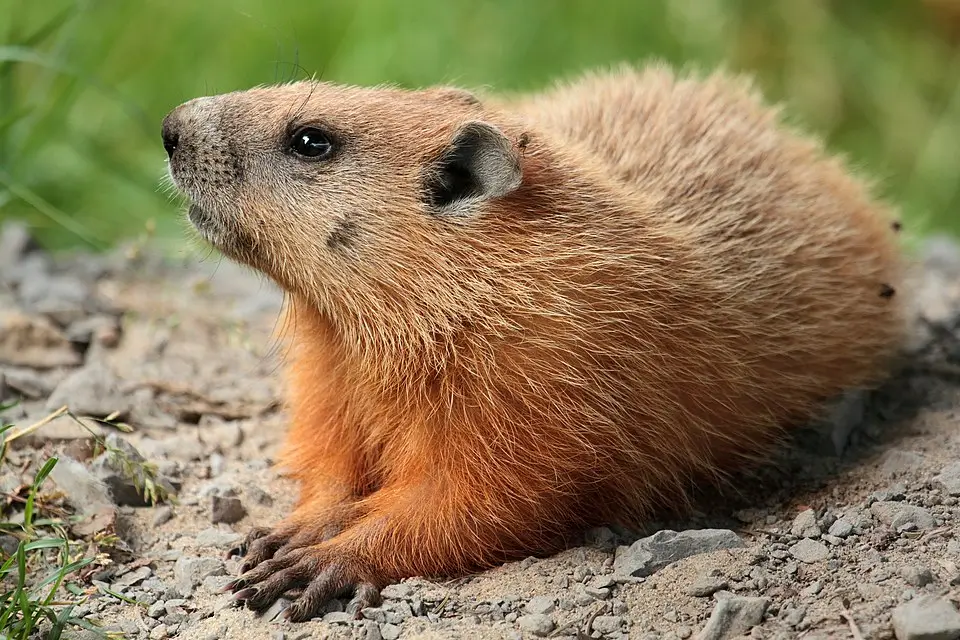
Groundhogs are stocky, low-slung mammals built for life close to the ground. They have short, powerful legs equipped with stout, curved claws that make them exceptional diggers. Their fur is coarse and typically grizzled brown or reddish-brown, with a somewhat darker back and a lighter underside. The tail is short and bushy relative to their body size, distinguishing them from squirrels at a glance.
One of the most remarkable biological traits of the groundhog is its capacity for true hibernation. Unlike many animals that enter a state of torpor during winter, groundhogs undergo a dramatic physiological transformation. Their body temperature drops significantly, their heart rate slows to just a few beats per minute, and their breathing becomes extremely shallow. This deep hibernation typically begins in the fall and lasts through the winter months, with the animal emerging in late winter or early spring — an event commemorated, of course, by Groundhog Day on February 2nd.
Groundhogs are also notable for the elaborate burrow systems they construct. These underground tunnels can extend to impressive lengths and depths, featuring multiple chambers including sleeping areas and separate latrine chambers. Burrow entrances are often surrounded by mounds of excavated soil, making them easy to identify in the field. These burrows serve not only the groundhog but also provide critical shelter for a wide variety of other wildlife species, including foxes, rabbits, skunks, and various reptiles. In this way, the groundhog functions as an important ecosystem engineer.
The groundhog is herbivorous, feeding primarily on grasses, clovers, alfalfa, dandelions, and other leafy vegetation. It may also consume berries, agricultural crops, and occasionally grubs or insects. Groundhogs accumulate substantial fat reserves during the summer and fall feeding season, which sustains them through their long hibernation period. They are typically active during the day, particularly in the early morning and late afternoon hours, making them relatively easy to observe in the field.
Communication among groundhogs often involves a high-pitched whistle — hence the nickname "whistle-pig" — which serves as an alarm call to warn nearby individuals of potential predators. They are largely solitary outside of the mating season, which occurs shortly after emergence from hibernation in early spring.
Habitat & Range
The groundhog enjoys one of the broadest ranges of any marmot species in North America. Its distribution extends from the southeastern United States northward through the mid-Atlantic and New England states, across the Great Lakes region, and well into Canada — including the provinces of Ontario, Quebec, Manitoba, and beyond. The species is highly adaptable and thrives in a variety of habitat types, including open woodlands, forest edges, fields, meadows, pastures, and agricultural areas.
The groundhog is particularly well-suited to edge habitats — areas where forested land transitions into open ground. These transition zones provide both the cover and proximity to vegetation that groundhogs require. They are commonly found along fence lines, roadsides, field margins, and the edges of woodlots.
In Minnesota, the groundhog's range extends across much of the state, particularly in the southern and central regions where agricultural land and mixed forests create ideal habitat conditions. Minnesota's landscape — with its mosaic of farmland, grasslands, and forested corridors — is well within the ecological comfort zone of Marmota monax. The state's roughly 5.8 million residents are spread across a landscape bordered by Wisconsin to the east, Iowa to the south, and the Dakotas to the west, and many rural Minnesotans are well acquainted with the sight of a groundhog perched upright at the edge of a soybean field or alfalfa meadow.
Hunting Information
Groundhog hunting has a long and respected tradition in North America, particularly across the rural eastern and midwestern United States. For many hunters, pursuing woodchucks is more than just a pastime — it is a way to hone marksmanship skills, manage populations on agricultural land, and spend meaningful time in the field between larger hunting seasons.
Groundhog hunting is commonly practiced as a form of varmint hunting, and it offers excellent opportunities for precision rifle shooting. Because groundhogs are relatively stationary when feeding and often allow hunters to set up at considerable distances, they are a popular target for long-range shooting enthusiasts. Flat-shooting centerfire calibers are traditionally favored for this type of hunting, as they allow for accurate shots across open fields.
In agricultural regions, landowners often welcome groundhog hunters because burrows can pose a hazard to livestock and farm equipment. A horse stepping into a groundhog burrow can sustain a serious injury, and the tunnels can also undermine the integrity of earthen structures. This practical dimension gives groundhog hunting a valued utilitarian role in addition to its recreational appeal.
As for hunting regulations in Minnesota specifically, official hunting information for groundhog was not available at the time of this writing. Hunters interested in pursuing groundhog in Minnesota are strongly encouraged to consult the Minnesota Department of Natural Resources (DNR) directly for the most current regulations, licensing requirements, and season information. Regulations can change from year to year, and it is always the responsibility of the individual hunter to ensure full compliance with state and local laws before heading afield. Contacting the Minnesota DNR or visiting their official website will provide the most accurate and up-to-date guidance.
What is generally true across much of their range is that groundhogs are considered unprotected or minimally regulated small game in many states, reflecting both their adaptability and their sometimes-contentious relationship with agriculture. However, it is critical never to assume that rules in one state apply in another. Always verify local regulations.
Conservation
The groundhog is currently classified as a species of least concern from a conservation standpoint. Its wide range, reproductive capacity, and adaptability to human-modified landscapes have allowed it to maintain robust populations across most of its historic range. In many areas, groundhog populations have actually benefited from agricultural development, which has expanded the availability of open-field habitat and food sources.
Groundhogs typically produce one litter per year, with litters commonly ranging from two to six young. The young are born in the spring, are weaned over the course of several weeks, and disperse by late summer to establish their own territories and burrows. This reproductive strategy, while not prolific by small-mammal standards, is sufficient to maintain stable populations across their range.
Beyond their own numbers, groundhogs contribute meaningfully to the broader health of ecosystems they inhabit. Their burrowing activity aerates and turns over soil, promoting plant growth and improving soil structure. The abandoned burrows they leave behind serve as ready-made shelters for dozens of other species, earning the groundhog a reputation as a foundational species in many woodland and grassland communities.
Predators of the groundhog include hawks, eagles, foxes, coyotes, bobcats, and domestic dogs. These natural predators help regulate groundhog populations in areas where hunting pressure is low. The groundhog's vigilant behavior — remaining upright and alert while feeding, retreating quickly to burrow entrances at the first sign of danger — reflects millions of years of evolutionary pressure from these predators.
In Minnesota and across the Upper Midwest, the groundhog remains a healthy and visible part of the natural landscape. Its continued presence is a positive indicator of functioning edge habitats and healthy agricultural ecosystems.
Conclusion
The groundhog is far more than a cultural curiosity or a weather-predicting celebrity. It is a resilient, ecologically important mammal with a fascinating biology and a prominent place in North American wildlife. From its extraordinary hibernation physiology to its role as an ecosystem engineer, Marmota monax rewards the attention of anyone willing to take a closer look. For hunters, naturalists, and outdoor enthusiasts in Minnesota and across the continent, the groundhog represents one of the most accessible and engaging wildlife encounters available in rural and semi-rural landscapes.