Overview
Few woodland creatures are as instantly recognizable—or as widely appreciated—as the Eastern gray squirrel (Sciurus carolinensis). With its silvery-gray fur, bushy tail, and tireless energy, this small mammal has become one of North America's most familiar wildlife species. Whether darting across a city park, leaping between hardwood branches in a quiet forest, or raiding a backyard bird feeder, the Eastern gray squirrel has earned a place in the daily lives of millions of people across the continent.
For hunters, wildlife watchers, and outdoor enthusiasts in Minnesota, the Eastern gray squirrel offers a tremendous combination of accessibility, challenge, and reward. Squirrel hunting is often considered the "gateway" pursuit that introduces new sportsmen and women to the woods, sharpening skills in marksmanship, stealth, and patience that translate to every other type of hunt. At the same time, this species is a fascinating subject of study in its own right, with behaviors and adaptations that have allowed it to thrive across an enormous range of habitats—from the dense hardwood forests of the Mississippi River bluffs to the tree-lined neighborhoods of Minneapolis and Saint Paul.
This article explores the biology, habitat, hunting traditions, and conservation status of the Eastern gray squirrel, with a particular focus on its presence in Minnesota, the "Land of 10,000 Lakes."
Biological Traits
The Eastern gray squirrel is classified scientifically as Sciurus carolinensis, placing it within the family Sciuridae, which includes tree squirrels, ground squirrels, chipmunks, and marmots. The genus name Sciurus derives from the Greek words skia (shadow) and oura (tail), a reference to the way these animals can be seen sitting in the shadow of their own bushy tails.
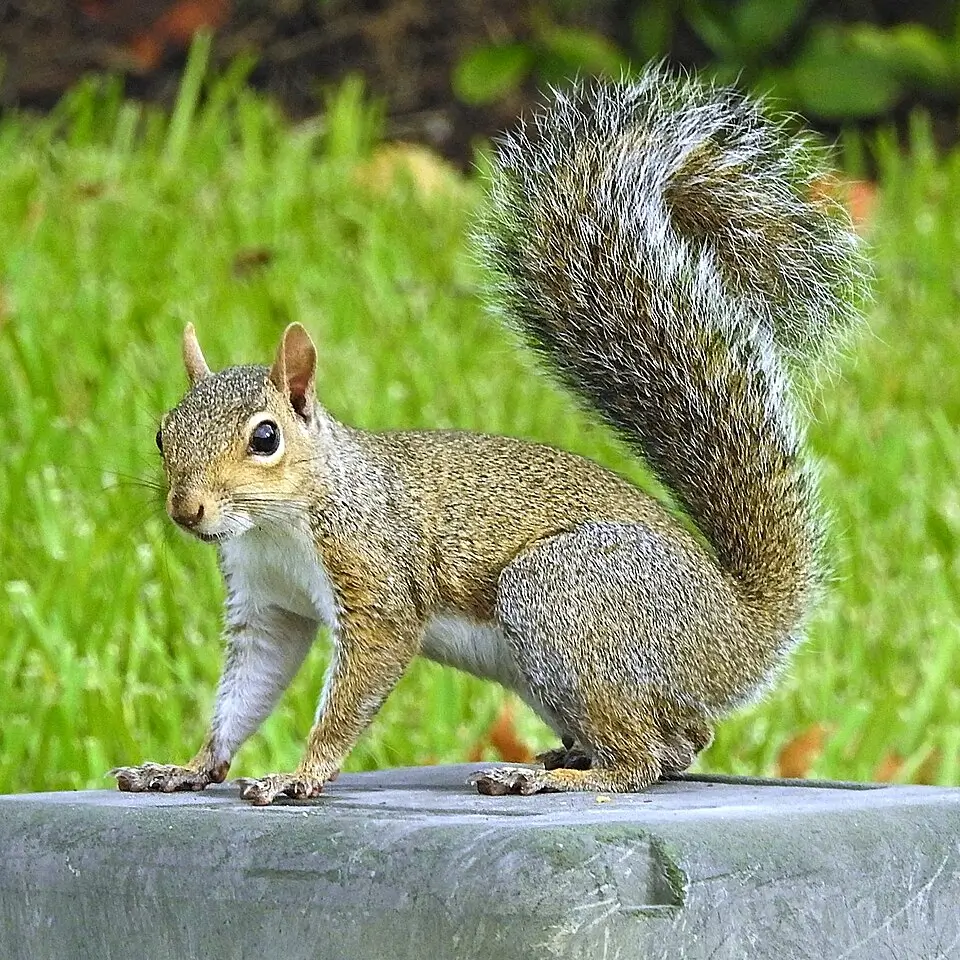
As its name suggests, the Eastern gray squirrel typically displays a coat of grizzled gray fur on its upper body, with lighter, often white or pale gray underparts. The fur is generally a mix of black, brown, and white hairs that blend together to produce the silvery-gray appearance. However, color variations are common. Melanistic (all-black) individuals appear regularly in some populations, particularly in northern parts of the range, and leucistic or albino individuals occasionally occur as well. The dramatic, fluffy tail—often nearly as long as the body itself—serves multiple functions: balance during leaps, communication through flicking and waving, warmth in cold weather, and even a sunshade on hot days.
Adult Eastern gray squirrels are medium-sized tree squirrels, larger than chipmunks and red squirrels but smaller than fox squirrels. They possess sharp, curved claws perfectly suited for climbing, and their hind feet can rotate nearly 180 degrees, enabling them to descend tree trunks head-first—a trick few other mammals can match.
Like all rodents, Eastern gray squirrels have continuously growing incisors that they must wear down through gnawing. Their diet is primarily plant-based and varies seasonally. In autumn, hard mast such as acorns, hickory nuts, and walnuts dominates their intake, with squirrels famously caching individual nuts in scattered locations throughout their territory. This behavior, known as "scatter hoarding," not only sustains the squirrels through winter but also contributes significantly to forest regeneration, as forgotten caches sprout into new trees. Other foods include buds, flowers, fungi, fruits, seeds, and occasionally insects or other small protein sources.
Eastern gray squirrels are diurnal, meaning they are active during daylight hours, with peaks of activity in the early morning and late afternoon. They communicate through a variety of vocalizations—chattering, barking, and "quaa" calls—along with tail flicks and body postures. They typically produce two litters per year under favorable conditions, with young born in tree cavities or leaf nests called dreys.
Habitat & Range
The native range of the Eastern gray squirrel covers much of the eastern half of North America, from southern Canada down through the eastern United States. Their preferred habitat is mature deciduous or mixed hardwood forest, particularly stands dominated by mast-producing trees such as oak, hickory, walnut, beech, and maple. These forests provide both abundant food and the cavities and crotches needed for nesting.
The species has proven remarkably adaptable, however. Eastern gray squirrels readily colonize suburban neighborhoods, urban parks, college campuses, and farmland with sufficient tree cover. Their ability to exploit human-modified landscapes is one reason they have been so successful—and why they have been introduced, sometimes controversially, to regions outside their native range, including parts of the western United States and Europe.
In Minnesota, the Eastern gray squirrel finds suitable habitat across much of the state, particularly in the central and southeastern hardwood forest regions. The "Big Woods" ecological zone—historically dominated by sugar maple, basswood, elm, and oak—provides classic squirrel country. The bluff country of southeastern Minnesota, with its rugged oak-hickory forests along the Mississippi River, is especially productive. Northern Minnesota, with its expansive coniferous and mixed forests, supports fewer Eastern gray squirrels than the hardwood-rich south, but the species is still present wherever suitable mast-producing trees occur. Urban populations thrive throughout the Twin Cities metropolitan area, Duluth, Rochester, and other municipalities.
Minnesota's varied geography—shaped by glacial history, forested lake country, and the convergence of prairie, hardwood, and boreal biomes—offers Eastern gray squirrels a remarkable range of habitats within a single state. Even in this northern climate, the squirrels remain active year-round, relying on cached food, sheltered nests, and dense fur to weather harsh winters.
Hunting Information
Squirrel hunting is a time-honored tradition in Minnesota and across much of North America. The Eastern gray squirrel, along with the fox squirrel, is one of the primary small-game species pursued by Minnesota hunters. For many sportsmen and women, squirrel season represents the first opportunity each fall to head into the woods, and it offers an excellent training ground for young or beginning hunters.
Hunters in Minnesota typically pursue Eastern gray squirrels using one of two main approaches: still-hunting, in which the hunter sits quietly near a likely feeding tree (often a productive oak or hickory) and waits for squirrels to reveal themselves, or stalking, in which the hunter moves slowly and quietly through the woods, scanning the canopy for movement. A third popular method involves using a well-trained squirrel dog—often a feist or cur—to locate and tree squirrels.
Common firearms for squirrel hunting include .22 rimfire rifles, which reward precise marksmanship, and small-gauge shotguns such as the .410 or 20-gauge, which are forgiving for shots through brush or at moving targets. Archery equipment is also used by some hunters seeking an added challenge.
Because specific Minnesota season dates, bag limits, and license requirements were not included in the source data for this article, hunters are strongly encouraged to consult the Minnesota Department of Natural Resources (DNR) directly for current regulations before heading afield. Regulations may include season opening and closing dates, daily and possession limits, legal hunting hours, license categories (including youth and apprentice options), and any area-specific rules. Always confirm the latest information from official sources prior to your hunt.
The culinary tradition of squirrel hunting is also worth noting. Eastern gray squirrel meat is mild, tender when prepared properly, and a staple of classic American game cookery, featured in dishes ranging from Brunswick stew to fried squirrel with gravy. For many hunters, a fall afternoon in the squirrel woods culminates in a hearty meal shared with family.
Conservation
The Eastern gray squirrel is one of the most abundant and secure mammal species in North America. Within its native range, populations are healthy and widely distributed, and the species is listed as Least Concern on the IUCN Red List. There are no significant conservation threats to the Eastern gray squirrel in Minnesota or across most of its range, and regulated hunting has no measurable negative impact on overall population health.
In fact, sustainable hunting plays a positive role in wildlife management. License revenues and excise taxes paid by hunters fund habitat conservation, public land acquisition, scientific research, and education programs that benefit a wide array of wildlife—not just game species. Squirrel hunters who participate in this system are directly supporting the broader conservation effort that protects Minnesota's forests, lakes, and wetlands.
Habitat conservation remains the most important long-term factor in maintaining strong squirrel populations. Protecting mature hardwood forests, encouraging mast-producing tree species in woodland management plans, and preserving riparian corridors all contribute to healthy gray squirrel numbers. Backyard wildlife enthusiasts can also support local populations by maintaining mature trees, leaving snags where safe to do so, and providing supplemental food sources such as nut-bearing native plantings.
For Minnesotans interested in observing or pursuing the Eastern gray squirrel, the opportunities are nearly endless. Whether you head into the hardwood ridges of the southeast with a .22, sit quietly on a state forest stand watching the canopy come alive, or simply enjoy a coffee on the back porch as a familiar gray visitor scampers along a fence rail, this remarkable little mammal continues to enrich the outdoor experience for everyone who pays attention.