Overview
Few wild animals embody the spirit of resilience and adaptability quite like the coyote (Canis latrans). Known across the continent as a cunning, resourceful predator, the coyote has earned a place in both indigenous folklore and modern wildlife management conversations. From the sun-baked deserts of the American Southwest to the cold, lake-dotted forests of Minnesota, this remarkable canid has demonstrated an almost unparalleled ability to thrive alongside — and sometimes in spite of — human civilization. In fact, while many large predators have seen their ranges contract over the past century, the coyote has done the opposite, expanding its territory significantly across North America.
In Minnesota, the "Land of 10,000 Lakes," the coyote is a well-established resident. With over 14,420 lakes, sprawling forests, fertile agricultural land, and vast open prairies, Minnesota offers a diverse tapestry of landscapes that perfectly suit the coyote's generalist lifestyle. Understanding this animal — its biology, behavior, and ecological role — is essential for hunters, wildlife enthusiasts, and conservationists alike.
Biological Traits
The coyote (Canis latrans), whose name derives from the Nahuatl word coyotl, is a member of the family Canidae, sharing its lineage with wolves, foxes, and domestic dogs. The species name latrans is Latin for "barking," a fitting descriptor for an animal celebrated for its distinctive vocalizations — the haunting howls, yips, and barks that have echoed across North American landscapes for thousands of years.
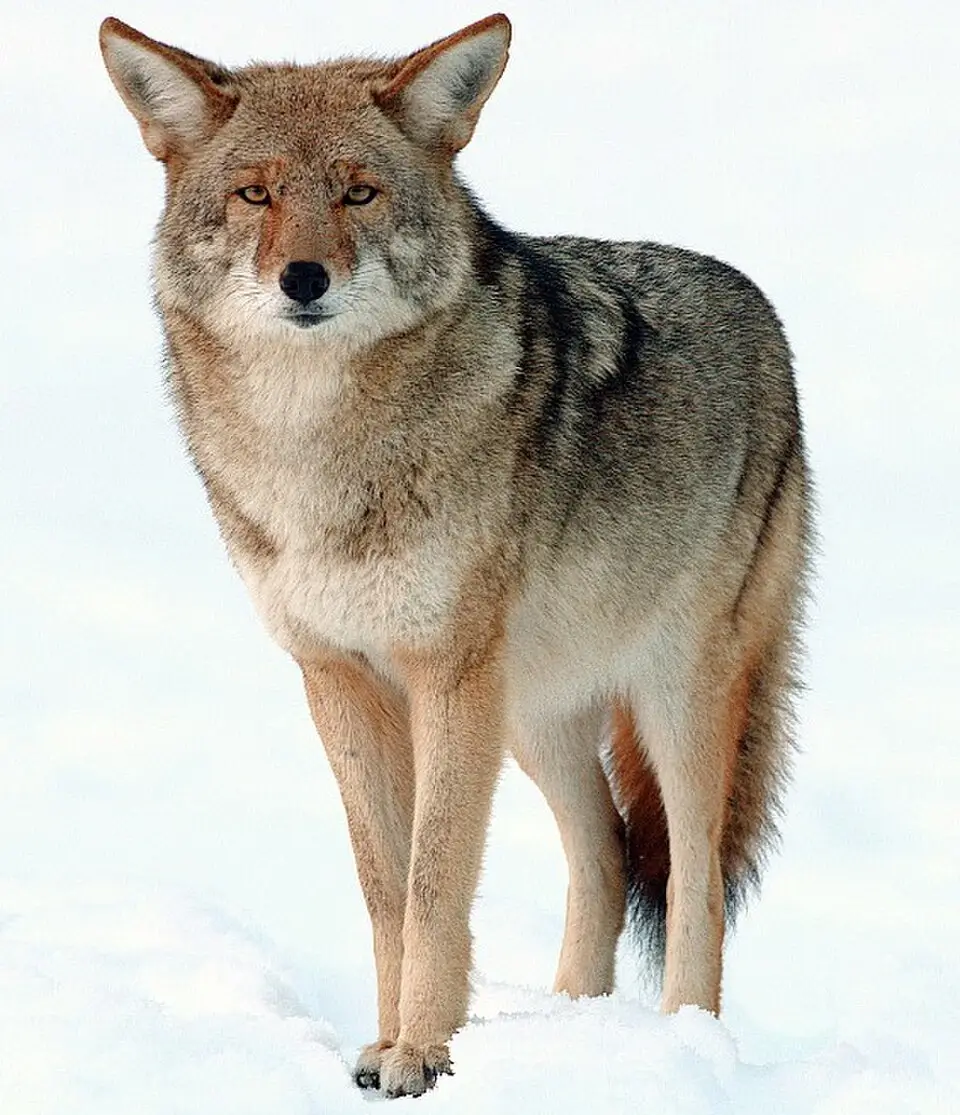
In terms of physical appearance, coyotes are medium-sized canids, typically smaller than gray wolves but larger than most foxes. Their fur is generally a mix of gray, brown, and tan, often with a reddish tinge along the legs and face, and a pale or whitish underside. The tail is bushy and usually held low while running — a key distinguishing feature from domestic dogs, which often carry their tails upright. Ears are large, pointed, and highly expressive, and the muzzle is long and narrow.
Coyotes are opportunistic omnivores, which is one of the primary reasons for their extraordinary success. Their diet is remarkably broad, encompassing small mammals like rabbits, mice, voles, and squirrels, as well as birds, reptiles, insects, fruits, berries, and carrion. They are equally comfortable hunting alone or cooperating in small family groups, adjusting their social structure and strategy depending on prey availability and terrain.
One of the most fascinating aspects of coyote biology is their reproductive adaptability. When coyote populations are reduced through hunting or other pressures, females often respond by producing larger litters. This compensatory reproduction mechanism makes the coyote extremely difficult to suppress through conventional means and helps ensure the species' long-term survival. Coyotes are primarily monogamous and typically mate once a year in late winter. After a gestation period of roughly 63 days, pups are born in dens that may be dug into the ground, sheltered under rocks, or repurposed from other animals.
Coyotes are also highly intelligent animals with complex social structures. They communicate through an impressive range of vocalizations — studies have identified over a dozen distinct sounds — as well as body language and scent marking. This vocal complexity serves to maintain territory boundaries, coordinate during hunts, and keep family groups connected across large areas.
Habitat & Range
The coyote is one of the most widely distributed wild mammals in North America. Historically native to the Great Plains and western regions of the continent, Canis latrans has dramatically expanded its range over the past century, now found from Central America all the way to Alaska and across virtually the entire United States and Canada, including urbanized areas.
Their habitat flexibility is truly extraordinary. Coyotes are equally at home in deserts, grasslands, shrublands, temperate forests, tropical zones, farmland, and suburban neighborhoods. This versatility is a product of both their dietary generalism and their behavioral flexibility — coyotes learn quickly, adapt their activity patterns to avoid human disturbance, and can exploit virtually any food source available in their environment.
In Minnesota, coyotes occupy a wide range of habitats. The state's diverse landscape — featuring boreal forests in the north, mixed deciduous forests in the east and center, prairie and farmland in the west and south, and more than 14,000 lakes and extensive wetlands throughout — provides excellent coyote habitat year-round. They are found in virtually every county in the state, from the agricultural flatlands of the Red River Valley to the lake-studded forests of the Boundary Waters region.
Minnesota's climate, while harsh in winter, does not deter coyotes. Their thick double coats provide excellent insulation, and their hunting skills allow them to exploit prey species that remain active through the cold months, including rabbits, mice, and deer (particularly deer weakened by winter conditions or available as carrion). The state's mix of wild lands and agriculture also suits coyotes well, as farmland and forest edges offer a diverse mix of prey and denning opportunities.
Hunting Information
Coyote hunting is a widely practiced and respected tradition across Minnesota and much of North America. Hunters pursue coyotes for a variety of reasons, including sport, fur harvesting, and participation in broader wildlife management efforts. Coyote hunting can be challenging and deeply rewarding, requiring patience, woodsmanship, and a sound understanding of animal behavior.
One of the most popular and effective methods for hunting coyotes is calling. Hunters use electronic or mouth-blown calls to mimic the distress sounds of prey animals — such as a wounded rabbit — or to replicate coyote vocalizations like howls or yips. These sounds trigger the coyote's natural instincts, drawing them into range. Decoys are often used in conjunction with calls to provide a visual target for the approaching animal.
Spot-and-stalk hunting is another favored technique, particularly in open terrain like Minnesota's agricultural fields or prairie areas in the western part of the state. Hunters glass large areas from elevated positions, locate coyotes, and then carefully move into position for a shot. Rifle hunting with flat-shooting calibers is standard for open-country hunting, while shotguns and archery equipment are preferred for close-range or more densely vegetated settings.
Coyote hunting can be productive throughout the year, though many experienced hunters favor late fall and winter. During this period, coyotes are more actively moving, fur quality is at its peak, and the leaf-off conditions make spotting and calling significantly easier. Additionally, the late-winter breeding season can make coyotes bolder and more responsive to calls.
Hunters in Minnesota interested in pursuing coyotes should always consult the Minnesota Department of Natural Resources (DNR) for the most current regulations, licensing requirements, and season information. Regulations can change, and staying informed ensures a legal and ethical hunting experience. As of the time of this writing, specific season dates and license details were not available in the source data used for this article, so prospective hunters are strongly encouraged to visit the Minnesota DNR's official website for up-to-date guidance.
Conservation
The coyote occupies an important and complex role in North American ecosystems. As a mesopredator — predators that occupy a middle tier in the food web — coyotes help regulate populations of small mammals and other prey species, contributing to the overall balance of the ecosystems they inhabit. In areas where apex predators like wolves have been removed or reduced, coyotes often step into a broader ecological role, helping to prevent prey populations from reaching unsustainable levels.
The coyote's conservation status is one of the more positive stories in North American wildlife. Unlike many large carnivores that have faced severe population declines due to habitat loss and persecution, the coyote has thrived. It is currently listed as a species of Least Concern by the International Union for Conservation of Nature (IUCN), reflecting its stable and expanding global population. Its success serves as a testament to the species' remarkable adaptability and resilience.
In Minnesota, coyotes coexist with a rich diversity of wildlife, including white-tailed deer, wild turkey, Canada geese, and various small mammals — all of which may interact with coyotes as prey, competitors, or fellow inhabitants of shared landscapes. The state's robust wildlife management framework, managed by the Minnesota DNR, helps ensure that coyote populations remain in balance with their environment and with the needs of hunters, farmers, and conservationists alike.
The coyote's story is ultimately one of extraordinary success in the face of change. As human landscapes continue to evolve, this adaptable predator shows no signs of retreating — instead, it continues to find new ways to thrive, earning both the respect and the admiration of those who encounter it in the wild.