Overview
Few animals capture the imagination of outdoor enthusiasts quite like the cougar. Known by more common names than almost any other mammal in the Western Hemisphere — including mountain lion, puma, panther, catamount, and painter — the cougar (Puma concolor) is a creature of myth, mystery, and remarkable adaptability. Its silent footsteps have moved through the forests, mountains, deserts, and grasslands of the Americas for thousands of years, and its presence continues to shape the ecosystems it inhabits.
For hunters, wildlife watchers, and conservationists alike, the cougar represents both an iconic apex predator and a symbol of wild country. Despite being one of the most widely distributed large mammals in the Americas, the cougar is rarely seen by humans. Its solitary nature, exceptional stealth, and preference for rugged, remote terrain make encounters uncommon — even in regions where the species is well established.
This article explores the biology, range, habitat, and conservation status of the cougar, along with information relevant to those curious about its presence in Minnesota and the broader Upper Midwest. Whether you are a backcountry traveler, a houndsman, or simply a wildlife enthusiast, understanding this remarkable cat enriches every step into the outdoors.
Biological Traits
The cougar belongs to the family Felidae and the subfamily Felinae, placing it among the so-called "small cats" despite its considerable size. Genetically, it is more closely related to the domestic cat than to lions, tigers, or other true big cats of the genus Panthera. This taxonomic distinction is reflected in several of the cougar's traits: it cannot roar, but instead produces a wide range of vocalizations including purrs, chirps, hisses, growls, and the famous bone-chilling scream associated with females in estrus or communicating with cubs.
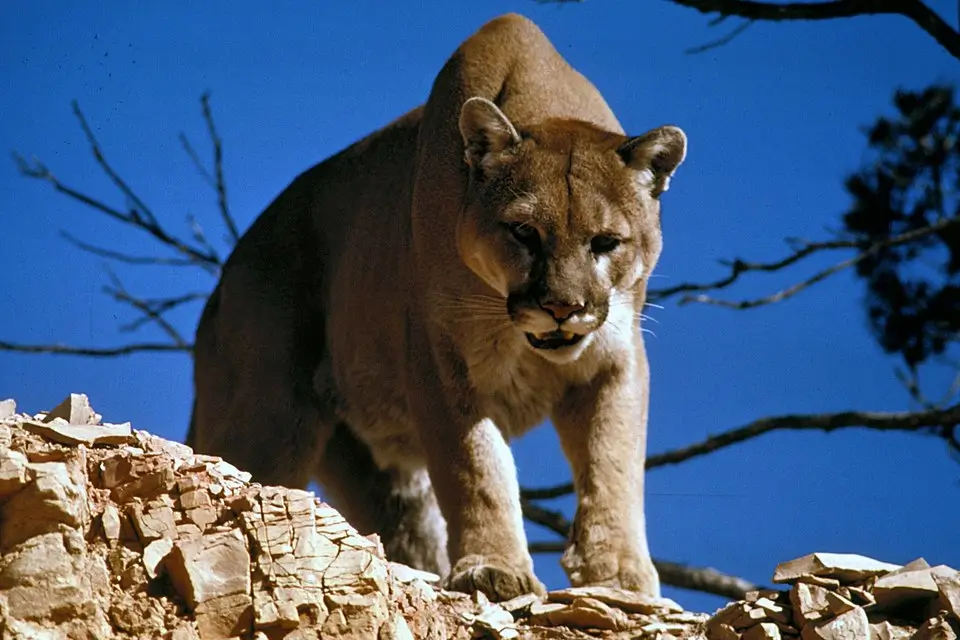
Cougars are characterized by a sleek, muscular build, a small rounded head, short rounded ears, and a long, heavy tail that often measures roughly one-third of the animal's total length. The tail is a key identifying feature, distinguishing cougars from bobcats and lynx, both of which have short, stubby tails. The fur is typically tawny, ranging from a pale yellowish-buff to a reddish or grayish brown, with lighter coloration on the belly, throat, and chin. Cubs are born with spotted coats and blue eyes, which fade as they mature into the uniform adult coloration that gives the species its scientific name, concolor, meaning "of one color."
Cougars are powerful, athletic predators. They are capable of explosive bursts of speed, remarkable vertical leaps, and long horizontal jumps. Their hind legs are notably larger and more muscular than their front legs, which enables them to spring upon prey with tremendous force. As obligate carnivores, cougars rely on a diet composed primarily of ungulates such as deer, elk, and bighorn sheep, supplemented by smaller mammals like rabbits, hares, raccoons, beavers, and occasionally rodents and birds. They are ambush hunters, relying on stalking and a short, decisive attack rather than long pursuits.
Solitary by nature, cougars maintain large home ranges that they patrol and mark with scrapes, urine, and feces. Males typically hold larger territories than females and may overlap the ranges of several females. Cougars are generally most active during dawn, dusk, and nighttime hours, although they may be observed during daylight in undisturbed habitat. Females give birth to litters of cubs in secluded den sites and raise them alone, with the young remaining dependent for a year or more before dispersing to establish their own territories. Dispersing young cougars — particularly subadult males — can travel astonishing distances in search of new range, sometimes hundreds of miles from where they were born.
Habitat & Range
The cougar holds the distinction of having one of the broadest geographic distributions of any terrestrial mammal in the Western Hemisphere. Historically, its range extended from the Yukon in Canada all the way south to the southern tip of South America, and from the Pacific to the Atlantic across both continents. This wide distribution speaks to the species' remarkable ecological flexibility.
Cougars thrive in a tremendous variety of habitats. They are found in coniferous forests, deciduous woodlands, swamps, desert scrublands, grasslands, and mountainous terrain reaching to high elevations. The common thread among these habitats is the availability of cover for stalking prey, sufficient ungulate populations to support the cougar's energy needs, and relative seclusion from heavy human disturbance. Rocky outcrops, dense brush, riparian corridors, and rugged canyons are all favored landscape features that provide both hunting opportunities and security.
In the United States, breeding populations of cougars are concentrated primarily in the western states, including the Rocky Mountain region, the Pacific Northwest, the Southwest, and parts of the Great Plains. A small, isolated population — the Florida panther — persists in the southeastern United States. In recent decades, dispersing cougars from western breeding populations have increasingly been documented in midwestern states, occasionally including the Dakotas, Nebraska, Iowa, Wisconsin, and Minnesota.
Cougars in Minnesota
Minnesota, the "Land of 10,000 Lakes," features a diverse landscape of boreal forests, mixed hardwood woodlands, prairies, wetlands, and waterways. While Minnesota does not have a known established breeding population of cougars, the state lies within the broader region where transient cougars from western source populations have been documented. Confirmed sightings in Minnesota tend to involve dispersing young males traveling great distances in search of mates and unoccupied territory. These transient cougars typically pass through the state rather than settling, and verified encounters remain uncommon.
For outdoor enthusiasts in Minnesota, this means that while it is highly unlikely to see a cougar, the possibility exists, particularly in more remote forested or river-corridor habitats. Any potential sighting should be reported to the Minnesota Department of Natural Resources, which evaluates evidence such as photographs, tracks, and DNA samples to confirm whether a cougar has been present.
Hunting Information
Cougar hunting is a regulated activity in several western U.S. states and Canadian provinces where established breeding populations exist. In those jurisdictions, methods commonly used by licensed hunters include hunting with trained hound packs, spot-and-stalk in snow, and predator calling. Seasons, quotas, and license requirements vary significantly by state and are determined by wildlife management agencies based on population data and management objectives.
In Minnesota, there is no established cougar hunting season. Because the state does not have a verified resident breeding population, cougars are not managed as a game species in the same way they are in western states with regular harvest seasons. Hunters interested in pursuing cougars typically travel to states where the species is well established and where regulated seasons, licensing systems, and tag allocations are in place.
Anyone considering a cougar hunt — whether in the western United States, Canada, or elsewhere — should consult directly with the relevant state or provincial wildlife agency for the most current and accurate information on seasons, license requirements, legal methods, mandatory reporting, and any applicable quotas. Regulations can change from year to year based on population assessments and management priorities, and it is always the hunter's responsibility to ensure full compliance with local laws.
In Minnesota specifically, hunters and outdoor users should also be aware that cougars sighted in the state may be afforded protections, and any encounter or take should be handled in coordination with the Minnesota Department of Natural Resources.
Conservation
The conservation story of the cougar is one of resilience. Following centuries of bounty hunting, habitat loss, and persecution that drove cougars out of much of their eastern North American range, populations in the West have largely stabilized and, in some regions, expanded. Today, the cougar is generally considered a species of Least Concern at the global level, although certain subspecies and isolated populations — such as the Florida panther — remain endangered and require dedicated conservation efforts.
Cougars play a vital ecological role as apex predators. By preying primarily on deer and other ungulates, they help regulate prey populations, which in turn influences vegetation patterns, stream health, and biodiversity. The concept of trophic cascades — where the presence or absence of top predators ripples through entire ecosystems — has been studied extensively in landscapes where cougars are part of the natural community.
Modern cougar conservation focuses on maintaining connectivity between populations, preserving large tracts of suitable habitat, reducing conflicts with livestock and humans, and applying science-based management approaches. The gradual recolonization of midwestern states by dispersing cougars is an encouraging sign for those who value the return of native wildlife, though it also brings new questions about coexistence, public safety, and management strategy.
For Minnesota and other states along the eastern edge of the cougar's expanding dispersal range, the future may bring more frequent sightings as western populations continue to produce wide-ranging young animals. Continued monitoring, public education, and informed wildlife management will be key to ensuring that any future cougar presence is met with understanding rather than fear.