Overview
Few animals embody the wild spirit of North America's forests, grasslands, and mountain ranges quite like the bobcat. Compact, powerful, and perpetually elusive, the bobcat (Lynx rufus) is the continent's most widespread native wild cat — and one of its most fascinating predators. Found across a sweeping range that stretches from southern Canada down through the continental United States and into northern Mexico, the bobcat has earned a reputation as a master of adaptation, thriving in environments as diverse as dense boreal forests, arid desert scrublands, and even the outskirts of suburban neighborhoods.
In Minnesota, a state renowned for its sprawling wilderness, pristine lakes, and rich hunting traditions, the bobcat occupies an important ecological role. As the "Land of 10,000 Lakes" — which actually boasts an astonishing 14,420 lakes — Minnesota provides a diverse patchwork of habitats that suit the bobcat's wide-ranging lifestyle. For hunters, wildlife enthusiasts, and conservationists alike, the bobcat represents both a prized quarry and a symbol of the untamed North American wilderness.
This article takes an in-depth look at the biology, behavior, habitat preferences, hunting context, and conservation status of this remarkable feline, with a particular focus on its presence in the state of Minnesota.
Biological Traits
The bobcat belongs to the family Felidae and the genus Lynx, placing it in close company with its larger cousin, the Canada lynx (Lynx canadensis), which also inhabits portions of Minnesota's northern forests. The scientific name Lynx rufus reflects a key visual characteristic of the species — rufus is Latin for "red" or "reddish," a nod to the animal's distinctive reddish-brown coat.
Physical Appearance
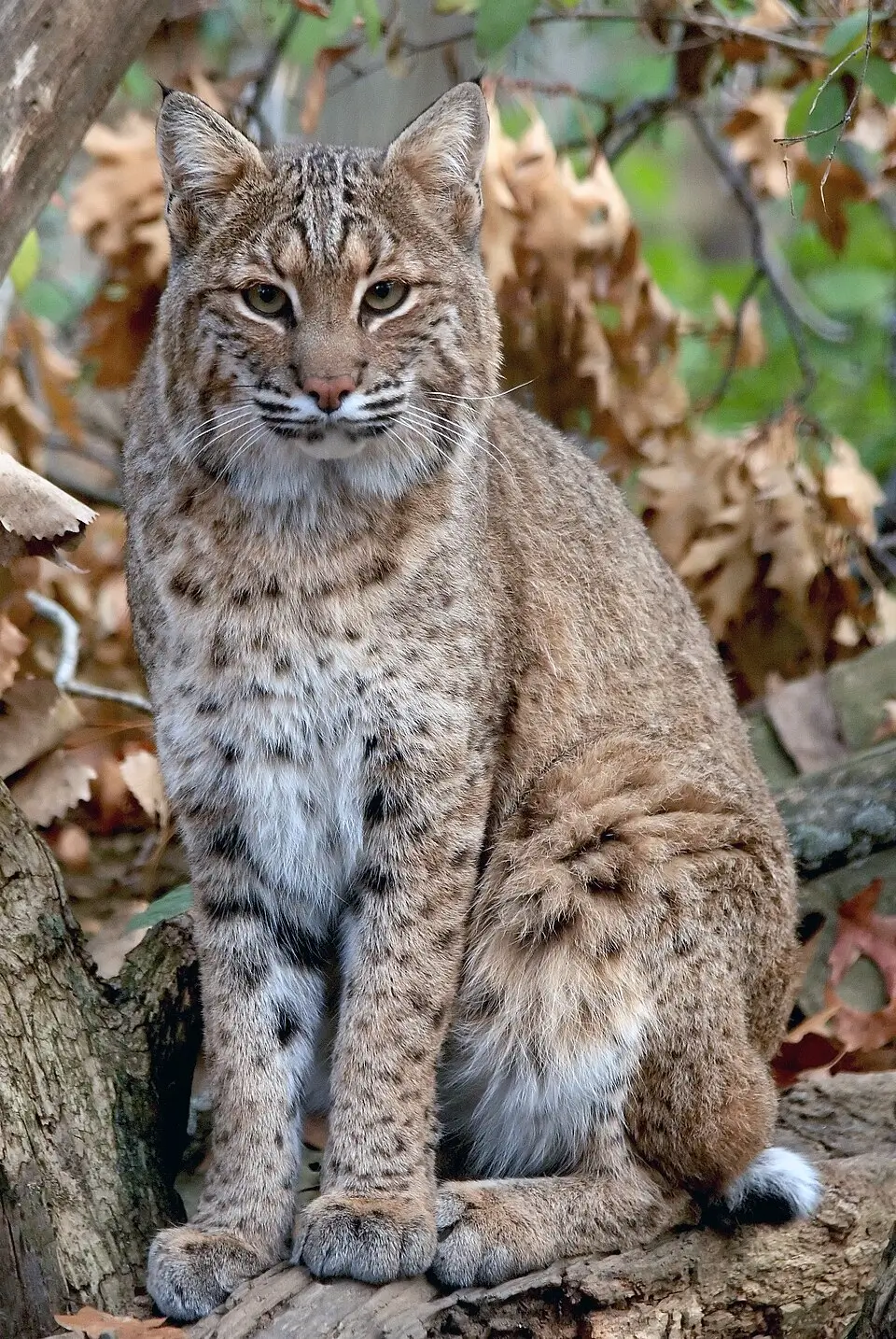
The bobcat is a medium-sized felid, roughly twice the size of a domestic cat. Adults typically weigh between 11 and 30 pounds, though males are considerably larger than females. The coat is dense and soft, generally exhibiting a base color ranging from light gray to reddish-brown, overlaid with dark streaks and spots that provide excellent camouflage in dappled woodland light. The underparts are pale and often spotted.
One of the bobcat's most recognizable features is the short, "bobbed" tail from which it draws its common name. The tail typically measures just four to six inches in length and features a black tip on the upper surface while remaining white or pale on the underside — a key distinction from the Canada lynx, whose tail is entirely black-tipped. The bobcat also sports distinctive tufted ears and prominent facial ruffs, giving it a somewhat lynx-like appearance, though its legs are proportionally shorter and its paws smaller than those of the Canada lynx.
Senses and Behavior
The bobcat is a predominantly solitary and territorial animal. Adults maintain defined home ranges that they mark with scent posts, scratch marks on trees, and feces. These territories vary widely in size depending on prey availability, habitat quality, and season, but can range from a few square miles in prey-rich environments to well over 100 square miles in more challenging landscapes.
Primarily crepuscular and nocturnal, bobcats do most of their hunting around dawn and dusk, though they are opportunistic enough to be active at any hour when conditions favor a successful hunt. Their senses are extraordinarily well-developed. Their large, forward-facing eyes provide excellent low-light vision, while their acute hearing allows them to detect the faintest rustle of prey beneath snow or leaf litter. Like all felids, the bobcat possesses retractable claws that remain sharp and effective as tools for both climbing and capturing prey.
Diet and Hunting Strategy
The bobcat is an obligate carnivore and a highly skilled ambush predator. Its primary prey across most of its range is the eastern cottontail and other rabbit species, but it is an opportunistic hunter capable of taking a remarkably wide variety of prey. Deer — particularly white-tailed deer fawns and weakened or winter-stressed adults — form an important food source, especially in northern states like Minnesota. Squirrels, mice, voles, birds, and wild turkey are also regularly taken. In lean times, bobcats may consume insects and carrion.
The bobcat hunts by stealth, using its spotted coat as camouflage while stalking as close to prey as possible before launching a short, explosive burst of speed. It typically delivers a killing bite to the base of the skull or throat.
Reproduction
Bobcats breed primarily in late winter, typically between February and March in northern portions of their range. After a gestation period of approximately 60 to 70 days, females give birth to litters of one to six kittens, with two or three being most common. Kittens are born blind and helpless in a secluded den — often a hollow log, rock crevice, or dense thicket — and remain with their mother for several months as they learn hunting skills. By the end of their first year, young bobcats typically disperse to establish their own territories.
Habitat and Range
The bobcat's extraordinary adaptability is perhaps best illustrated by the sheer breadth of habitats it occupies. Across North America, bobcats are found in coniferous and mixed forests, hardwood woodlands, swamps, scrublands, coastal marshes, mountainous terrain, semi-arid deserts, and agricultural areas bordered by forest edges.
In Minnesota, the bobcat is predominantly associated with the dense mixed and coniferous forests of the northeastern and north-central portions of the state — the same rugged lake country and boreal forest landscape that defines the Boundary Waters Canoe Area Wilderness and the Superior National Forest. Forested areas interspersed with rocky outcrops, wetlands, and dense brush provide ideal cover for both denning and hunting.
The bobcat's range in Minnesota overlaps significantly with that of the Canada lynx in the far north, and the two species occupy broadly similar ecological niches. However, the bobcat tends to be more adaptable to a wider variety of habitat types and is generally found farther south. The availability of prey — particularly snowshoe hares and cottontail rabbits — is a critical factor governing bobcat density and distribution across Minnesota's varied landscapes.
One of the defining characteristics of the bobcat compared to the Canada lynx is its ability to tolerate deeper, denser snow. While the Canada lynx's large, snowshoe-like paws give it an advantage in heavy snowpack, the bobcat compensates with its versatility and its ability to exploit prey other than snowshoe hares when necessary.
Hunting Information
The bobcat has long been valued by hunters and trappers across North America, prized both for the challenge it presents and for its striking fur. In many states and Canadian provinces, bobcat populations support regulated hunting and trapping seasons designed to keep harvests sustainable while providing important recreational opportunities.
In Minnesota, the bobcat is recognized as a game species with a historical and cultural significance in the state's hunting and trapping traditions. The state's vast forested areas in the north provide important bobcat habitat, and the species has been managed as a regulated furbearer and game animal.
However, as of the time of writing, specific current season dates, license requirements, and bag limits for bobcat hunting and trapping in Minnesota are not available in the source data consulted for this article. Hunters and trappers interested in pursuing bobcat in Minnesota are strongly encouraged to consult the Minnesota Department of Natural Resources (DNR) directly for the most current and accurate regulations, season dates, license requirements, and any zone-specific restrictions. Regulations can change from season to season based on population surveys, habitat assessments, and wildlife management priorities.
What is well-established is that bobcat hunting and trapping, where permitted, requires patience, skill, and a thorough understanding of the animal's habits. Successful hunters often use predator calls — mimicking the distress cries of rabbits or other small prey — to lure bobcats within range. Trapping remains a traditional and effective method as well, with carefully placed foothold traps or cage traps set along known travel corridors, near prey concentrations, or at scent-marked locations.
Hound hunting, where permitted, is another traditional pursuit, using packs of trained hounds to track and tree bobcats. This method requires significant investment in dogs and training but is deeply embedded in the culture of cat hunting across portions of the American South and West.
Conservation
The bobcat's conservation status across North America is generally considered stable and secure. The International Union for Conservation of Nature (IUCN) lists the bobcat as a species of Least Concern, reflecting its wide distribution, adaptability, and relatively healthy overall population across the continent.
At its population nadir in the mid-twentieth century, unregulated hunting, habitat loss, and pesticide use reduced bobcat numbers significantly in parts of their range. However, the establishment of regulated hunting seasons, improved habitat protections, and active wildlife management programs helped populations recover substantially. Today, the bobcat is considered one of North America's conservation success stories — a testament to the value of science-based wildlife management.
In Minnesota, the bobcat benefits from the state's commitment to professional wildlife management and from the vast tracts of protected and managed public land that provide critical habitat. Conservation efforts that protect forest integrity, manage prey populations, and maintain travel corridors between habitat patches are all vitally important to the long-term health of the bobcat population.
One ongoing consideration in Minnesota and other northern states is the relationship between bobcat and Canada lynx populations, particularly in areas where their ranges overlap. Because the Canada lynx is listed as a threatened species in the contiguous United States, management decisions affecting shared habitats must carefully consider potential impacts on lynx populations while also providing for sustainable bobcat management.
The broader health of Minnesota's boreal and mixed forest ecosystems — shaped by responsible forestry, wetland conservation, and wildlife-friendly land management — will continue to define the bobcat's future in the state.
Conclusion
The bobcat (Lynx rufus) is a remarkable animal — a ghost of the forest that has managed to thrive across an extraordinary range of habitats and human-altered landscapes. In Minnesota, it finds a home in the wild northern forests that give the state much of its outdoor character and appeal. For hunters, it represents one of North America's most challenging and rewarding pursuits. For wildlife watchers, a fleeting glimpse of a bobcat slipping through the timber is an unforgettable encounter. And for conservationists, its continental recovery serves as an inspiring example of what thoughtful, science-driven wildlife stewardship can achieve.
Whether you are a hunter planning a Minnesota bobcat expedition, a naturalist eager to understand this elusive predator, or simply someone who appreciates the wild beauty of North America's native wildlife, the bobcat rewards attention and respect in equal measure.