Overview
Few birds capture the spirit of the American outdoors quite like the wild turkey. Bold, wary, and unmistakably American, Meleagris gallopavo has been a fixture of North American wildlife for thousands of years. From the dense hardwood forests of the Eastern United States to the rugged high-country terrain of the Mountain West, the wild turkey has proven itself to be one of the most adaptable and resilient game birds on the continent. For hunters, wildlife enthusiasts, and conservationists alike, the wild turkey represents a true success story — a species that was once pushed to the brink of local extinction and has since made a remarkable comeback across much of its historical and even expanded range.
In Wyoming, a state celebrated for its sweeping landscapes, dramatic mountain ranges, and wide-open spaces, the wild turkey occupies a fascinating ecological niche. Wyoming's diverse terrain — from the Black Hills and Thunder Basin in the east to the forested river drainages cutting through the western ranges — offers a variety of habitats that wild turkeys can and do utilize. Understanding this bird's biology, behavior, and habitat preferences is essential not only for hunters pursuing it but for anyone who appreciates the richness of Wyoming's wildlife heritage.
Biological Traits
The wild turkey, Meleagris gallopavo, is the largest member of the order Galliformes native to North America, and it is one of only two species in the genus Meleagris, the other being the ocellated turkey (Meleagris ocellata) of the Yucatán Peninsula. The wild turkey is the direct ancestor of the domesticated turkey, a fact that makes this bird unique among North American game species in terms of its cultural and agricultural history.
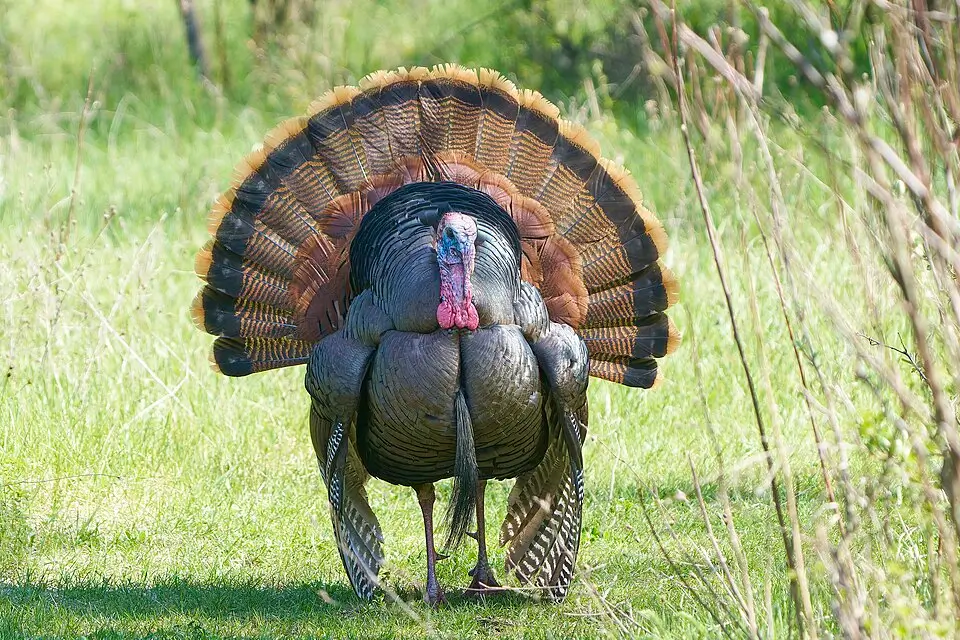
Wild turkeys are immediately recognizable birds. Adult males, known as toms or gobblers, are large, powerfully built birds characterized by their iridescent bronze-green plumage, distinctive fan-shaped tail, featherless red and blue head, and the prominent fleshy appendage called a snood that hangs over the beak. One of the tom's most recognizable features is the beard — a cluster of modified, hair-like feathers projecting from the breast that can grow to considerable length in older birds. During the spring breeding season, toms engage in elaborate strutting displays, fanning their tail feathers, puffing up their body plumage, and producing the iconic gobbling call that resonates through woodlands at dawn.
Adult male wild turkeys can weigh anywhere from roughly 11 to over 24 pounds, making them a substantial bird by any measure. Hens, or female turkeys, are considerably smaller and more cryptically colored in dull brown tones that provide excellent camouflage during the nesting season. This sexual dimorphism is a defining characteristic of the species.
Wild turkeys are notably intelligent birds with keen eyesight and sharp hearing — traits that have made them a prized and challenging quarry for hunters throughout American history. They are highly social animals that typically travel in flocks, with social structures that shift throughout the year depending on the season. During winter, large mixed flocks may form, while spring sees toms competing fiercely for breeding rights and hens going off alone or in small groups to nest and raise their young.
The diet of the wild turkey is omnivorous and opportunistic. These birds forage on the ground for a wide variety of foods including acorns, seeds, berries, insects, small reptiles, and agricultural grains where available. Their ability to shift dietary preferences based on seasonal availability makes them well-suited to a range of environments.
Nesting typically takes place in spring. Hens construct a shallow scrape on the ground, often concealed beneath dense vegetation, and lay clutches that can range from around 10 to 14 eggs on average. The incubation period lasts approximately 28 days, after which the precocial poults hatch and are quickly mobile, following the hen and foraging for insects within hours of hatching. Poult survival in the first weeks of life is heavily influenced by weather conditions and predation pressure, and it plays a critical role in determining annual population trends.
Habitat & Range
The wild turkey is native to North America and portions of Central America, with the species' natural range originally spanning much of the United States, Mexico, and parts of Canada. Six recognized subspecies of Meleagris gallopavo exist, each adapted to particular regional environments. The subspecies most relevant to Wyoming and the broader Mountain West is the Merriam's turkey (Meleagris gallopavo merriami), a bird adapted to ponderosa pine forests and mountain terrain at higher elevations.
Merriam's turkeys are characteristic of the Rocky Mountain region and the high plains that border it. They tend to inhabit areas where ponderosa pine, juniper, and oak scrub intermingle with grassy meadows and stream corridors — exactly the kind of habitat found in parts of Wyoming, particularly in the Black Hills of the northeastern part of the state and in the forested river drainages of the central and western regions.
Wild turkeys depend heavily on a mosaic of habitat types. They require roosting trees — typically large-diameter conifers or hardwoods near water — where they spend the night safe from ground predators. They also need open areas for foraging and displaying, and dense brush or grasslands for nesting cover. The availability of water and mast crops such as pine seeds and acorns is a key factor in determining habitat quality and flock movements throughout the year.
Wyoming's diverse landscape, though challenging in many ways due to its elevation and climate, provides suitable habitat for wild turkeys in select areas. River bottoms lined with cottonwood, willow, and other woody vegetation serve as important travel corridors and winter habitat. The state's ponderosa pine forests, particularly in the northeast, are especially productive turkey country.
Hunting Information
The wild turkey is one of the most sought-after game birds in North America, and for good reason. Hunting turkeys — especially in the spring when lovesick gobblers respond to calls — is widely regarded as one of the most exciting and skill-demanding forms of wingshooting and small-game hunting available to American hunters. Turkey hunting requires patience, woodsmanship, knowledge of animal behavior, and proficiency with a firearm or archery equipment.
Spring turkey hunting, which takes advantage of the breeding season when gobblers are actively responding to calls, is the most popular season across most states. Hunters typically use a variety of friction and mouth calls to mimic the sounds of a receptive hen, drawing toms within range. Fall hunting, which targets both males and females and relies more on locating flocks and either ambushing them or calling scattered birds back together, offers a different and equally rewarding experience.
In Wyoming, the wild turkey is a legal game species and has been successfully established in portions of the state through historical transplanting efforts that benefited from collaborative conservation work between wildlife managers and sportsman organizations. Hunters interested in pursuing wild turkeys in Wyoming should consult the Wyoming Game and Fish Department directly for the most current and accurate information regarding season dates, license requirements, bag limits, and legal hunting units, as regulations are subject to change from year to year. Given the dynamic nature of wildlife management and population assessments, obtaining up-to-date official guidance before heading afield is always the responsible approach.
Whether hunting with a shotgun in the dense pines of the Black Hills or setting up along a river bottom with a bow in hand, Wyoming turkey hunting offers a rewarding challenge in spectacular country.
Conservation
The conservation story of the wild turkey is one of the great wildlife management triumphs of the 20th century. By the early 1900s, unregulated market hunting, widespread habitat loss due to agricultural conversion and deforestation, and a lack of organized wildlife management had reduced wild turkey populations to critically low levels across much of their historical range. Some estimates suggest the continental population had fallen to fewer than 30,000 birds at its lowest point.
The recovery was driven by a combination of science-based management, regulated hunting seasons, habitat restoration, and large-scale trapping and transplanting programs. The National Wild Turkey Federation (NWTF), founded in 1973, became a central force in turkey restoration efforts, working alongside state wildlife agencies to relocate wild-trapped birds to suitable habitats across the country. Today, the continental wild turkey population is estimated in the millions, and the bird has been successfully established in all 49 contiguous states as well as Hawaii.
In Wyoming and across the Mountain West, Merriam's turkey populations are managed as a sustainable and huntable resource. Hunters themselves have been among the most important contributors to turkey conservation, both through license and tag revenues that fund state wildlife programs and through direct participation in habitat improvement projects supported by organizations like the NWTF.
The wild turkey's story is a testament to what thoughtful, science-based wildlife management and the dedication of the hunting and conservation community can achieve. It is a bird worth knowing, worth protecting, and — in the proper season and with the proper licensing — very much worth pursuing.