Overview
Few animals embody the essence of wild, untamed waterways quite like the American mink. Agile, fierce, and endlessly fascinating, this semi-aquatic mustelid has captured the imagination of naturalists, trappers, and wildlife enthusiasts for centuries. Known scientifically as Neogale vison, the American mink is a cornerstone predator of wetland and riparian ecosystems across North America, playing a vital role in maintaining the ecological balance of the habitats it calls home. From the boggy marshes of the eastern seaboard to the cold, rushing streams of the Rocky Mountain West, including those that wind through Wyoming's dramatic landscapes, the American mink is a constant and compelling presence wherever clean water and healthy prey populations exist.
This article explores the biology, habitat, behavior, and hunting traditions associated with the American mink, offering a thorough look at one of North America's most captivating small carnivores. Whether you are a seasoned trapper, a wildlife observer, or simply someone curious about the natural world, understanding the American mink is a rewarding pursuit.
Biological Traits
The American mink is a member of the family Mustelidae, a diverse and successful group of carnivorous mammals that also includes weasels, otters, ferrets, badgers, and wolverines. Within this family, mink are closely related to weasels and share many of their physical and behavioral characteristics, though the mink is notably larger and more water-adapted than most of its relatives.
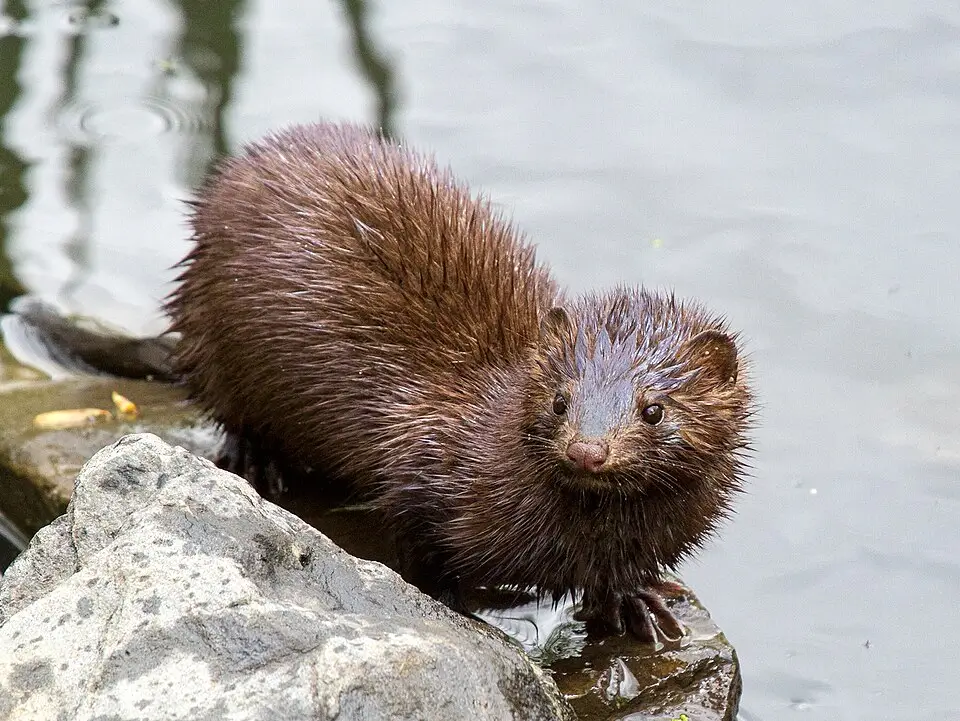
Physically, the American mink is a slender, elongated animal with short legs, a somewhat flattened head, small rounded ears, and a pointed snout. Its coat is one of the most recognizable features of the species — dense, lustrous, and water-repellent, it consists of a soft, thick underfur overlaid with longer, glossy guard hairs. In the wild, American mink typically display a rich, dark brown coloration across most of the body, often with white or cream-colored patches on the chin and throat. This natural coat has, of course, made the mink historically prized in the fur trade.
Like many mustelids, the American mink possesses well-developed anal scent glands capable of producing a strong, musky odor used for territory marking and defense. While not as potent as that of a skunk, mink musk is distinctively pungent and serves as an important form of chemical communication between individuals.
American mink are sexually dimorphic, meaning males are noticeably larger than females. Males typically weigh more and have a longer body length, giving them a competitive advantage in territorial disputes. Both sexes are solitary outside of the breeding season, which generally occurs in late winter and early spring. Mink are induced ovulators, meaning ovulation is triggered by the act of mating itself, and they also exhibit delayed implantation — a fascinating reproductive adaptation in which the fertilized egg does not immediately implant in the uterine wall. This allows the timing of birth to coincide with optimal environmental conditions. Kits are typically born in spring, and litters can range from just a few to nearly a dozen young, though average litters tend to be in the middle of that range.
The senses of the American mink are well-adapted to its predatory lifestyle. It has keen vision, a sharp sense of smell, and quick reflexes that make it an effective hunter of a wide variety of prey. Its diet is notably diverse and opportunistic, reflecting the mink's role as a generalist predator. Common prey items include fish, crayfish, frogs, small mammals such as mice and muskrats, birds, and various invertebrates. This dietary flexibility is one reason the American mink has been so successful across such a broad geographic range.
Mink are also strong swimmers, capable of diving and pursuing fish underwater with considerable skill. Their partially webbed hind feet assist in propulsion, and their dense, oily fur provides excellent insulation even in cold water. On land, they move with a characteristic bounding gait typical of mustelids, capable of traveling considerable distances during nightly foraging excursions.
Habitat & Range
The American mink is found throughout most of North America, ranging from the southern edges of Canada southward through much of the contiguous United States. Its distribution closely tracks the availability of water — streams, rivers, lakes, ponds, marshes, and wetlands of virtually every description can support mink populations, provided there is adequate prey and suitable cover.
The species shows a strong preference for riparian corridors: the strips of vegetated land bordering streams and rivers. Dense bankside vegetation, undercut banks, root tangles, fallen logs, and debris piles all provide the shelter and den sites that mink require. Mink are not particularly tolerant of heavily degraded or polluted waterways, making their presence in a watershed a generally positive indicator of ecosystem health.
In Wyoming, the American mink finds suitable habitat in the state's many rivers, streams, and wetland systems. Wyoming's diverse geography — encompassing the Rocky Mountains, high plains, sagebrush basins, and the headwaters of major river systems including the Green, Snake, and Yellowstone rivers — provides a mosaic of aquatic habitats that can support mink populations in appropriate locations. The cold, clear streams of the mountains and foothills are particularly well-suited to mink, offering abundant prey in the form of fish, crayfish, and small mammals along the banks.
Wyoming is the least populous state in the United States, with an estimated population of just 587,618 residents as of 2024, and much of its vast landscape remains wild and relatively undisturbed. This low human footprint means that many of Wyoming's riparian and wetland habitats retain the ecological integrity that mink and other sensitive wildlife species require. The state capital, Cheyenne, sits at the southeastern corner of the state, far from many of Wyoming's most pristine wilderness areas, where wild creatures like the American mink continue to thrive largely undisturbed.
Hunting and Trapping Information
The American mink has a long and storied history in the North American fur trade. For centuries, both Indigenous peoples and European settlers prized mink pelts for their warmth, durability, and beauty. The mink fur trade played a significant role in the economic development of many frontier regions, and trapping for mink remains a traditional outdoor pursuit practiced by many hunters and trappers today.
Modern mink trapping typically employs a variety of methods, including foothold traps, body-grip traps (such as Conibear-style traps), and cage traps set along waterways, near den entrances, or at locations where sign — such as tracks, scat, or prey remains — indicates regular mink activity. Successful mink trapping requires a thorough understanding of the animal's habits, habitat preferences, and daily movements, making it a genuinely skillful endeavor that rewards careful observation and experience.
In Wyoming, hunting and trapping are deeply embedded in the cultural and outdoor heritage of the state. Wyoming's wildlife resources are managed by the Wyoming Game and Fish Department, which oversees trapping seasons and regulations for furbearing animals including the American mink. However, specific season dates, license requirements, and trapping regulations for American mink in Wyoming were not available in the source data consulted for this article. Anyone interested in trapping American mink in Wyoming is strongly encouraged to consult the Wyoming Game and Fish Department directly and to review the most current version of the Wyoming Trapping Regulations for accurate, up-to-date information on legal seasons, bag limits, licensing requirements, and any applicable restrictions.
It is worth noting that responsible and ethical trapping practices are important for the long-term sustainability of mink populations and the health of the broader ecosystem. Modern wildlife management principles emphasize harvesting practices that maintain healthy, sustainable populations, and Wyoming's game management framework reflects these conservation values.
Conservation
The American mink is currently classified as a species of least concern by the International Union for Conservation of Nature (IUCN), reflecting the fact that its populations across North America remain broadly healthy and widespread. Unlike some of its mustelid relatives — most notably the critically endangered black-footed ferret — the American mink has demonstrated considerable resilience and adaptability in the face of human landscape change.
That said, the American mink is not without its ecological challenges. Wetland loss and degradation, water pollution, and the alteration of riparian habitats through agricultural practices, channelization, and development can all negatively affect local mink populations. Clean water is essential not only for mink directly, but also for the fish, crayfish, and other prey species that mink depend upon. Conservation efforts that protect and restore wetlands, maintain riparian buffers, and improve water quality therefore benefit mink along with a broad suite of other wildlife.
An interesting conservation dimension of the American mink story involves its status in parts of Europe. The American mink was introduced to Europe through the fur farming industry in the twentieth century, and escaped or released individuals established feral populations in many countries. In some regions, these invasive mink populations have had significant impacts on native wildlife, particularly ground-nesting birds and the native European mink (Mustela lutreola), a critically endangered species. This situation underscores the importance of responsible wildlife management and the care that must be taken when any species is introduced — deliberately or accidentally — outside its native range.
Within its native North American range, the American mink remains a vibrant and important part of healthy wetland and riparian ecosystems. Its role as a mid-level predator helps regulate populations of fish, amphibians, and small mammals, contributing to the ecological balance of the waterways it inhabits. For wildlife enthusiasts and outdoor adventurers in Wyoming and across the continent, the American mink represents one of nature's most elegantly adapted and endlessly intriguing predators.