Overview
Few animals in North America are as instantly recognizable — or as universally respected — as the striped skunk (Mephitis mephitis). With its bold black-and-white coloration and legendary chemical defense, the striped skunk occupies a unique and fascinating place in the continent's wildlife tapestry. Whether encountered along a woodland trail, spotted foraging at dusk in a meadow, or observed making its unhurried way across a rural Wyoming road, the striped skunk commands attention and respect in equal measure.
Despite its reputation, the striped skunk is a remarkably interesting mammal that plays a meaningful role in the ecosystems it inhabits. It is one of the most widespread members of the family Mephitidae — the skunk family — and its range extends from southern Canada through the contiguous United States and into northern Mexico. In states like Wyoming, where wide-open landscapes, diverse elevation zones, and a rich mosaic of habitats converge, the striped skunk is a well-established and ecologically important resident.
This article takes an in-depth look at the biology, behavior, habitat preferences, hunting traditions, and conservation status of the striped skunk, with particular attention to its presence in the great state of Wyoming.
Biological Traits
The striped skunk (Mephitis mephitis) belongs to the family Mephitidae and is one of the most distinctive mammals in North America. Its scientific name, Mephitis mephitis, is derived from the Latin word for a noxious or poisonous gas — a fitting tribute to the animal's most famous attribute.
Appearance
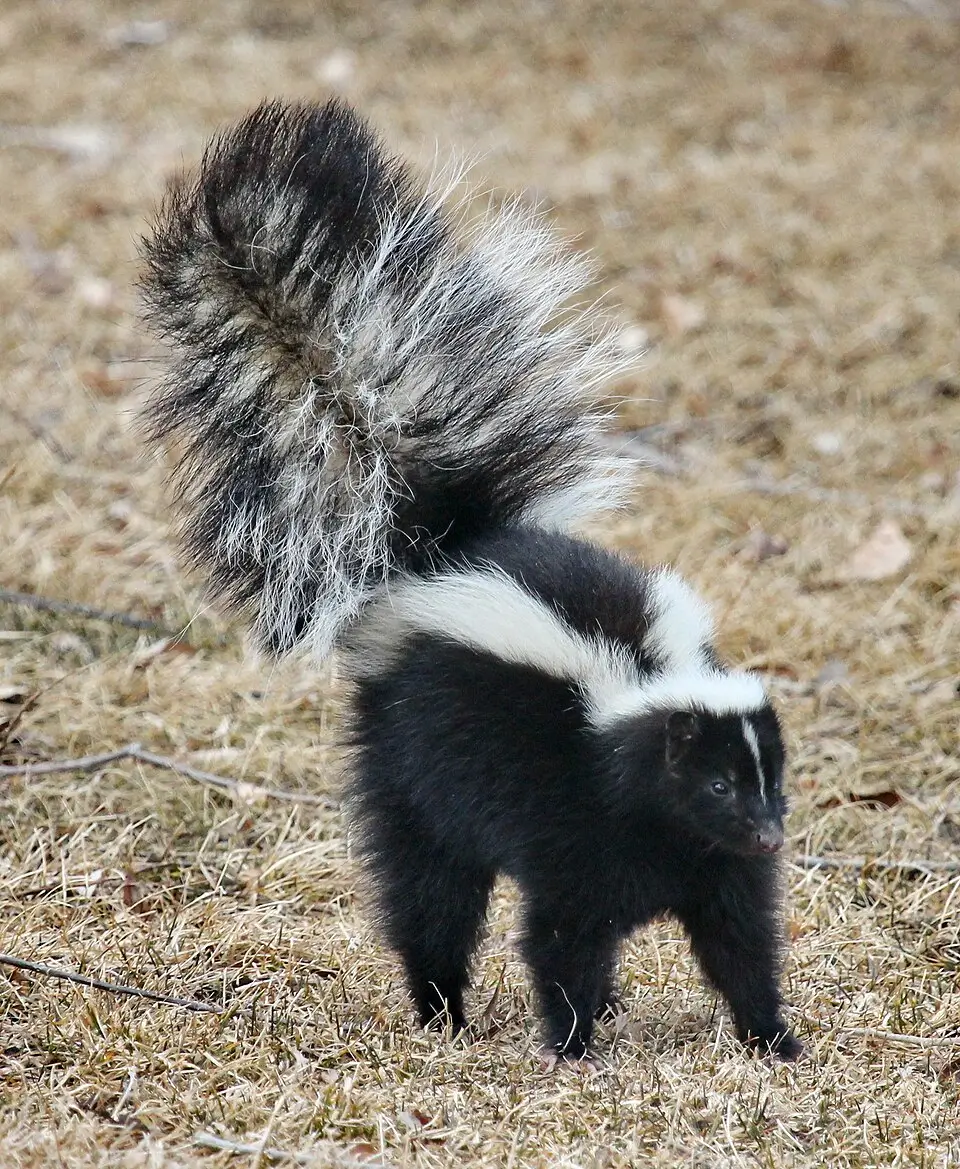
The striped skunk is a medium-sized mammal, roughly the size of a domestic cat. Its most immediately striking feature is its coloration: a glossy black coat adorned with two prominent white stripes that run from the top of the head down the back toward the tail. The pattern can vary somewhat between individuals — some skunks display broader or narrower stripes, and the extent of white on the tail may differ — but the general design is consistent across the species. A white stripe often runs from the snout up to the forehead, lending the animal a distinctive facial appearance.
The striped skunk has a compact, stocky body with short legs and prominent, strong claws well-suited for digging. Its bushy, full tail is another recognizable feature and is often held erect as a warning signal when the animal feels threatened.
The Famous Defense Mechanism
The striped skunk's chemical defense is one of the most effective in the animal kingdom. Specialized scent glands located beneath the tail produce a sulfur-containing compound known as n-butyl mercaptan (thiol). When threatened, a skunk can accurately spray this potent liquid at distances of up to 10 feet or more, and the odor can be detected far beyond that range. Before spraying, a skunk typically issues clear warnings — stamping its front feet, raising its tail, and even performing a brief handstand in some species — giving potential predators ample opportunity to retreat.
This defense mechanism is so effective that most natural predators learn to avoid skunks. The great horned owl (Bubo virginianus) is one of the few predators that regularly preys on skunks, largely because birds have a poorly developed sense of smell.
Diet and Foraging Behavior
Striped skunks are omnivores with broad and opportunistic diets. They consume insects — including grubs, beetles, and grasshoppers — small mammals, bird eggs, berries, fruits, roots, and carrion. Their strong, curved claws make them adept diggers, and they are often found excavating soil in search of grubs and earthworms. This digging behavior, while occasionally frustrating to homeowners, plays a role in aerating soil and controlling insect populations.
Skunks are primarily nocturnal, doing most of their foraging between dusk and dawn. They have relatively poor eyesight but compensate with a well-developed sense of smell that guides them to food sources.
Reproduction and Life Cycle
Striped skunks typically breed in late winter, with births occurring in spring. Litters commonly consist of four to seven young, known as kits. The young are born helpless but develop quickly, and by late summer they are generally capable of independent living. Females are the primary caregivers, raising the young through the critical early weeks of life.
Skunks are not true hibernators, but in colder regions — including much of Wyoming — they enter a state of winter torpor during the coldest months, retreating to dens and significantly reducing their activity levels until milder temperatures return.
Lifespan
In the wild, striped skunks typically live two to three years, though individuals in favorable conditions may survive longer. Predation, vehicle strikes, and disease are among the most common causes of mortality.
Habitat & Range
The striped skunk is one of the most adaptable mammals in North America, thriving across a remarkable variety of habitats. It is found throughout most of the contiguous United States, much of southern Canada, and into northern Mexico. This broad distribution reflects the species' dietary flexibility and tolerance for a wide range of environmental conditions.
Preferred Habitat Types
Striped skunks tend to favor habitat edges — areas where different habitat types meet, such as forest margins, grassland-woodland transitions, and the borders of agricultural land. They are commonly found in open woodlands, brushy areas, grasslands, farmland, suburban neighborhoods, and riparian corridors. They generally avoid dense, unbroken forest and extremely arid desert environments, though they can persist in semi-arid scrubland if water and food are available.
Den sites are typically located in burrows excavated by other animals, beneath rock piles, under stumps, or in hollow logs. Skunks will also den beneath buildings and outbuildings in areas where human development provides suitable cover.
Wyoming
In Wyoming — the tenth-largest state by area and a landscape defined by its dramatic topography and ecological diversity — the striped skunk is a common and widespread resident. From the high plains and sagebrush steppe of the east and southeast to the river valleys, foothills, and lower mountain slopes of the west, skunks make use of the wide variety of habitats the state provides. Wyoming's mix of agricultural land, riparian zones, prairie grasslands, and mixed shrubland is particularly well-suited to striped skunk habitat preferences.
Wyoming's vast and sparsely populated landscapes — the state is the least populous in the nation, with an estimated population of just 587,618 as of 2024 — mean that large swaths of prime skunk habitat remain intact and minimally disturbed. This undoubtedly supports healthy skunk populations across much of the state.
Hunting Information
The striped skunk has a modest but genuine history as a furbearer in North American trapping and hunting traditions. Historically, skunk pelts were harvested and sold in the fur trade, and skunk trapping remains a legal activity in many states and provinces across North America.
In Wyoming, specific hunting and trapping seasons, licensing requirements, and regulations for striped skunks are best confirmed directly with the Wyoming Game and Fish Department, as official season information was not available in the source data used for this article. Wyoming's game and fish agency is the authoritative source for current, accurate regulatory information.
Hunters and trappers interested in pursuing striped skunks in Wyoming should consult the Wyoming Game and Fish Department's official resources prior to the season. Regulations can change from year to year, and it is always the responsibility of the individual hunter or trapper to ensure they are in full compliance with current state law.
Trapping Traditions
Historically, the striped skunk was a valued furbearer in the North American fur trade. Skunk fur, sometimes marketed under alternate names, was used in garments and accessories during the height of the fur trade era. While the commercial demand for skunk fur has diminished in modern times, recreational trapping of skunks continues in many states as a component of furbearer management and wildlife tradition.
Trappers pursuing skunks typically use cage traps or body-gripping traps, and careful handling is obviously essential given the animal's defensive capabilities. Experienced trappers are well-versed in techniques that minimize the likelihood of being sprayed.
Pest Management
Beyond recreational hunting and trapping, striped skunks are also managed in the context of wildlife conflict situations. Skunks denning beneath homes, raiding poultry operations, or causing damage to lawns and gardens are occasionally dealt with through humane trapping and relocation or lethal control, typically carried out by licensed wildlife control professionals or landowners operating within state guidelines.
Conservation
The striped skunk is currently classified as a species of Least Concern by the International Union for Conservation of Nature (IUCN), reflecting its wide distribution and generally stable population across its range. The species has demonstrated considerable resilience to human modification of the landscape and, in many areas, has benefited from the edge habitats and food availability associated with agricultural and suburban development.
Striped skunks play an important ecological role as both predator and prey. Their consumption of large quantities of insects — including agricultural pests — provides a natural pest control service. They also serve as prey for larger predators, including great horned owls, coyotes, bobcats, and pumas, integrating them into food webs at multiple levels.
One conservation consideration associated with skunks is their role as a major wildlife reservoir for rabies in North America. Skunks are among the primary wild carriers of rabies, and wildlife health professionals monitor skunk populations as part of broader rabies surveillance and management efforts. This does not diminish the ecological value of the species but underscores the importance of responsible wildlife management and public education.
In Wyoming and across the West, responsible trapping regulations, habitat conservation, and ongoing wildlife management work together to ensure that striped skunk populations remain healthy and ecologically functional for generations to come.
Conclusion
The striped skunk (Mephitis mephitis) is far more than the punchline of a familiar joke. It is a resilient, adaptable, and ecologically significant mammal that has thrived across North America for millennia. From the sagebrush flats and river bottoms of Wyoming to farmland edges and suburban greenbelts across the continent, the striped skunk continues to fill its ecological niche with characteristic confidence.
For outdoor enthusiasts, hunters, trappers, naturalists, and wildlife watchers, the striped skunk offers a rewarding subject of study and a reminder that the wild world — even in its most familiar forms — is endlessly interesting. Wyoming's expansive and largely undeveloped landscapes provide outstanding habitat, ensuring that this iconic black-and-white mammal will remain a fixture of the Western wilderness for years to come.