Overview
Few birds capture the imagination of upland hunters and wildlife enthusiasts quite like the ruffed grouse. Known scientifically as Bonasa umbellus, this remarkable bird is one of North America's most beloved and widely distributed game birds. Whether you encounter one exploding from a dense thicket with a thunderous burst of wings or hear the distinctive drumming of a male echoing through a hardwood forest on a crisp spring morning, the ruffed grouse leaves a lasting impression on anyone fortunate enough to experience it in the wild.
The ruffed grouse occupies a special place in the cultural and sporting heritage of North America. It has inspired generations of hunters, birders, and naturalists, earning a devoted following unlike perhaps any other upland bird. Often referred to as the "king of game birds" by its most passionate admirers, the ruffed grouse demands respect — both for its wildness and for the challenging, often demanding terrain it calls home. For hunters and wildlife observers in states like Wyoming and across the broader American West, understanding this species is the first step toward appreciating just how remarkable it truly is.
This guide explores the biology, habitat, hunting traditions, and conservation status of the ruffed grouse, providing a comprehensive overview of one of North America's most iconic woodland birds.
Biological Traits
The ruffed grouse (Bonasa umbellus) is a medium-sized bird belonging to the family Phasianidae, which also includes turkeys, pheasants, and other grouse species. It is a member of the subfamily Tetraoninae, commonly referred to as the grouse subfamily, which is characterized by feathered nostrils and legs adapted for cold-weather survival.
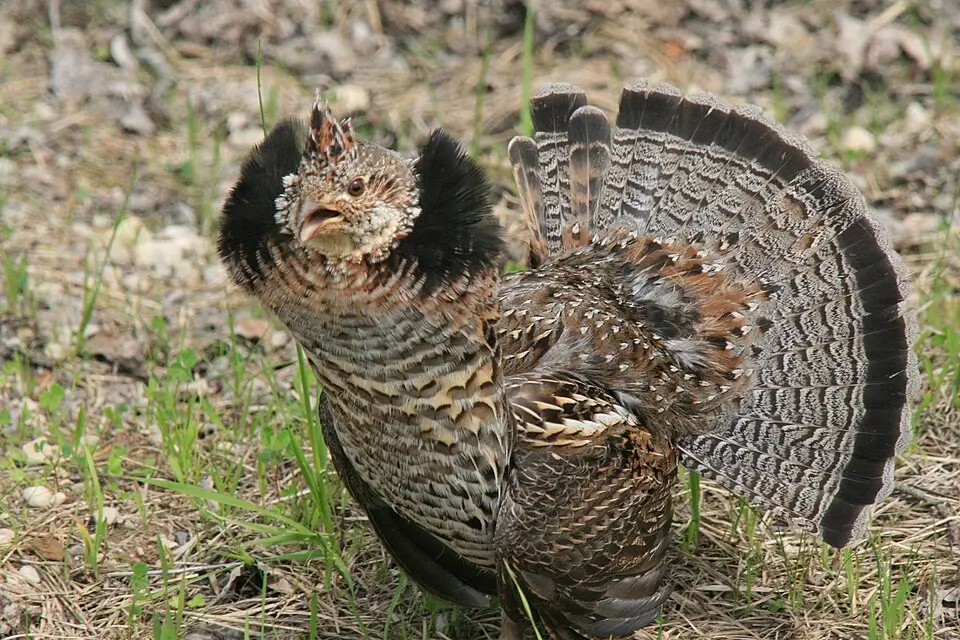
One of the most distinctive features of the ruffed grouse is its namesake "ruff" — a cluster of dark, iridescent feathers located on the sides of the neck. These feathers are typically more prominent in males and are erected during courtship displays, giving the bird a striking, dramatic appearance. The species name umbellus is derived from the Latin word for "umbrella" or "shade," a likely reference to this dramatic neck ruff.
Ruffed grouse display two primary color morphs: a gray phase and a brown (or rufous) phase. Gray-phase birds tend to be more common in northern populations, while brown-phase birds are more frequently observed in southern and Appalachian populations. Both color morphs feature beautifully complex barred and mottled plumage patterns that provide exceptional camouflage in the dappled light of their forest habitat.
One of the most fascinating behaviors of the ruffed grouse is the male's "drumming" display. Unlike most birds that attract mates through vocalizations, male ruffed grouse beat their wings rapidly while perched on a log or elevated surface, creating a deep, resonating thumping sound that starts slowly and accelerates into a rapid blur. This drumming sound can carry remarkable distances through forest environments and serves both to attract females and to establish territorial boundaries with rival males.
The feet of the ruffed grouse also undergo a remarkable seasonal adaptation. In winter, the birds grow comb-like projections called pectinations along the sides of their toes. These structures act essentially like snowshoes, distributing the bird's weight more evenly over snow and allowing them to walk across soft snow with surprising ease. This adaptation is a hallmark of northern grouse species and underscores the remarkable evolutionary refinement of this bird.
Ruffed grouse are also known for their ability to dive beneath the snow surface and roost in snow burrows during extreme cold. Snow provides excellent insulation, and temperatures inside a snow burrow can be dramatically warmer than ambient air temperatures, allowing the birds to conserve critical energy during harsh winter conditions.
Habitat & Range
The ruffed grouse is one of the most widely distributed upland game birds in North America. Its range extends from Alaska and Canada in the north, southward through the Appalachian Mountains into Georgia, and westward through portions of the Great Lakes region and into the Northern Rocky Mountains. The species thrives in young to mid-successional mixed forests, where a diverse mix of hardwoods, conifers, and brushy understory provides ideal feeding and cover conditions.
Aspen groves are particularly important habitat for ruffed grouse across much of their range. The catkins and buds of aspen trees serve as a critical winter food source, allowing grouse to survive periods of deep snow when other foods are inaccessible. In addition to aspens, ruffed grouse rely on a wide variety of plant foods throughout the year, including berries, leaves, insects (especially for chicks), and the buds and catkins of numerous tree species.
Dense forest edges, alder thickets, and areas of forest regeneration following disturbances such as timber harvesting or wildfire are especially valuable to ruffed grouse. These early successional habitats provide the combination of dense overhead cover for protection from aerial predators and diverse food resources that the species requires.
In Wyoming, ruffed grouse are found in suitable forested habitats, particularly in the northeastern portions of the state and in areas along the Rocky Mountain corridor where aspen groves and mixed woodland communities exist. Wyoming's diverse topography — ranging from high mountain forests to foothills and river valleys — provides pockets of suitable ruffed grouse habitat, though the species is not as abundant here as in the Upper Midwest or the Appalachians. Hunters and wildlife enthusiasts in Wyoming seeking ruffed grouse should focus their efforts on riparian corridors lined with aspen and alder, as well as forested hillsides with dense understory vegetation.
Hunting Information
The ruffed grouse holds a cherished place in the traditions of upland bird hunting. Hunting ruffed grouse is considered by many experienced hunters to be among the most demanding and rewarding forms of upland sport. The birds are notoriously difficult to approach and flush unpredictably, bursting from cover with an explosive wingbeat that can startle even the most experienced hunters. Their preference for dense cover means that shots are often taken at close range through heavy vegetation, requiring quick reflexes and instinctive shooting.
Hunting ruffed grouse is traditionally done on foot, often with a flushing or pointing dog. Well-trained dogs, particularly setters, spaniels, and pointing breeds, are invaluable tools for locating and flushing grouse from dense cover. The close working style required by ruffed grouse habitat places a premium on dogs that work within range and can handle heavy brush.
In Wyoming, ruffed grouse hunting exists within the broader context of the state's rich upland hunting heritage. Wyoming's vast public lands provide access to remote forested areas where grouse populations exist. Hunters interested in pursuing ruffed grouse in Wyoming should consult the Wyoming Game and Fish Department for current season dates, bag limits, and licensing requirements, as regulations can change from year to year. Always verify the most up-to-date information through official state wildlife agency channels before heading afield.
Shotguns in 20-gauge or 12-gauge configurations are the most common choices for ruffed grouse hunting, with open chokes such as improved cylinder or skeet preferred for the close-range, dense-cover shots that characterize grouse hunting. Light loads of small shot — typically No. 7½ or No. 8 — are well suited to this type of hunting.
Conservation
The ruffed grouse is currently considered a species of least concern from a global conservation standpoint, though populations can fluctuate significantly due to natural cycles, habitat changes, and weather patterns. One of the most well-documented ecological phenomena associated with this species is its roughly ten-year population cycle, particularly prominent in northern populations. These cycles are driven by complex interactions between grouse populations, their food resources, and predator communities.
Habitat management is the cornerstone of ruffed grouse conservation. Because the species depends heavily on young, brushy forest and early successional habitat, forest management practices that create or maintain these habitat types are critically important. Organizations such as the Ruffed Grouse Society have been instrumental in advocating for and funding habitat improvement projects across the species' range.
In Wyoming and the broader Rocky Mountain West, preserving aspen groves — which face pressure from overgrazing, succession to conifer-dominated forest, and other factors — is particularly important for sustaining local ruffed grouse populations. Efforts to manage and restore aspen communities benefit not only grouse but a wide range of wildlife species that depend on this ecologically rich habitat type.
Hunters themselves have historically played a vital role in grouse conservation, contributing through license fees and excise taxes on sporting equipment that fund state wildlife management programs. This model of conservation, rooted in the North American Wildlife Conservation Model, ensures that game species like the ruffed grouse continue to thrive for future generations.