Overview
Few animals capture the human imagination quite like the red fox. With its flame-bright coat, bushy tail, and keen, intelligent eyes, Vulpes vulpes has earned a prominent place in folklore, literature, and the cultural consciousness of civilizations across the world. From the trickster figures of Native American traditions to the clever characters of European fables, the red fox has long been recognized as one of nature's most resourceful and adaptable creatures. But beyond its symbolic resonance, the red fox is a genuinely remarkable animal — a highly successful predator and omnivore that has managed to thrive across an extraordinary range of environments on nearly every continent on Earth.
In Wyoming, this charismatic canid finds itself right at home. The state's vast open landscapes, rolling sagebrush plains, mountain meadows, river corridors, and agricultural edges provide an ideal patchwork of habitats for red foxes to hunt, den, and raise their young. Wyoming, the tenth-largest state in the nation by area and home to some of the most spectacular wild country in the American West, offers outdoor enthusiasts and wildlife observers countless opportunities to encounter this elegant and endlessly fascinating animal. Whether you are a hunter, a naturalist, or simply someone who appreciates the wild spirit of the American West, the red fox rewards close attention.
Biological Traits
The red fox, Vulpes vulpes, belongs to the family Canidae — the same family that includes wolves, coyotes, domestic dogs, and other foxes. It is the largest of the true foxes, a group distinguished from other canids by their smaller size, longer, bushier tails, and more cat-like behavioral traits. The red fox is scientifically classified as follows:
- Kingdom: Animalia
- Phylum: Chordata
- Class: Mammalia
- Order: Carnivora
- Family: Canidae
- Genus: Vulpes
- Species: Vulpes vulpes
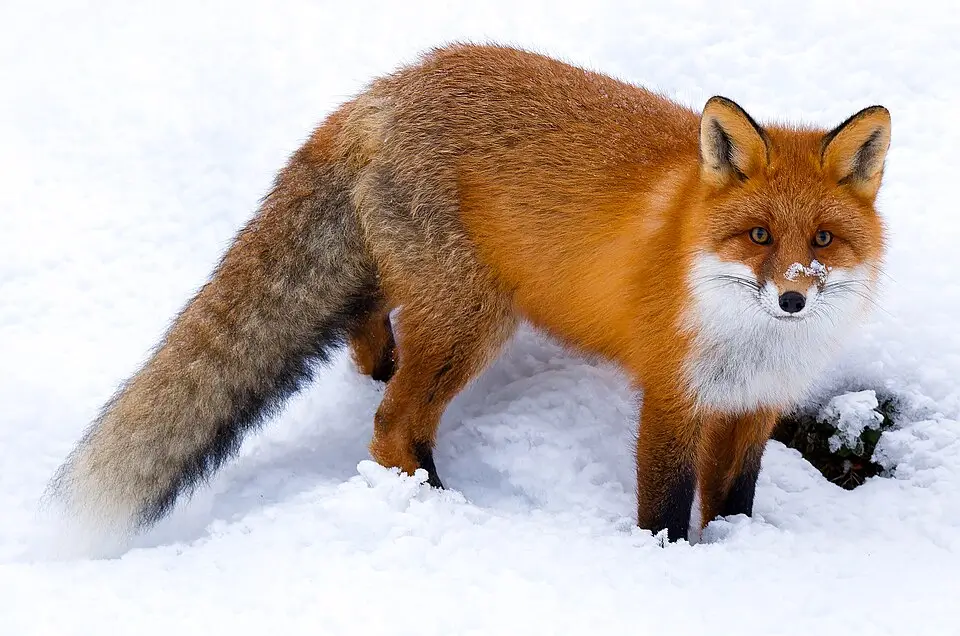
The most immediately recognizable feature of the red fox is its coat. The typical coloration is a rich, rusty red across the back and flanks, with white or pale underbelly fur, black legs and feet, and a long, full tail — called a brush — that usually features a distinctive white tip. However, red foxes are notably variable in coloration, and several color morphs are well documented. The "cross fox" displays a darker, brownish coat with a cross-shaped pattern of darker fur across the shoulders. The "silver fox" is a melanistic form with a predominantly black or dark grey coat highlighted with silver-tipped guard hairs. These color variations are not separate species but simply naturally occurring genetic variations within Vulpes vulpes.
Red foxes possess a suite of physical adaptations that make them exceptional hunters. Their large, upright, highly mobile ears can swivel independently, allowing them to pinpoint sounds with impressive precision — an ability that is critically important when hunting small mammals beneath grass or snow. Their vertical, slit-like pupils provide excellent low-light vision, enhancing their effectiveness as crepuscular and nocturnal hunters. Their long, slender muzzle houses a keen sense of smell, and their light, agile build allows for both sustained travel and explosive short bursts of speed when pursuing prey.
As omnivores, red foxes maintain an extraordinarily diverse diet. Small mammals — particularly voles, mice, rabbits, and ground squirrels — form the backbone of their nutrition in most environments. They also consume birds, eggs, insects, earthworms, berries, fruits, carrion, and occasionally larger prey when the opportunity arises. This dietary flexibility is one of the primary reasons the red fox has succeeded so broadly across such a wide array of ecosystems.
Red foxes are largely solitary hunters, though they are not truly solitary animals. They form bonded pairs that typically mate for life, and a mated pair will cooperate during the denning season to raise their young. The breeding season generally occurs in late winter, with a gestation period of approximately 52 days. Litters typically consist of four to six kits, though larger litters are not uncommon. Kits are born blind and helpless but develop rapidly, beginning to emerge from the den at around four weeks of age and typically dispersing from the family group by autumn.
Habitat & Range
Vulpes vulpes holds the distinction of having the widest natural distribution of any land carnivore on Earth. Native populations span North America, Europe, Asia, and North Africa, and the species has been successfully introduced to Australia, where it is now well established. This extraordinary geographic range is a testament to the red fox's unparalleled adaptability.
Within North America, red foxes occupy habitats as varied as arctic tundra, temperate forests, coastal marshes, tallgrass prairies, high alpine meadows, and suburban neighborhoods. They are notably comfortable at the edges of human settlement, where fragmented landscapes create the kind of habitat diversity — open hunting grounds interspersed with sheltered denning sites — that foxes exploit with ease.
In Wyoming specifically, red foxes are found throughout the state, though their distribution is influenced by elevation, prey availability, and competition with other predators. The state's diverse topography — which ranges from high-elevation mountain ranges like the Tetons, the Wind Rivers, and the Bighorns down through river valleys, sagebrush basins, and grass prairies — supports a healthy red fox population. At higher elevations in mountainous terrain, red foxes may overlap in range with their close relative, the native montane-adapted swift fox (Vulpes velox), and with coyotes, which are dominant competitors in many Wyoming landscapes. Red foxes tend to thrive particularly well in transitional zones — where forests meet meadows, or where agricultural land borders natural cover — because these edge habitats concentrate the prey species that foxes favor.
Hunting Information
The red fox has a long and respected tradition as a game and furbearer species across North America. Hunters and trappers have pursued the red fox for centuries, both for its beautiful fur and for the challenge and skill that fox hunting demands. Red fox fur has historically been prized in the fur trade for its exceptional quality and warmth, and the species continues to be legally harvested in many states today.
In Wyoming, the red fox is classified as a furbearer, and hunting and trapping regulations for furbearers are managed by the Wyoming Game and Fish Department. As with all hunting and trapping activities in Wyoming, prospective hunters and trappers should consult the most current Wyoming Game and Fish Department regulations before taking to the field, as seasons, methods, and licensing requirements can change from year to year. At the time of this writing, specific current season dates and license requirements for red fox in Wyoming were not available in the source data consulted for this article, and readers are strongly encouraged to verify current rules directly with the Wyoming Game and Fish Department.
What is well established is that Wyoming's wide-open landscapes, low human population density — the state is the least populous in the nation, with an estimated population of just 587,618 as of 2024 — and abundant wild habitat make it an appealing destination for hunters and trappers with an interest in pursuing red fox. Hunters typically pursue fox using methods including calling, which exploits the fox's curiosity and predatory instincts, as well as spot-and-stalk techniques in open country. Trapping remains a traditional and effective method for harvesting red fox, with various trap styles permitted depending on current regulations.
For those who pursue fox for sport and fur, the challenge is considerable. Red foxes are alert, wary animals with sharp senses, and successfully calling or locating a mature fox in open Wyoming terrain demands patience, practiced field craft, and a thorough understanding of the animal's habits and habitat preferences.
Conservation
The red fox is currently classified by the International Union for Conservation of Nature (IUCN) as a species of Least Concern, reflecting its broad distribution, large overall population, and high adaptability. Unlike many wildlife species that have declined in the face of human land use changes, the red fox has in many respects benefited from agricultural development and the fragmentation of landscapes, which create the edge habitats it favors.
In Wyoming, the red fox is managed as a furbearer by the Wyoming Game and Fish Department, which works to ensure that harvest levels remain sustainable and that population health is maintained over time. Responsible hunters and trappers play an important role in this management framework, serving as both harvesters and as a source of valuable field data that wildlife managers use to monitor population trends.
It is worth noting that the relationship between native red fox populations in the western United States and the non-native red foxes introduced from Europe in earlier centuries remains an area of ongoing scientific interest. Research has explored the extent to which native montane red fox populations remain genetically distinct from introduced lowland populations, and conservation efforts in some areas have focused on protecting the genetic integrity of native lineages.
For the wildlife observer, photographer, or hunter, the red fox remains one of Wyoming's most exciting and rewarding wild species to pursue — a creature of grace, intelligence, and remarkable adaptability that embodies the wild spirit of the American West.