Overview
Few animals embody the wild spirit of the American West quite like the pronghorn (Antilocapra americana). Swift, striking, and uniquely adapted to the vast open landscapes of North America, the pronghorn is a creature unlike any other on Earth. Often mistakenly called an "antelope" — and widely referred to as such across the West — the pronghorn is not a true antelope at all. It is, in fact, the sole surviving member of the family Antilocapridae, a lineage that stretches back millions of years on the North American continent. This remarkable animal is a living relic of the Pleistocene era, a time when the Great Plains teemed with predators fast enough to push the evolution of extraordinary speed. Today, the pronghorn stands as an icon of the American wilderness, celebrated by wildlife enthusiasts, photographers, and hunters alike.
Wyoming, one of the most sparsely populated states in the nation — home to an estimated 587,618 people as of 2024 — is arguably the heartland of pronghorn country. The state's sweeping sagebrush flats, open grasslands, and wide-open spaces provide ideal habitat for these animals. Wyoming consistently supports one of the largest pronghorn populations in the world, making it a premier destination for anyone hoping to observe or pursue this extraordinary species.
Biological Traits
The pronghorn (Antilocapra americana) is a study in evolutionary excellence. Its scientific name translates roughly to "American goat-antelope," reflecting the long-standing taxonomic debate over its classification. While it superficially resembles the antelopes of Africa and Asia, the pronghorn belongs to an entirely separate evolutionary lineage found only in North America.
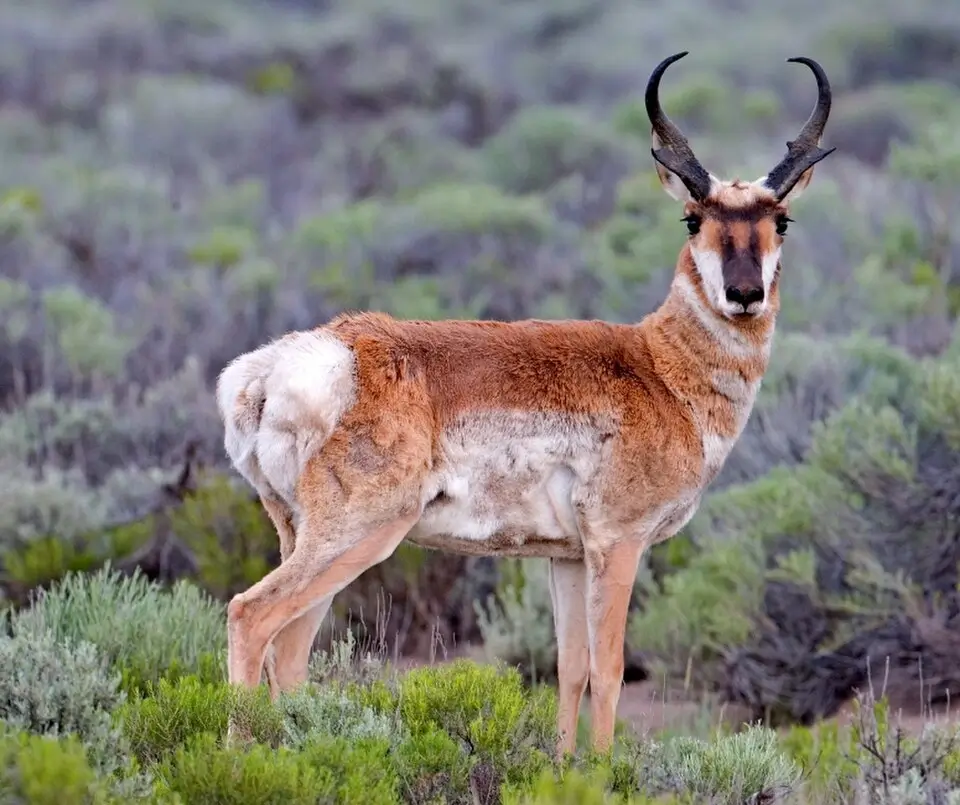
One of the most immediately recognizable features of the pronghorn is its coloration. The animal sports a rich tan or reddish-brown coat on its back and sides, contrasted sharply by white on its belly, rump, chest, and lower sides. Males display prominent black markings on the face and neck, lending them a distinguished appearance. Both males and females possess horns — another trait that sets the pronghorn apart from most other horned animals. While deer grow antlers that are shed and regrown annually, and true antelopes grow permanent horns with no branching, the pronghorn grows a unique pronged horn sheath over a bony core. These sheaths are shed annually, much like antlers, but the bony core remains. The forward-pointing prong that gives the animal its common name is a distinctive feature, especially prominent in males.
Males, known as bucks, are generally larger than females (does), though both sexes are built for speed and endurance. The pronghorn's body is a marvel of aerodynamic and physiological engineering. It possesses a large windpipe, heart, and lungs relative to its body size, allowing it to sustain high oxygen consumption over long distances. Its legs are long and slender, and its hooves are padded and cushioned to absorb the impact of running at speed. Perhaps most impressively, the pronghorn is the fastest land animal in the Western Hemisphere and the second fastest in the world, capable of reaching speeds approaching 55 miles per hour. Unlike the cheetah — the world's fastest land animal — the pronghorn can maintain high speeds over extended distances, a trait thought to have evolved in response to now-extinct predators such as the American cheetah and other Pleistocene megafauna.
The pronghorn's eyes are another notable feature. Set wide on the sides of the head and roughly the size of a horse's eyes relative to skull size, they provide a panoramic field of vision that is excellent for detecting predators at great distances. This wide-angle view, combined with the pronghorn's speed, makes it one of the most alert and elusive animals on the continent.
Pronghorn are social animals, typically forming herds that vary in size seasonally. During summer, smaller groups are common, while large aggregations may form during the fall and winter months. They are migratory in many parts of their range, undertaking seasonal movements between summer and winter grounds that can span significant distances. In fact, one of the longest land migrations in the continental United States involves pronghorn traveling through Wyoming's Upper Green River Basin — a journey that underscores the importance of maintaining open, connected landscapes for this species.
Habitat and Range
The pronghorn is a creature of open country. It thrives in the grasslands, sagebrush steppe, and semi-arid shrublands that characterize much of the American West and portions of Canada and Mexico. Unlike many ungulates that rely on forests or dense cover for safety, the pronghorn's primary defense strategy is detection and speed — and both work best in wide-open terrain where it can see threats from great distances and outrun them with ease.
The historical range of the pronghorn once covered a vast swath of North America, from southern Canada through the Great Plains and into northern Mexico. While this range has contracted somewhat from its historical extent, pronghorn remain well-distributed across suitable habitats in the western United States. States including Wyoming, Montana, Nevada, Colorado, New Mexico, and others support healthy populations.
Wyoming, in particular, is a stronghold for the species. The state's combination of high-elevation grasslands, sagebrush basins, and relatively low human population density — Wyoming is the least populous state in the nation despite being the tenth-largest by area — creates conditions that are close to ideal for pronghorn. The wide open spaces that make Wyoming feel remote and undeveloped to human visitors are, for the pronghorn, simply home.
The animals require access to water, particularly in arid regions, and they are known to travel considerable distances to find it. They are also highly dependent on the connectivity of their habitat — fences, roads, and other human infrastructure can pose significant challenges to their movement, particularly during seasonal migrations.
Hunting Information
The pronghorn is one of the most sought-after big game animals in the American West, and Wyoming is widely regarded as one of the finest destinations in North America for pronghorn hunting. The state's enormous tracts of public land, combined with its robust pronghorn population, create outstanding opportunities for hunters of all experience levels.
Hunting pronghorn is a pursuit that demands patience, glassing skills, and an appreciation for wide-open spaces. Because pronghorn rely on their eyesight as their primary defense, spot-and-stalk hunting is the most common method employed. Hunters typically use binoculars and spotting scopes to locate animals from elevated positions or road pullouts before planning a careful stalk across the open terrain. Given the pronghorn's exceptional eyesight and the open nature of its habitat, successful stalks require careful attention to wind direction, terrain features, and slow, deliberate movement.
Archery hunters face a particularly exhilarating challenge when pursuing pronghorn, as getting within bow range of an animal with such keen eyesight and a habit of living in open ground requires considerable skill and creativity. Techniques such as using natural terrain features for concealment, constructing ground blinds near water sources or travel corridors, and using decoys are all employed by bowhunters pursuing pronghorn.
Rifle hunters enjoy somewhat greater flexibility in terms of effective range, but the hunt remains a rewarding exercise in fieldcraft. Reading pronghorn behavior, understanding their daily movement patterns, and making precise shots at potentially long distances are all part of the experience.
It is important for anyone planning a pronghorn hunt in Wyoming to consult the Wyoming Game and Fish Department directly for the most current licensing requirements, season dates, and draw information, as regulations are updated regularly and can vary by hunting unit. Specific license fees, season dates, and tag availability are not reproduced here, as hunters should always reference the official source for the most accurate and up-to-date information.
Conservation
The story of the pronghorn is, in many respects, a conservation success story. By the early twentieth century, pronghorn populations had plummeted dramatically from their historical highs — estimated in the tens of millions — largely due to unregulated hunting, habitat loss, and competition with livestock. Thanks to the implementation of regulated hunting, habitat conservation efforts, and wildlife management programs, pronghorn populations have rebounded significantly. Today, the species is not considered threatened or endangered across most of its range, and it remains a symbol of what thoughtful wildlife management can achieve.
Hunter-conservationists have played a meaningful role in pronghorn recovery, as license and tag fees fund state wildlife agencies and habitat programs that benefit not only pronghorn but a wide array of other species. Organizations dedicated to habitat conservation have also worked to protect the open landscapes and migration corridors that pronghorn depend on.
Looking ahead, maintaining connected habitats, particularly wildlife-friendly fencing and underpasses along major migration routes, remains a priority for pronghorn conservation. As Wyoming and other western states continue to balance development with wildlife stewardship, the pronghorn stands as a reminder of the irreplaceable value of America's wild open spaces.