Overview
Few sounds evoke the spirit of the American countryside quite like the clear, whistled call of the Northern bobwhite. A sharp, rising "bob-WHITE!" ringing out across a brushy meadow or woodland edge is one of the most recognizable wildlife sounds in North America, and for generations of hunters and naturalists alike, it has served as both a welcome greeting and a thrilling promise of adventure in the field. The Northern bobwhite (Colinus virginianus) is one of the most iconic upland game birds on the continent — a species that has shaped hunting traditions, inspired conservation movements, and captured the hearts of wildlife enthusiasts from coast to coast.
Whether you are a seasoned bird hunter with a well-trained pointer at your side, a beginning naturalist learning to identify backyard wildlife, or simply someone who appreciates the rich tapestry of North American fauna, the Northern bobwhite deserves your attention and your respect. This compact, charismatic quail is a creature of remarkable adaptability, complex social behavior, and deep cultural significance. Understanding it more fully only deepens one's appreciation for the wild lands it calls home.
Biological Traits
The Northern bobwhite belongs to the family Odontophoridae — the New World quails — and is the only member of its genus, Colinus, native to the eastern United States. It is a small, rotund bird, built close to the ground and perfectly designed for life in dense, low vegetation. Adults typically weigh somewhere between five and eight ounces and measure roughly nine to ten inches in length, making them a compact but surprisingly swift bird capable of explosive, short bursts of flight when startled.
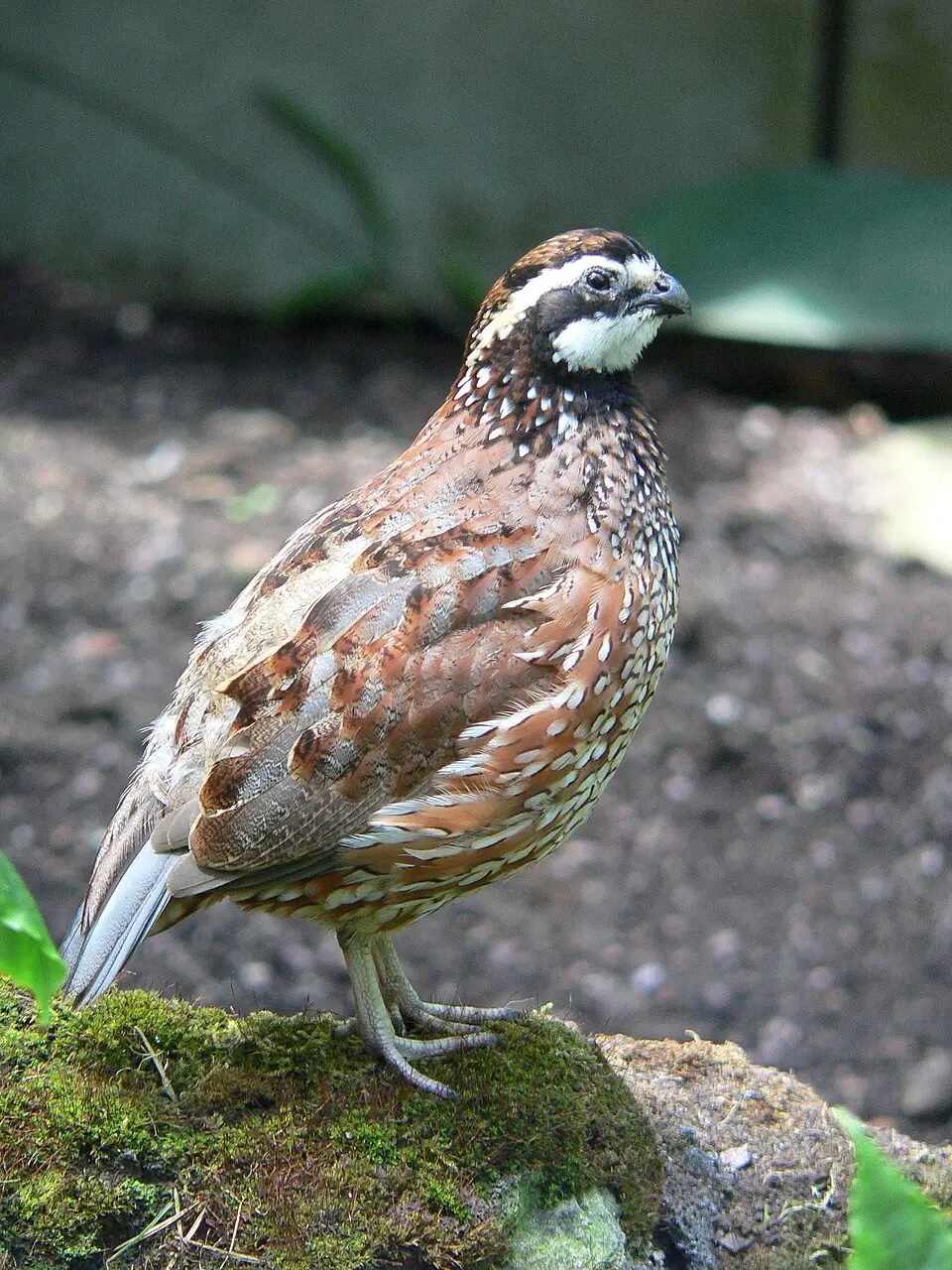
One of the most striking features of the Northern bobwhite is its plumage. Males are adorned with a bold white supercilium — a stripe above the eye — and a white throat patch, both of which are bordered by rich chestnut-brown and black markings. The overall body coloration is a warm mix of reddish-brown, buff, black, and white, providing excellent camouflage among dried grasses and leaf litter. Females share the same general patterning but display buffy or tan tones where the male shows bright white, making them slightly less conspicuous overall. This sexual dimorphism, while subtle compared to some other game birds, is a reliable field identification mark.
The bobwhite is an omnivore, feeding on a wide variety of seeds, insects, berries, and green plant material. During the warmer months, insects make up a significant portion of the diet, especially for chicks, which require high-protein food sources to fuel their rapid early growth. As the seasons shift toward fall and winter, seeds — particularly those of native legumes, grasses, and agricultural crops such as corn and soybeans — become the dietary staple. This dietary flexibility is one of the traits that has historically allowed the species to thrive across a broad range of habitats.
Bobwhites are highly social birds for much of the year. Outside of the breeding season, they gather into small groups known as coveys, typically consisting of anywhere from a handful to over two dozen individuals. A covey roosts communally at night, with the birds arranging themselves in a tight circle on the ground, tails pointing inward and heads facing outward — a formation that allows for shared warmth and near-360-degree vigilance against predators. This behavior is one of the more endearing and well-known aspects of bobwhite natural history.
The breeding season typically begins in late spring and can extend well into summer. Northern bobwhites are notable among North American quail for the degree of male parental involvement in incubation and chick-rearing. Both sexes may incubate eggs, and males frequently take on significant brooding responsibilities — an unusual trait among upland game birds. The nest is a simple grass-lined cup concealed within dense ground vegetation, and a typical clutch contains around twelve to fourteen eggs, though clutch sizes can vary. The chicks are precocial, meaning they hatch fully developed and capable of movement almost immediately, following their parents through the vegetation within hours of hatching.
The Northern bobwhite's famous call — the clear, two- or three-note whistle that gives the bird its common name — is primarily a male vocalization used to advertise territory and attract mates. The call is one of the most distinctive sounds of the eastern and southern American countryside and remains a beloved feature of warm-season mornings across the species' range.
Habitat & Range
The Northern bobwhite is primarily a bird of the eastern and south-central United States, with its core range stretching from the Great Plains eastward to the Atlantic Coast and from southern Canada southward into Mexico and parts of Central America. It is most abundant across the Southeast and South-Central states, where a combination of warm climate, open agricultural land, and brushy cover has historically supported large populations.
The species favors a mosaic of habitats — open woodlands, brushy field edges, early successional shrublands, pine savannas, and agricultural areas with adequate cover and food. It thrives where patches of dense, low vegetation are interspersed with more open areas for foraging, and where native bunch grasses, shrubs, and weedy plants provide both food and protective cover. The bobwhite is fundamentally an "edge" species, one that prospers at the boundaries between different habitat types where structural diversity is greatest.
In the western portion of its range, the Northern bobwhite becomes increasingly uncommon. Wyoming, situated in the Mountain West region of the United States, lies well outside the species' natural and established range. The rugged terrain, high elevation, semi-arid climate, and cold winters of Wyoming are generally inhospitable to a species adapted for warmer, more humid, and more structurally diverse lowland environments. While isolated populations of introduced quail species, including some bobwhite relatives, have been attempted in various western states, the Northern bobwhite is not considered a native or established resident of Wyoming's wildlife community.
Hunting Information
The Northern bobwhite holds a place of extraordinary importance in American hunting culture. It is arguably the most storied upland game bird in North America, the subject of centuries of tradition, literature, and sporting lore. The classic Southern quail hunt — a brace of pointing dogs working through piney woods or broomsedge fields, birders following on foot or horseback, the explosive flush of a covey sending hearts racing — is one of the most celebrated experiences in all of American field sports.
Bobwhite hunting is legal across much of the bird's core range in the Southeast, South, and Midwest, with seasons and bag limits set by individual state wildlife agencies based on annual population assessments. Hunters typically pursue bobwhites with flushing dogs or pointing breeds, the latter of which have been selectively bred and trained over generations specifically for quail work. Popular pointing breeds associated with bobwhite hunting include the English Pointer and various setter breeds. Shotguns chambered in 12, 20, or 28 gauge with open chokes and light loads are the traditional choice, reflecting the close-range nature of most covey flushes.
For hunters in Wyoming, it is important to note that the Northern bobwhite is not a native game bird in the state, and no established hunting season for this species exists within Wyoming's borders. The state's upland bird hunting opportunities are better oriented toward native and introduced species better suited to its landscape, such as the greater sage-grouse, sharp-tailed grouse, Gambel's quail in limited southern areas, wild turkey, and various pheasant populations. Hunters specifically interested in bobwhite should consult wildlife agencies in states within the species' established range — particularly those in the Southeast, Midwest, and South — for current season dates, licensing requirements, and bag limit information.
Conservation
The Northern bobwhite has experienced significant population declines over the past several decades across much of its range, a trend that has drawn considerable attention from wildlife managers, conservation organizations, and the hunting community alike. Habitat loss and fragmentation — driven by the conversion of farmland, the suppression of fire in pine savannas, the loss of brushy field edges, and the intensification of agriculture — are widely recognized as the primary drivers of these declines.
Numerous organizations and state wildlife agencies have invested substantially in bobwhite habitat restoration, focusing on native grassland management, prescribed fire programs, brush pile creation, and the establishment of quail management corridors. Conservation farming practices, such as leaving field margins unplanted and maintaining hedgerows and native grass buffers, have also been promoted as important tools for supporting bobwhite populations on working agricultural lands.
The hunting community has long been a powerful advocate for bobwhite conservation, and organizations dedicated to quail habitat and population recovery continue to play an important role in funding research, habitat work, and public engagement around this species. The Northern bobwhite serves as a flagship species for grassland and early successional habitat conservation — efforts that benefit not only quail but a wide range of other wildlife that shares its preferred landscapes.
Despite the challenges it faces, the Northern bobwhite remains a resilient and adaptable species. With continued investment in habitat management, thoughtful land stewardship, and science-based harvest regulation, the prospects for this beloved bird remain hopeful.