Overview
Few animals embody the spirit of North American wetlands quite like the muskrat (Ondatra zibethicus). This semi-aquatic rodent has been a fixture of lakes, marshes, ponds, and slow-moving rivers across the continent for thousands of years, playing a vital role in wetland ecosystems while simultaneously capturing the imagination of naturalists, trappers, and outdoor enthusiasts alike. From the vast prairie potholes of the Great Plains to the mountain-fed streams of states like Wyoming, the muskrat is a testament to nature's ingenuity — a small but remarkably resilient creature that has thrived across an enormous geographic range.
The muskrat holds a unique place in North American cultural history as well. Long before European settlers arrived, Indigenous peoples relied on muskrats for both food and fur. During the height of the North American fur trade, muskrat pelts became one of the most commercially significant furs on the continent, helping to drive exploration and economic activity across vast wilderness territories. Today, muskrats remain an important species for trappers, wildlife managers, and conservationists alike — a living symbol of the rich biodiversity that defines North American wetland habitats.
In Wyoming, a state celebrated for its rugged landscapes and incredible wildlife diversity, the muskrat finds suitable habitat in the rivers, streams, reservoirs, and wetlands scattered across this largely arid but hydrologically dynamic region. Understanding the muskrat's biology, behavior, and ecological role offers a richer appreciation for the natural world that Wyoming's residents and visitors are fortunate to experience.
Biological Traits
The muskrat (Ondatra zibethicus) is the sole member of the genus Ondatra and belongs to the family Cricetidae, which also includes voles, lemmings, and hamsters. Despite its common name and superficial resemblance to members of the rat family, the muskrat is more closely related to voles than to true rats.
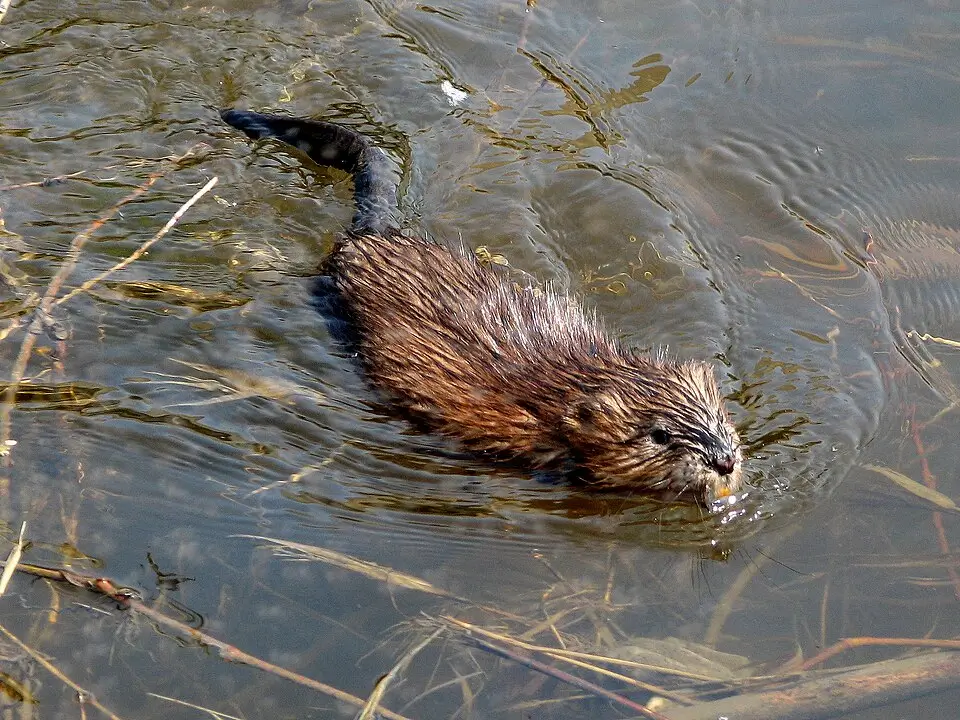
In terms of physical appearance, the muskrat is a medium-sized rodent built for life in and around water. Its body is compact and rounded, covered in dense, glossy fur that ranges in color from dark brown on the back to a lighter, often silvery-gray tone on the underside. This fur is composed of two distinct layers: a coarse outer coat that repels water and a soft, dense underfur that provides exceptional insulation in cold aquatic environments. This double-layered fur is one of the primary reasons muskrat pelts have historically been so prized in the fur trade.
One of the muskrat's most distinctive physical features is its long, laterally flattened tail, which acts as a rudder when the animal swims. Unlike the beaver's broad, paddle-shaped tail, the muskrat's tail is slender and scaly, yet highly effective for steering through water. The muskrat's hind feet are partially webbed, further adapting it for aquatic locomotion, while its small forelimbs are used for digging, carrying food, and constructing shelter.
The species gets its common name from the pair of musk glands located near the base of its tail. These glands produce a musky secretion that muskrats use for communication, particularly for marking territory and attracting mates during the breeding season. This olfactory signaling is a critical aspect of muskrat social behavior.
Muskrats are primarily herbivores, with a diet centered on aquatic and semi-aquatic vegetation such as cattails, sedges, rushes, and water lilies. They may also consume roots, tubers, and agricultural crops growing near water. Occasionally, muskrats supplement their diet with animal matter, including freshwater mussels, frogs, small fish, and crayfish, particularly when plant food is scarce during winter months.
Breeding biology in muskrats is prolific. Females are capable of producing multiple litters per year, with litter sizes typically ranging from four to eight young. This high reproductive rate allows muskrat populations to recover quickly from environmental pressures or harvest, contributing to the species' overall resilience. Young muskrats grow rapidly and are capable of fending for themselves within a relatively short period after birth.
Habitat & Range
The muskrat boasts one of the widest natural distributions of any North American mammal. Ondatra zibethicus is found from Alaska and Canada in the north all the way through the contiguous United States and into northern Mexico in the south. The species has also been introduced to parts of Europe, Asia, and South America, where it has established itself with considerable success — sometimes to the point of becoming an invasive concern in certain regions.
Within this broad range, muskrats demonstrate a strong preference for wetland environments. They are most commonly associated with marshes, swamps, ponds, lakes, slow-moving rivers, irrigation canals, and the vegetated margins of reservoirs. The critical habitat requirements for muskrats include the availability of shallow water (typically no more than a few feet deep), abundant aquatic or emergent vegetation for food and building materials, and stable water levels that allow for the construction and maintenance of their iconic lodge structures.
Muskrat lodges are among the most recognizable structures in the natural world. Built from heaped piles of cattails, reeds, mud, and other vegetation, these dome-shaped homes rise above the water surface and provide insulated, predator-resistant shelter. Lodges can be quite large, sometimes measuring several feet in height and diameter. Inside, a network of tunnels and chambers above the waterline serves as dry living and nesting space. In areas where the banks are suitable, muskrats may instead excavate burrows directly into the shoreline rather than constructing free-standing lodges.
In Wyoming, despite the state's predominantly arid and semi-arid character, muskrats are present wherever suitable wetland habitats exist. The state's rivers — including the Snake, Green, North Platte, and Powder Rivers — along with their associated backwaters, oxbows, and marshy edges, provide important muskrat habitat. Reservoirs, natural lakes in mountain valleys, and irrigation infrastructure also support muskrat populations in various parts of the state. Wyoming's position in the Mountain West means that water resources, while less abundant than in wetter regions of the country, are concentrated in ecologically productive areas that support diverse wildlife communities.
Hunting and Trapping Information
The muskrat has an extraordinarily long history as a furbearer in North America. Trapping muskrats was among the earliest and most widespread forms of commercial wildlife harvest on the continent, and the species remains an important target for modern trappers interested in both sustenance and the traditional skills of the fur trade.
Muskrats are typically harvested using trapping methods rather than conventional hunting with firearms, though regulations vary by jurisdiction. Common trapping techniques include the use of body-gripping traps, foothold traps, and wire cage traps placed at den entrances, runways, and feeding stations. Skilled trappers learn to read muskrat sign — including feeding platforms, runways through marsh vegetation, and lodge entrance locations — to place traps effectively.
For those interested in pursuing muskrats in Wyoming, it is important to consult the Wyoming Game and Fish Department directly for the most current and accurate information regarding trapping seasons, license requirements, bag limits, and legal methods of take. Regulations for furbearers, including muskrats, can change from season to season, and compliance with all applicable state and federal laws is essential. As of the time of this writing, specific season dates and license details for muskrat in Wyoming were not available through the sources consulted for this article, and prospective trappers are strongly encouraged to visit the Wyoming Game and Fish Department's official website or contact a regional office for up-to-date regulatory guidance.
What is well established is that muskrat trapping, when conducted in accordance with wildlife management guidelines, is a sustainable and ecologically sound activity. Regulated harvest helps maintain muskrat populations at healthy levels relative to available habitat, preventing the overutilization of aquatic vegetation that can occur when muskrat numbers grow unchecked.
Conservation
From a conservation standpoint, the muskrat (Ondatra zibethicus) is currently considered a species of least concern by major wildlife assessment bodies. Its broad geographic range, high reproductive rate, and adaptability to a wide variety of wetland conditions have allowed it to remain abundant across much of its native range despite pressures from habitat loss, water quality degradation, and predation.
Muskrats play a genuinely important ecological role in wetland systems. Through their feeding activities — particularly their harvesting of cattails and other emergent vegetation — muskrats help maintain open water areas within marshes, creating habitat diversity that benefits a wide range of other species, including waterfowl, wading birds, and fish. This process, sometimes described as ecosystem engineering, makes the muskrat a keystone species in many wetland communities.
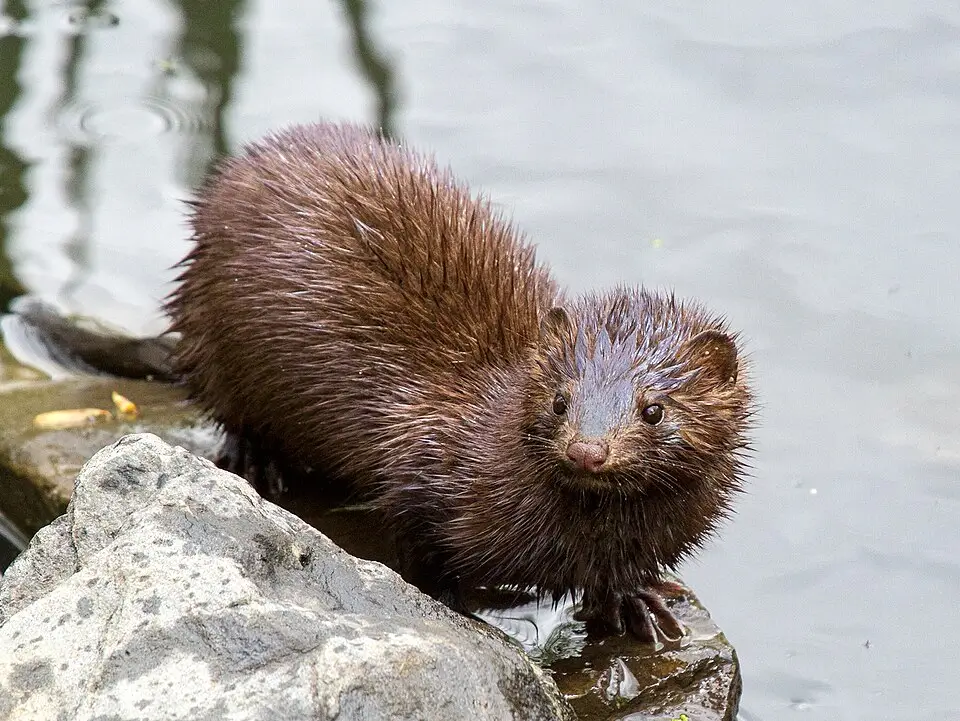
Predators of the muskrat include mink, otters, foxes, coyotes, raccoons, large raptors such as great horned owls and red-tailed hawks, and large fish such as pike and bass. These predator-prey relationships are an important part of healthy wetland food webs, and the muskrat's role as prey helps sustain populations of many of Wyoming's most iconic predators.
The greatest long-term threat to muskrat populations is habitat loss — specifically the draining, filling, and degradation of wetland habitats. Conservation efforts that protect and restore wetlands benefit not only muskrats but the entire suite of species that depend on these productive ecosystems. In Wyoming, ongoing efforts to preserve riparian corridors and wetland areas along major river systems contribute to maintaining viable muskrat populations and the broader ecological health of these environments.
Hunters, trappers, and wildlife enthusiasts all have a shared interest in healthy muskrat populations and the wetland habitats that sustain them. Supporting wetland conservation initiatives, practicing ethical and legal harvesting, and engaging with state wildlife management programs are meaningful ways that outdoor community members can contribute to the long-term well-being of this remarkable species.