Overview
Few birds are as deeply woven into the fabric of American outdoor culture as the mourning dove (Zenaida macroura). Its soft, mournful cooing drifts across fields, meadows, and suburban backyards from coast to coast, lending a gentle soundtrack to warm summer mornings. Yet despite its gentle disposition and delicate appearance, the mourning dove holds a remarkable distinction: it is the most harvested migratory game bird in North America, with millions of birds taken by hunters each year across dozens of states.
In Wyoming, a state defined by vast open spaces, sweeping grasslands, and a deep-rooted hunting tradition, the mourning dove occupies a special place in the hearts of upland bird hunters and wildlife enthusiasts alike. Whether you're watching a pair of doves perch on a fence line at dawn or standing in a sunflower field waiting for the afternoon flight to begin, encountering mourning doves in the wild is one of the quintessential Wyoming outdoor experiences. This article explores the biology, behavior, habitat, and hunting culture surrounding this beloved bird, with a particular focus on the opportunities available to sportsmen and wildlife watchers in Wyoming.
Biological Traits
The mourning dove is a medium-sized member of the family Columbidae, the pigeons and doves, and bears the scientific name Zenaida macroura. The genus name Zenaida honors Princess Zénaïde Bonaparte, the wife of French naturalist Charles Lucien Bonaparte, while macroura derives from the Greek words for "long" and "tail" — a fitting tribute to one of the bird's most recognizable features.
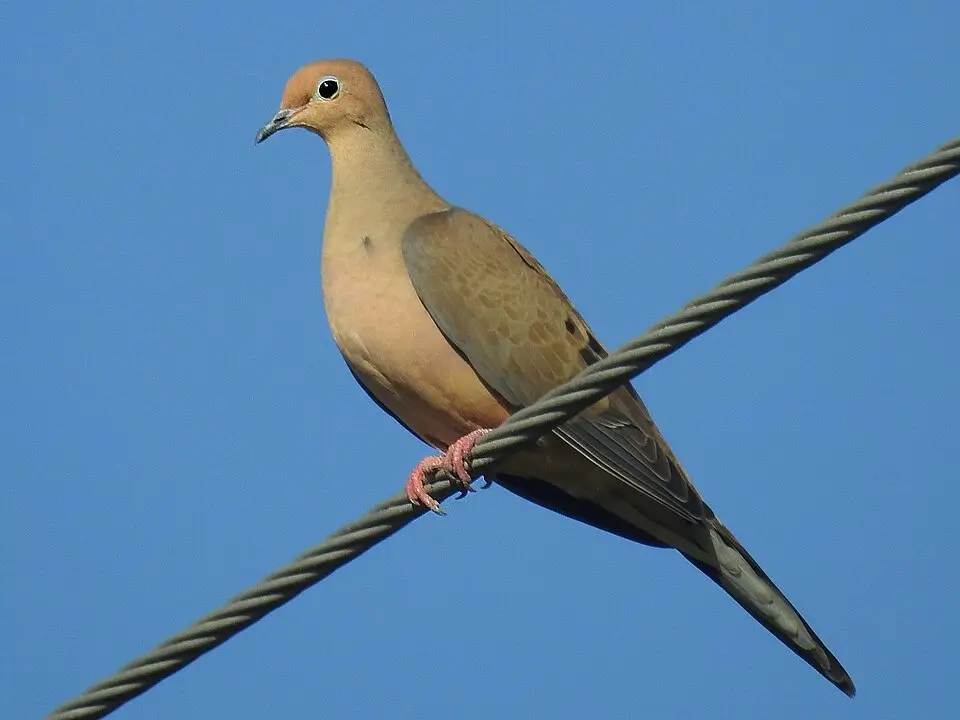
In terms of physical appearance, mourning doves are slender, streamlined birds with small rounded heads and long, tapered tails that give them an elegant silhouette in flight. Their plumage is soft and muted, typically a warm buffy-brown or grayish-tan on the back and wings, with a pale pinkish wash on the breast. Black spots are often visible on the wings, and iridescent patches of pink and green can shimmer on the sides of the neck in good light. Beneath their understated coloration lies one of nature's most aerodynamically efficient bodies — mourning doves are incredibly fast fliers, capable of reaching speeds exceeding 55 miles per hour when flushed.
One of the mourning dove's most distinctive characteristics is its voice. The species derives its common name from its call: a slow, melancholy cooing that sounds almost like a lament. This vocalization — typically rendered as "ooo-woo-woo-woo" — is often mistaken by casual observers for the hooting of an owl. It is the male dove who most commonly produces this call, using it primarily as a territorial and courtship display.
Mourning doves are also remarkable for their reproductive productivity. They are prolific breeders, capable of raising multiple broods in a single year — sometimes as many as five or six in warmer climates. Both parents participate in incubation and the feeding of young, which are known as squabs. Newly hatched squabs are fed a specialized secretion called "crop milk," a nutrient-rich fluid produced in the crop of both adult birds. This adaptation allows mourning doves to begin nesting early in the season and continue breeding well into late summer or early fall, contributing to the species' impressive overall population numbers.
The diet of the mourning dove is almost exclusively granivorous — composed primarily of seeds. Grass seeds, weed seeds, grains such as corn, millet, and sunflower, and agricultural crop residues make up the bulk of their nutritional intake. Doves are ground feeders and will spend much of their day walking along bare or sparsely vegetated ground, picking up seeds with their small bills. Unlike many other birds, doves are capable of drinking by sucking up water continuously rather than lifting their heads to swallow, an efficient and distinctive method of hydration.
Habitat & Range
The mourning dove enjoys one of the most extensive ranges of any North American bird. It is found throughout the contiguous United States, into southern Canada, throughout Mexico, and across much of Central America and the Caribbean. It thrives in a remarkable variety of environments, including open woodlands, agricultural fields, suburban parks, desert scrub, forest edges, and grasslands — essentially anywhere that provides open ground for foraging, nearby trees or shrubs for perching, and reliable sources of water.
In Wyoming, mourning doves are a familiar presence across much of the state during the warmer months. Wyoming's diverse landscape — which includes rolling high plains in the east, sagebrush basins in the west and central regions, forested mountain ranges, and irrigated agricultural valleys — provides a wealth of suitable habitat. The eastern plains of Wyoming, where wheat fields, sunflower crops, and grasslands dominate the scenery, are particularly productive areas for doves. The presence of stock ponds, irrigation ditches, and natural water sources throughout the state makes the Wyoming landscape even more attractive to these birds, which depend on regular access to water.
Mourning doves are migratory in the northern portions of their range, including Wyoming. As summer wanes and temperatures begin to fall in late August and September, dove populations in the state begin to shift southward, eventually wintering in the southern United States and Mexico. This migratory behavior places mourning doves under the jurisdiction of the U.S. Fish and Wildlife Service and the Migratory Bird Treaty Act, which governs their management across all states.
Hunting Information
Dove hunting is one of the most popular and socially vibrant forms of bird hunting in the United States. It is often considered an excellent entry point for new hunters due to the relatively low equipment requirements, the social atmosphere of a dove field, and the fast-paced action that good flights can provide. Hunters typically use 12, 20, or 28-gauge shotguns loaded with light field loads, and the sport rewards both shooting skill and an understanding of dove behavior and movement patterns.
In Wyoming, dove hunting takes place during the late summer and early fall, aligning with the birds' presence in the state before their southward migration. Wyoming's wide-open spaces, agricultural lands, and abundant water sources can create excellent conditions for dove hunting, particularly in the eastern part of the state where agricultural activity is more concentrated.
Successful dove hunters in Wyoming and elsewhere typically focus their efforts near food sources such as harvested grain fields, sunflower patches, or milo fields, combined with nearby water sources and open roosting areas. Doves are creatures of habit, and identifying their daily flight patterns between feeding, watering, and roosting areas is key to a productive hunt. Early morning and late afternoon tend to be the most active periods for dove movement.
Because mourning doves are federally managed migratory birds, hunters in Wyoming are required to comply with federal regulations set by the U.S. Fish and Wildlife Service in addition to any state-specific rules established by the Wyoming Game and Fish Department. Hunters interested in pursuing doves in Wyoming should consult the most current Wyoming Game and Fish Department regulations for specific season dates, bag limits, and licensing requirements, as these details can change from year to year and were not available at the time of this article's writing.
It is also worth noting that lead shot restrictions and the use of non-toxic shot may apply in certain areas, particularly on federal lands. Checking regulations thoroughly before heading into the field is always a best practice.
Conservation
The mourning dove is one of the true conservation success stories of North American wildlife management. Thanks to careful oversight under the Migratory Bird Treaty Act and cooperative management between federal and state agencies, mourning dove populations remain robust and widespread. The species is currently listed as one of Least Concern by the International Union for Conservation of Nature (IUCN), reflecting stable population trends across its range.
Habitat conservation plays a crucial role in sustaining healthy dove populations. Agricultural practices that leave crop residue in fields, the maintenance of hedgerows and brushy field edges, and the preservation of water sources all contribute positively to dove habitat. Conservation programs such as the Conservation Reserve Program (CRP) have helped maintain open, weedy habitats that doves depend on for feeding and nesting.
Hunters themselves play an important role in dove conservation, both through the funding generated by excise taxes on firearms and ammunition under the Federal Aid in Wildlife Restoration Act (Pittman-Robertson Act) and through active participation in habitat stewardship. Hunting organizations and state wildlife agencies often work together to identify and improve dove habitat on public and private lands alike.
In Wyoming, where public land hunting access is generous by national standards and habitat diversity is exceptional, the future of mourning dove populations looks bright. The combination of thoughtful wildlife management, engaged hunting communities, and the dove's own impressive reproductive capacity ensures that this beloved bird will continue to grace Wyoming's skies for generations to come.