Overview
Few animals in North America command the kind of cultural recognition enjoyed by the groundhog. Known scientifically as Marmota monax, the groundhog has woven itself into the fabric of American and Canadian life in a way that goes far beyond its biological significance. From the celebrated Groundhog Day tradition each February to its role as a prominent garden raider in rural communities, this stocky, burrowing rodent is one of the most recognizable mammals on the continent. Yet despite its fame, the groundhog remains surprisingly misunderstood. Behind the folklore and the fanfare lies a genuinely fascinating creature — a skilled engineer, a dedicated hibernator, and a resilient species that has adapted remarkably well to a landscape dramatically altered by human activity.
For hunters, naturalists, and outdoor enthusiasts alike, understanding the groundhog means appreciating an animal that is simultaneously a beloved cultural icon and a practical target for pest management and small-game hunting. Whether you are encountering one in a meadow in Wyoming, spotting one near a fence line in Pennsylvania, or simply curious about the biology of this remarkable mammal, the groundhog has plenty of stories to tell.
Biological Traits
The groundhog, Marmota monax, belongs to the family Sciuridae — the squirrel family — and is the largest member of the marmot genus found in the eastern and central portions of North America. Like all marmots, it is a robust, ground-dwelling rodent with a compact, muscular body built for digging rather than speed or climbing.
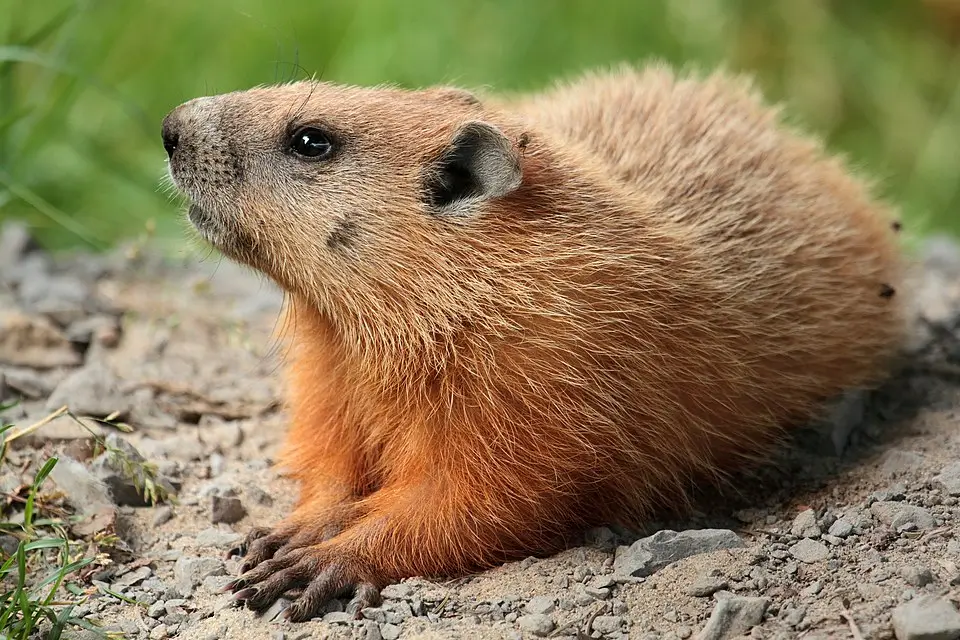
Adult groundhogs typically display a combination of coarse, brown or grayish-brown fur across most of the body, with slightly darker coloration along the back and lighter, reddish-brown hues on the underside. Their legs are short and powerful, perfectly adapted for excavating the extensive burrow systems that define much of their lifestyle. The tail is relatively short compared to other squirrel family members, thick and dark, and carried low rather than arched over the back. The head is broad and flat with small, rounded ears set wide apart, and the incisor teeth are notably strong — a characteristic shared across the rodent order, used for gnawing plant material and helping to clear roots while digging.
One of the groundhog's most remarkable biological features is its approach to winter survival. Unlike many mammals that simply slow their metabolism or cache food, the groundhog is a true hibernator. As temperatures drop in autumn, the groundhog retreats to a specially constructed hibernation chamber deep within its burrow, where its body temperature falls dramatically, its heart rate slows from roughly 80 beats per minute to just 5, and its breathing becomes shallow and infrequent. This state of torpor can last from October or November through February or March, depending on climate and geography. The animal survives entirely on fat reserves built up through intensive summer and early autumn feeding. This physiological feat is precisely what inspired the Groundhog Day tradition — the idea that a groundhog emerging from its burrow in early February might be detecting the approach of spring.
Groundhogs are herbivores with broad and sometimes voracious appetites. Their diet consists primarily of grasses, clover, alfalfa, dandelion, and other leafy vegetation. They are also known to consume agricultural crops such as soybeans, corn, and garden vegetables, which is a primary reason they are sometimes viewed as pest species by farmers and gardeners. Fruits, bark, and occasionally insects may supplement their diet as well.
Reproduction in groundhogs follows a fairly predictable seasonal pattern. Mating typically occurs in early spring, shortly after the animals emerge from hibernation. After a gestation period of approximately 31 to 32 days, females give birth to litters that commonly range from two to six young, known as pups or kits. The young are born blind and hairless, fully dependent on their mother for several weeks. By late summer, juvenile groundhogs are largely independent and will disperse to establish their own territories and burrows. Groundhogs are generally solitary animals outside of the mating season and the early weeks of offspring rearing.
Their burrow systems are genuinely impressive feats of engineering. A single groundhog may excavate a burrow network stretching 25 feet or more in length, with multiple entrances, separate chambers designated for sleeping and for waste, and a hibernation chamber positioned well below the frost line. These burrows are not only used by groundhogs — over time, vacated burrow systems become valuable habitat for foxes, rabbits, opossums, and many other species.
Groundhogs are prey for a variety of predators including red foxes, coyotes, large hawks, and eagles. Their primary defenses are vigilance and retreat to their burrows. They are capable of brief bursts of speed and, when cornered, will use their powerful incisors aggressively in self-defense.
Habitat & Range
The groundhog's range spans a broad swath of North America, extending from the southeastern United States northward through much of Canada and westward into portions of Alaska. The species is particularly abundant throughout the northeastern United States, the Midwest, and the eastern Canadian provinces. Its range extends into portions of the Mountain West as well, though groundhog populations in western states like Wyoming tend to be less dense compared to their counterparts in the east.
In terms of preferred habitat, groundhogs favor transitional zones — areas where open, grassy meadows or agricultural fields meet woodlands or shrubby edges. These ecotones provide ideal foraging opportunities in open areas while keeping woodland escape routes and denning sites nearby. Roadsides, fence rows, pastures, orchards, and the margins of agricultural fields are all characteristic groundhog habitat. The species has adapted well to human-altered landscapes and is frequently encountered near farms, rural homes, parks, and even suburban areas.
In Wyoming and the broader Mountain West region, groundhogs may be found in suitable open habitats at a variety of elevations, though they tend to favor lower-elevation grasslands, valley floors, and areas near agricultural development. Wyoming's landscape, characterized by sweeping high plains, mountain ranges, and wide-open valleys, offers a range of potential groundhog habitats, particularly in the eastern portions of the state where grasslands are more prevalent and the terrain more closely resembles the broader Great Plains environment where groundhogs thrive.
Hunting Information
The groundhog occupies an interesting position in the world of hunting. In many states and regions, it is classified as a non-game or pest species, meaning that formal season dates and licensing requirements are often minimal or absent. For many small-game hunters and varmint hunters, groundhog hunting represents an accessible and enjoyable pursuit that sharpens marksmanship skills, provides year-round shooting opportunities, and contributes to agricultural pest management.
Groundhog hunting is a popular pastime across much of the eastern United States, where populations are robust and landowner permission is often readily granted due to the damage the animals can cause to crops, pastures, and equipment. Hunters frequently use centerfire rifles chambered in flat-shooting cartridges, as groundhog hunting often involves long-distance shooting across open fields and meadows. The challenge of placing an accurate shot at extended ranges on a small, wary target makes groundhog hunting an excellent training exercise for big-game hunters seeking to refine their precision shooting skills.
Regarding Wyoming specifically, official hunting regulations for groundhogs are not detailed in available state sources at this time. Hunters interested in pursuing groundhogs in Wyoming should consult the Wyoming Game and Fish Department directly for the most current and accurate information regarding any applicable licenses, permits, or regulations. As with any hunting activity, securing landowner permission before accessing private property is both a legal requirement and a matter of good sportsmanship.
It is also worth noting that Wyoming's sparse population and vast landscapes make it a state where wildlife regulations and access opportunities can vary considerably by region. Hunters in the eastern grassland regions of the state may find more productive groundhog country than those in the high mountain terrain of the west.
Conservation
From a conservation standpoint, the groundhog is in a comfortable position. The species is classified as Least Concern on the IUCN Red List of Threatened Species, reflecting stable and widespread populations across its range. Indeed, the groundhog is one of those relatively rare wildlife success stories in which human landscape modification has largely benefited the species. The clearing of forests for agriculture and the creation of open, grassy edges have expanded suitable habitat for groundhogs over the past several centuries.
Groundhogs play meaningful ecological roles. Their extensive burrowing aerates and turns soil, improving drainage and contributing to soil health in ways that benefit a range of plant communities. As noted earlier, abandoned burrow systems provide critical shelter for numerous other species, making the groundhog a genuine ecosystem engineer. Their role as prey supports populations of foxes, raptors, and other predators that are integral to healthy food webs.
While groundhogs are not currently facing conservation challenges, responsible stewardship remains important. Sustainable hunting practices, respect for habitat, and awareness of local regulations all contribute to maintaining healthy wildlife populations for future generations of hunters and wildlife enthusiasts alike.