Overview
Few animals are as instantly recognizable to North Americans as the Eastern gray squirrel (Sciurus carolinensis). Whether darting across a suburban lawn, leaping effortlessly between the branches of a towering oak, or industriously burying acorns in preparation for winter, this energetic, adaptable rodent has woven itself into the fabric of everyday life across much of the United States and beyond. Despite its ubiquitous presence in parks, backyards, and forests alike, the Eastern gray squirrel is a remarkably sophisticated animal with a fascinating biology, a complex ecological role, and a long history of importance to hunters and wildlife enthusiasts throughout North America.
For those who appreciate the outdoors, the Eastern gray squirrel represents far more than a backyard visitor. It is one of the most widely pursued small game animals in the United States, offering hunters an accessible, exciting, and rewarding experience in the field. Whether you are a seasoned sportsman or a newcomer picking up a .22 rifle for the first time, squirrel hunting provides an intimate connection with the natural world that few other pursuits can match. This article takes an in-depth look at the Eastern gray squirrel — its biology, its habitat, its ecological significance, and what hunters and wildlife watchers should know about this remarkable species.
Biological Traits
The Eastern gray squirrel belongs to the family Sciuridae, the large and diverse family of rodents that includes chipmunks, marmots, prairie dogs, and flying squirrels. Within this family, Sciurus carolinensis is a true tree squirrel — agile, quick-witted, and perfectly adapted to life in the forest canopy.
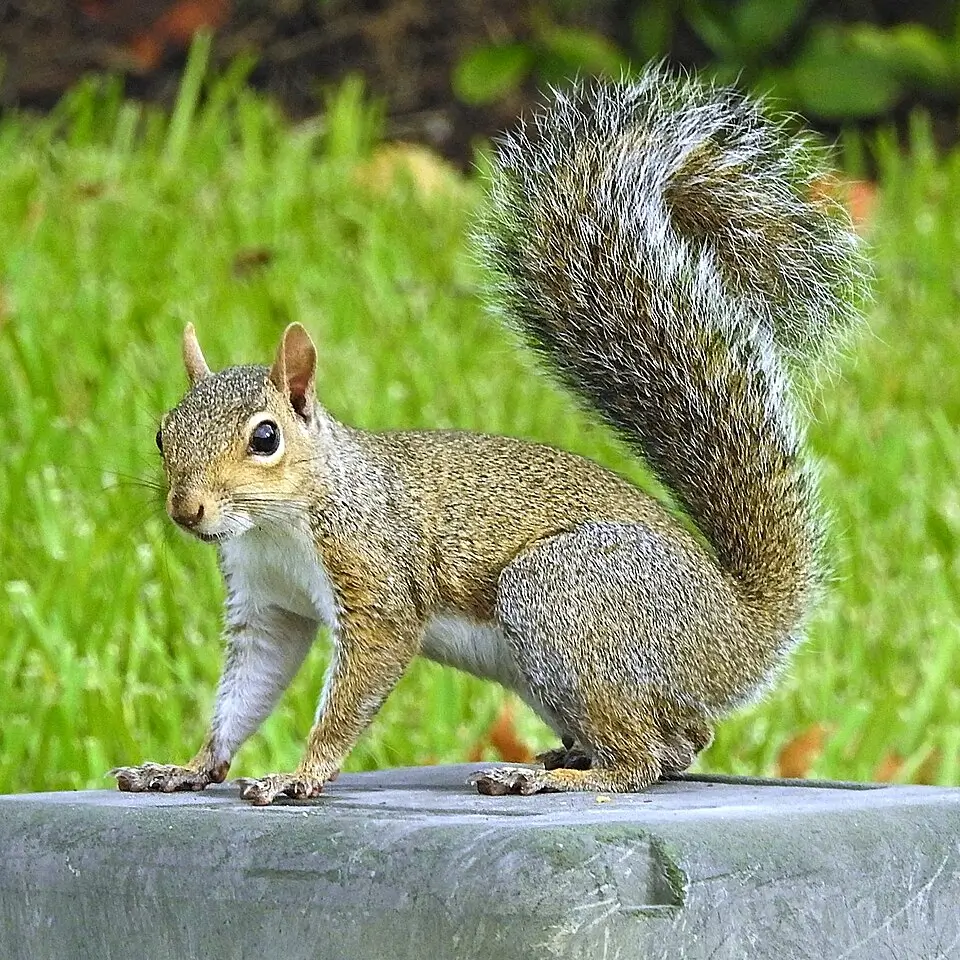
As its common name suggests, the Eastern gray squirrel is predominantly gray in coloration, typically displaying a grizzled silver-gray coat on its back and sides, with a paler, often whitish underside. The bushy, well-furred tail — one of the animal's most distinctive features — serves multiple functions, including balance during arboreal acrobatics, communication with other squirrels, and thermoregulation in cold weather. Color variations do occur within the species, and it is not uncommon to find individuals displaying melanistic (black) or leucistic (near-white) color morphs in certain populations, particularly in urban environments.
The Eastern gray squirrel is a medium-sized tree squirrel. Adults are generally robust and well-muscled, built for climbing, jumping, and navigating the three-dimensional environment of the forest. Their sharp, curved claws provide excellent grip on bark and branches, while their keen eyesight — with eyes positioned on the sides of the head for a wide field of view — helps them detect predators and locate food sources with impressive efficiency.
One of the most fascinating aspects of Eastern gray squirrel biology is their relationship with food and memory. These animals are scatter hoarders, meaning they bury individual food items — primarily nuts and seeds such as acorns, hickory nuts, and beechnuts — in hundreds or even thousands of separate caches spread across their home range. They rely on a remarkable spatial memory to relocate these hidden stores during the lean months of winter. Interestingly, research has shown that squirrels do not rely solely on memory; they also use their highly developed sense of smell to locate buried food, both their own caches and those of other squirrels. This behavior has profound ecological consequences, as forgotten or unrecovered caches effectively plant tree seeds across the landscape, making the Eastern gray squirrel an important agent of forest regeneration and seed dispersal.
Eastern gray squirrels do not hibernate. Instead, they remain active throughout the year, relying on their cached food supplies and their ability to forage opportunistically during breaks in winter weather. Their activity patterns are primarily diurnal, meaning they are most active during the daylight hours, particularly in the morning and late afternoon.
Reproduction in Eastern gray squirrels typically occurs twice per year, with breeding seasons generally occurring in winter and midsummer. Females give birth to litters of young after a gestation period of approximately 44 days. Litters commonly consist of two to four young, which are born blind, hairless, and entirely dependent on their mother. The young develop rapidly, opening their eyes at around four to five weeks of age and beginning to venture outside the nest not long after. By late summer or early fall, the young squirrels are largely independent and begin the critical process of building their own food caches in preparation for winter.
Eastern gray squirrels build two types of nests: leaf nests, called dreys, constructed from leaves and twigs high in the branches of trees, and den cavities, located in hollow trees or branches. Den cavities are generally preferred during cold weather and for raising young, as they provide superior insulation and protection from predators.
The species communicates using a variety of vocalizations and visual signals. Their characteristic alarm call — a rapid, chattering bark often accompanied by vigorous tail-flicking — is a familiar sound in any woodland or park setting and serves to alert other squirrels to the presence of potential predators.
Habitat and Range
The Eastern gray squirrel is native to the eastern and midwestern United States and Canada, with its natural range extending from the Atlantic Coast westward through the Great Plains and from the Gulf Coast north into southern Canada. As the name implies, this species is primarily associated with the eastern half of North America, where it inhabits a wide variety of forested environments.
The species shows a strong preference for mature deciduous and mixed deciduous-coniferous forests, particularly those dominated by mast-producing trees such as oaks, hickories, beeches, and walnuts. These trees provide the calorie-rich nuts that form the cornerstone of the Eastern gray squirrel's diet. However, the species is highly adaptable and has successfully colonized suburban and urban environments, where it takes advantage of ornamental plantings, bird feeders, and garden crops as supplemental food sources.
In addition to its native range, the Eastern gray squirrel has been introduced — both intentionally and accidentally — to numerous locations outside its natural range, including parts of western North America, Europe (particularly the United Kingdom and Italy), South Africa, and Australia. In some of these introduced regions, the Eastern gray squirrel has become an invasive species, displacing native wildlife and causing significant ecological disruption.
Within the state of Wyoming, the Eastern gray squirrel is not a native species. Wyoming's landscape is dominated by high-elevation mountain ranges, sweeping sagebrush plains, and vast grasslands — habitats that are generally not well-suited to the forest-dependent Eastern gray squirrel. The state's native tree squirrel fauna is represented primarily by species such as the Abert's squirrel and the red squirrel, which are adapted to Wyoming's coniferous forests. Wildlife enthusiasts visiting Wyoming are far more likely to encounter these native squirrel species than the Eastern gray squirrel.
Hunting Information
The Eastern gray squirrel holds a cherished place in American hunting tradition. Across much of the eastern United States, squirrel hunting is one of the most popular small game pursuits, enjoyed by millions of hunters each year. It is often cited as an ideal introduction to hunting for young sportsmen and sportswomen, offering accessible quarry, relatively forgiving terrain, and a rewarding table fare.
Squirrel hunters typically pursue their quarry in hardwood forests during the fall, when squirrels are most active in preparation for winter. Common methods include still-hunting — moving slowly and quietly through the woods and using patience and observation to spot squirrels in the canopy — and stand hunting, in which the hunter stations themselves near a productive mast-producing tree and waits for squirrel activity. Firearms commonly used for squirrel hunting include .22-caliber rimfire rifles, which offer the precision necessary for clean shots at small, often partially obscured targets, as well as small-bore shotguns for hunters who prefer wing-style shooting as squirrels move through the canopy.
Because the Eastern gray squirrel does not have an established presence in Wyoming, hunting opportunities for this specific species within the state are essentially nonexistent. Wyoming's hunting regulations are managed by the Wyoming Game and Fish Department, and prospective hunters should always consult the most current official regulations from that agency for the most accurate and up-to-date information on small game seasons, licensing requirements, and any applicable rules. Hunters interested in squirrel hunting are encouraged to explore the many states within the Eastern gray squirrel's native range, where robust hunting opportunities exist.
Conservation
The Eastern gray squirrel is classified as a species of Least Concern on the International Union for Conservation of Nature (IUCN) Red List, reflecting its wide distribution, large population size, and successful adaptation to human-modified environments. In most of its native range, populations are stable or increasing, supported by the species' high reproductive rate and dietary flexibility.
Conservation considerations for the Eastern gray squirrel are largely focused on the management of its introduced populations in regions where it has become invasive. In the United Kingdom, for example, the Eastern gray squirrel has contributed significantly to the decline of the native Eurasian red squirrel (Sciurus vulgaris), and considerable conservation effort is directed at managing gray squirrel populations to protect native biodiversity.
Within North America, the Eastern gray squirrel's most significant conservation role may be its contribution to forest regeneration. By caching and occasionally forgetting hundreds of thousands of nuts and seeds each year across its range, the species functions as a powerful driver of tree recruitment and forest diversity. Protecting mature hardwood forests — particularly those rich in mast-producing tree species — is therefore not only beneficial for squirrel populations but for the entire suite of wildlife and ecological processes that these forests support.
For hunters and wildlife managers alike, the Eastern gray squirrel represents a species where recreational hunting and conservation objectives align well. Regulated harvest contributes to wildlife management programs, generates funding through license sales for conservation initiatives, and fosters a sense of stewardship among sportsmen and sportswomen who value healthy, thriving wildlife populations.