Overview
Few animals command as much respect, fascination, and awe as the cougar — a sleek, powerful, and highly adaptable predator that has roamed the Americas for millions of years. Known by many names — mountain lion, puma, panther, and catamount, among others — the cougar (Puma concolor) holds the distinction of being one of the most widely distributed large terrestrial mammals in the Western Hemisphere. From the dense rainforests of South America to the snow-dusted ridgelines of the Rocky Mountains, this remarkable feline has proven itself to be one of nature's most successful predators.
In the American West, and particularly in a state like Wyoming, the cougar occupies a role of ecological significance that few other animals can match. Wyoming's vast wilderness — encompassing sweeping high-desert plains, rugged mountain ranges, and dense coniferous forests — provides ideal territory for these solitary hunters. Understanding the cougar means appreciating not just a single animal, but an entire ecosystem that depends on the balance this apex predator helps maintain.
Whether you are a wildlife enthusiast hiking through Yellowstone's backcountry, a hunter pursuing big game in the Wind River Range, or simply someone curious about the wild creatures that call the American West home, the cougar is a species that deserves your attention and respect.
Biological Traits
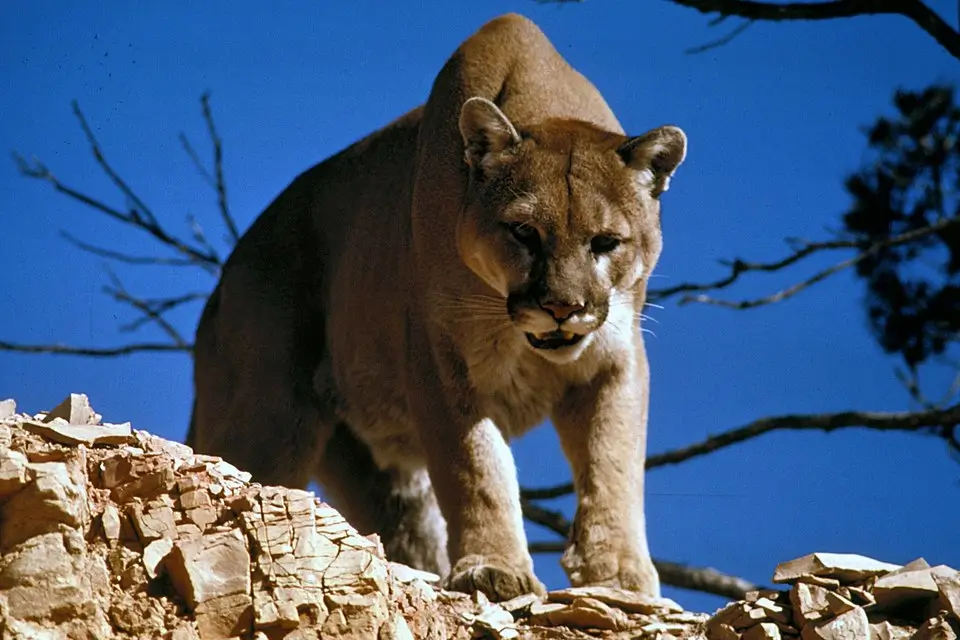
The cougar is the largest cat in the genus Puma and is classified within the family Felidae. Its scientific name, Puma concolor, translates roughly to "cat of one color," a fitting description for an animal whose coat is typically a uniform tawny, buff, or grayish-brown hue. Unlike many other large cats found around the world, the cougar does not have spots or stripes in adulthood, though juveniles are born with spotted coats that fade as they mature.
Cougars are sexually dimorphic, meaning males are substantially larger than females. Adult males are powerful, muscular animals capable of taking down prey many times their size, while females are more slender but equally agile. Their long, muscular hind legs make them extraordinary leapers, capable of jumping great distances both horizontally and vertically — an adaptation that serves them well when ambushing prey or navigating steep, rocky terrain.
One of the cougar's most defining biological features is its versatility as a predator. Equipped with sharp, retractable claws, powerful forelimbs, and strong jaws, the cougar is built for the ambush. It typically stalks its prey patiently before launching a rapid, decisive attack — often targeting the back of the neck or throat to dispatch prey quickly. Deer, elk, moose calves, bighorn sheep, and pronghorn are among the prey species commonly associated with cougar predation in the West.
Cougars are also known for their remarkable stealth and elusiveness. They are largely crepuscular and nocturnal, meaning they are most active during dawn, dusk, and nighttime hours. This behavior, combined with their solitary nature and large home ranges, makes them one of the least-seen large mammals in North America despite being relatively widespread. Hearing a cougar — a haunting, high-pitched scream — is itself a rare and memorable experience for those who spend time in the wilderness.
The cougar is one of the few large American mammals capable of purring, a trait it shares with smaller domestic cats rather than with lions and tigers, which roar. This biological quirk places the cougar in a unique middle ground among the world's wild felines.
Females typically give birth to litters of one to six cubs, with two to three being most common. Cubs remain dependent on their mother for an extended period, learning the hunting and survival skills they will need to establish their own territories. Young cougars eventually disperse — sometimes traveling extraordinary distances — to find and claim their own home ranges, a behavior that contributes to the species' wide geographic distribution.
Habitat & Range
The cougar's range is the most extensive of any wild land mammal in the Western Hemisphere, stretching from the Canadian Yukon in the north all the way to the southern tip of South America. Within the United States, cougar populations are most robust in the western states, where large tracts of undeveloped land provide the space and prey base these wide-ranging animals require.
Wyoming, with its combination of remote mountain ranges, national forests, wilderness areas, and national parks, represents some of the finest cougar habitat in the Lower 48 states. The Greater Yellowstone Ecosystem — one of the largest intact temperate ecosystems in the world — is home to a healthy cougar population that benefits from an abundance of prey species including mule deer, white-tailed deer, and elk. Similarly, the Black Hills region in the east, the Wind River Range, the Absaroka Mountains, and the rugged terrain of the Wyoming Range all provide excellent habitat for this adaptable predator.
Cougars are habitat generalists in many respects, capable of living in deserts, grasslands, tropical forests, and high-altitude mountain environments. However, they tend to favor areas with dense vegetation or rocky terrain that allows for stalking and ambushing prey. Proximity to reliable prey populations is the most critical habitat requirement for any cougar. In Wyoming, the state's abundant ungulate populations — supported by extensive public lands and nationally protected areas — make it one of the premier cougar landscapes in the country.
The cougar's large home range requirements mean that individual animals may travel across vast distances. Adult males, in particular, maintain expansive territories and will actively patrol and defend these areas against rival males. This spatial requirement underscores the importance of connected landscapes and wildlife corridors, which allow cougars to move between populations and maintain genetic diversity.
Hunting Information
The cougar has a long and significant history in North American hunting tradition. For generations, hunters, houndsmen, and wildlife managers have pursued mountain lions as a challenging and rewarding big game quarry. Hunting mountain lions with hounds — a practice with deep cultural roots in the American West — remains one of the most traditional and demanding forms of big game hunting, requiring skilled dogs, experienced handlers, and intimate knowledge of the terrain.
In Wyoming, the cougar is recognized as a game animal, and hunting opportunities exist within a regulated framework managed by the Wyoming Game and Fish Department. Because the source data available for this article does not include specific current season dates, license fees, or tag quotas, hunters interested in pursuing mountain lions in Wyoming are strongly encouraged to consult the Wyoming Game and Fish Department's official website and current regulations for the most up-to-date and accurate information. Regulations for big game species like the cougar can change from year to year based on population surveys, harvest data, and management objectives.
What can be said broadly is that Wyoming's cougar hunting tradition is well-established and that the state's rugged landscapes — from the Bighorn Mountains to the Snake River Canyon — offer hunters extraordinary opportunity to pursue this iconic predator in spectacular country. Mountain lion hunting in Wyoming, as in other western states, typically requires dedication, physical fitness, and a willingness to venture into remote and challenging terrain.
Prospective cougar hunters should also be aware of the importance of ethical hunting practices. Cougars are intelligent, elusive animals, and pursuing them responsibly — with respect for the animal, the landscape, and fellow hunters — is a cornerstone of the hunting community's commitment to conservation.
Conservation
The cougar's conservation story in North America is, in many ways, a remarkable success. Following centuries of persecution, habitat loss, and near-extirpation from many parts of their historic range, cougar populations in the western United States have rebounded significantly. This recovery is a testament to the effectiveness of science-based wildlife management and the dedication of state and federal wildlife agencies.
Today, regulated hunting plays a meaningful role in cougar conservation. Hunting license fees and excise taxes on sporting equipment — generated in part by hunters pursuing mountain lions — fund wildlife management programs, habitat conservation, and research initiatives. This funding model, often referred to as the North American Model of Wildlife Conservation, has been instrumental in supporting not only cougar populations but the full spectrum of wildlife that shares their habitat.
Cougars also serve a vital ecological function as apex predators. By regulating prey populations — particularly deer and elk — cougars help maintain the health and diversity of plant communities. This cascading ecological effect, sometimes called a trophic cascade, has been documented in various ecosystems and highlights the cougar's role as a keystone species.
In Wyoming, the combination of protected wilderness areas, robust prey populations, and thoughtful management by the Wyoming Game and Fish Department provides a strong foundation for the cougar's continued presence across the state. Ongoing research into cougar behavior, movement patterns, and population dynamics ensures that management decisions are grounded in the best available science.
For wildlife enthusiasts and hunters alike, the cougar represents something profound about the wild landscapes of the American West — a symbol of wildness, adaptability, and the enduring power of nature when given the space and respect it deserves.