Overview
Few animals are as deeply woven into the fabric of American outdoor culture as the cottontail rabbit. Whether you're a seasoned hunter heading out on a crisp winter morning, a naturalist observing wildlife in a meadow, or simply a backyard birdwatcher who notices a small, twitchy-nosed visitor nibbling at the garden's edge, the cottontail rabbit is an animal that almost every American has encountered at some point in their life. Belonging to the genus Sylvilagus, cottontail rabbits represent one of the most widespread and ecologically significant groups of small mammals on the continent. They are prey, they are prey animal, they are pest, they are game animal — and above all, they are a cornerstone of ecosystems from the Atlantic coast to the rugged high plains of Wyoming.
In the American West, and specifically in states like Wyoming, cottontail rabbits occupy a particularly interesting ecological and recreational niche. Wyoming's vast, open landscapes — stretching from the sagebrush flats to the forested mountain foothills — provide a mosaic of habitats that support healthy cottontail populations. For hunters, wildlife enthusiasts, and conservationists alike, understanding the cottontail rabbit is both a pleasure and a practical pursuit.
This article explores the biology, habitat, hunting traditions, and conservation considerations surrounding the cottontail rabbit, with a particular focus on what makes this species so enduring and so important across the American West.
Biological Traits
The cottontail rabbit belongs to the genus Sylvilagus, a name derived from Latin and Greek roots meaning "forest hare." This genus includes more than a dozen recognized species spread across North and South America, making it one of the most diverse rabbit genera in the Western Hemisphere. Among the most common species in the United States are the Eastern cottontail (Sylvilagus floridanus), the Desert cottontail (Sylvilagus audubonii), and the Mountain cottontail (Sylvilagus nuttallii) — the last of which is particularly relevant to Wyoming's terrain.
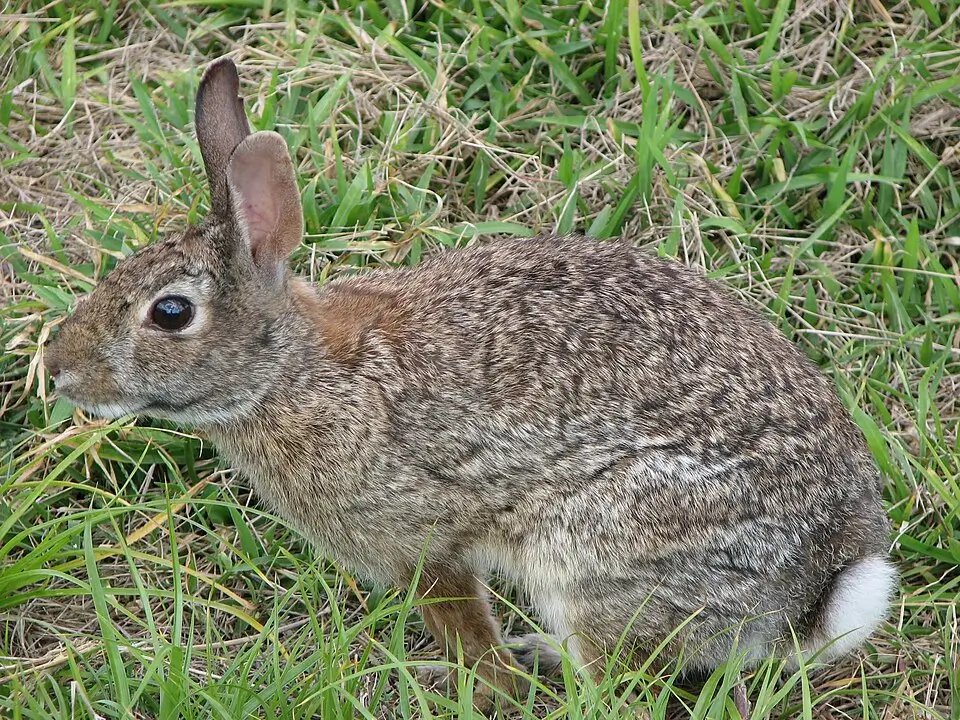
Cottontail rabbits are immediately recognizable by their compact, rounded bodies, large hind legs built for explosive bursts of speed, long ears tuned for detecting predators at great distances, and of course, the distinctive fluffy white tail that gives the entire group its common name. Adult cottontails are relatively small mammals, typically weighing between two and four pounds, though size varies by species and individual condition. Their fur is generally brownish-gray along the back and sides, fading to white on the belly and tail, providing effective camouflage among grasses, brush piles, and rocky terrain.
One of the most remarkable aspects of cottontail biology is their reproductive capacity. Cottontail rabbits are famously prolific breeders, capable of producing multiple litters per year depending on the season and geographic location. Females, known as does, can begin breeding at a remarkably young age, and gestation periods are relatively short — typically around four weeks. Litters commonly contain between three and eight young, called kittens or kits. These young are born in shallow, fur-lined nests in the ground, and they develop quickly, opening their eyes within a week and becoming largely independent in just a few weeks. This rapid reproductive cycle is a biological adaptation that helps sustain populations even under significant predation pressure.
Cottontails are crepuscular to nocturnal in their habits, meaning they are most active during the low-light hours of dawn and dusk, as well as overnight. During daylight hours, they often rest in what are called "forms" — shallow depressions in the grass, brush, or leaf litter — or take shelter in dense vegetation, burrows made by other animals, or rocky outcroppings. Their primary diet consists of grasses, forbs, and other herbaceous vegetation during warmer months, shifting to woody browse such as bark, twigs, and dried grasses when snow covers the ground in winter.
Their senses are finely tuned for survival. Those long ears rotate independently and can detect the faintest sounds from considerable distances. Their large, wide-set eyes provide an almost panoramic field of vision, making it difficult for predators to approach unseen. When threatened, cottontails employ a characteristic zigzag running pattern designed to confuse and outmaneuver pursuers. They are also capable of brief but impressive bursts of speed.
Habitat & Range
The genus Sylvilagus enjoys one of the broadest geographic ranges of any rabbit group in the Americas, with species found from southern Canada all the way through Central and South America. Within the United States, different species occupy different ecological niches, but the overall picture is one of remarkable adaptability.
In Wyoming specifically, cottontail rabbits are found across a wide variety of landscapes. The Mountain cottontail (Sylvilagus nuttallii) is the species most closely associated with Wyoming's terrain, thriving in sagebrush steppe, juniper woodlands, rocky foothills, and the brushy edges of stream corridors. The Desert cottontail (Sylvilagus audubonii) may also be encountered in Wyoming's lower-elevation, more arid zones, particularly in the southern portions of the state.
Wyoming is a landlocked state situated in the Mountain West subregion of the Western United States, bordering Montana to the north and northwest, South Dakota and Nebraska to the east, Idaho to the west, Utah to the southwest, and Colorado to the south. Despite being the tenth-largest state by area, Wyoming is the least populous state in the nation, with an estimated population of approximately 587,618 residents as of 2024. The state capital and most populous city is Cheyenne. This combination of vast open land and relatively sparse human population means that Wyoming supports extensive wild habitats, and cottontail rabbits benefit from the abundance of brushy, undisturbed terrain that characterizes much of the state.
Cottontails in Wyoming tend to concentrate in areas where food and cover are available simultaneously. Sagebrush flats, willow thickets along creek bottoms, brushy draws, and the transitional zones between grassland and shrubland are prime cottontail habitat. These transition zones, sometimes called "edge habitat," are especially productive because they offer the variety of vegetation types that cottontails need for both food and shelter. Rocky terrain with abundant hiding spots is also attractive to these rabbits.
Hunting Information
The cottontail rabbit holds a proud position as one of North America's most popular small game animals. Generations of hunters have been introduced to the sport through cottontail hunting, and for good reason: cottontails are accessible, widely distributed, and provide an enjoyable, action-packed hunting experience that doesn't require expensive gear or lengthy journeys into remote wilderness.
Cottontail hunting can be approached in several ways. Still-hunting or walking slowly through suitable habitat — brushy draws, sagebrush flats, and edge cover — flushes rabbits from their forms. Hunters working with beagles or other scent hounds enjoy the classic tradition of watching dogs work a rabbit's zigzag trail while the hunter positions themselves for a shot. Still other hunters prefer to post near dense brush piles and wait for movement.
Small-bore shotguns are the traditional choice for cottontail hunting, with shot sizes in the range of No. 6 or No. 7½ being popular for close-flushing rabbits in dense cover. Hunters who enjoy a challenge may opt for a small-caliber rifle or even a rimfire, particularly when cottontails are spotted at distance in more open terrain — a scenario that can occur frequently on Wyoming's sagebrush flats. Archery equipment, including traditional bows, recurves, and crossbows, also presents an exciting challenge for those seeking to test their stalking skills.
Wyoming's wide-open public lands, including Bureau of Land Management (BLM) parcels, national forests, and state trust lands, offer extensive opportunities for cottontail hunters to pursue their quarry without the need for special access agreements. As with all hunting in Wyoming, prospective hunters should consult the Wyoming Game and Fish Department for current regulations, licensing requirements, and any season dates that may apply before heading afield. Regulations can change from year to year, and it is always the hunter's responsibility to be informed and compliant.
Cottontail meat is considered by many hunters to be among the finest table fare available from small game. The meat is mild, lean, and versatile, lending itself to a wide variety of preparations — from classic rabbit stew and braised rabbit dishes to grilled or roasted preparations seasoned simply with herbs and wild garlic.
Conservation
Despite their abundance, cottontail rabbits are far from immune to the pressures that affect wildlife populations broadly. Habitat loss and habitat degradation represent the most significant long-term threats to cottontail populations across North America. As shrubby, brushy edges are converted to agricultural monocultures, manicured lawns, or developed land, the quality and quantity of cottontail habitat diminishes.
In Wyoming and across the Mountain West, the health of sagebrush ecosystems is of particular importance to cottontail populations. Sagebrush is a foundational plant community that supports a remarkable diversity of wildlife, and its ongoing health is a conservation priority for state and federal agencies as well as private conservation organizations.
Regulated hunting plays an important role in cottontail conservation. Hunting licenses and associated fees generate funding that supports wildlife management, habitat enhancement, and research programs that benefit game and non-game species alike. The North American Model of Wildlife Conservation, which underpins wildlife management in the United States and Canada, recognizes hunting as a legitimate and valuable conservation tool, and cottontail rabbit management fits squarely within this framework.
Predator-prey dynamics are also a critical aspect of cottontail ecology. Coyotes, foxes, hawks, owls, bobcats, and a host of other predators depend on cottontail rabbits as a food source. Healthy cottontail populations help sustain these predator populations in turn, contributing to the overall biodiversity and ecological balance of ecosystems across Wyoming and beyond.