Overview
Few sights in the natural world are as recognizable and stirring as a V-formation of Canada geese cutting across an autumn sky, their resonant honking carrying across fields and waterways. The Canada goose (Branta canadensis) stands as one of the most iconic and widely recognized waterfowl species in North America. From its striking black-and-white markings to its powerful, purposeful flight, this bird has captured the imagination of naturalists, wildlife enthusiasts, and hunters alike for generations.
In Wyoming — a vast, rugged state defined by sweeping grasslands, mountain ranges, and abundant waterways — the Canada goose is a celebrated part of the natural landscape. Despite being the least populous state in the nation with an estimated population of just 587,618 residents as of 2024, Wyoming's wild spaces teem with wildlife diversity. The state's rivers, reservoirs, wetlands, and agricultural fields provide ideal seasonal habitat for Canada geese, making encounters with this magnificent bird a common and treasured experience for those who spend time outdoors.
Whether you are a seasoned waterfowl hunter, a birdwatcher, or simply someone who appreciates the rhythms of nature, understanding the biology, behavior, and ecology of the Canada goose enriches every encounter with this remarkable species.
Biological Traits
The Canada goose, classified under the family Anatidae — which encompasses ducks, geese, and swans — is one of the largest waterfowl species native to North America. Branta canadensis is the scientific name for the species, placing it within the genus Branta, which includes several other "black geese" such as the Brant and the Barnacle goose.
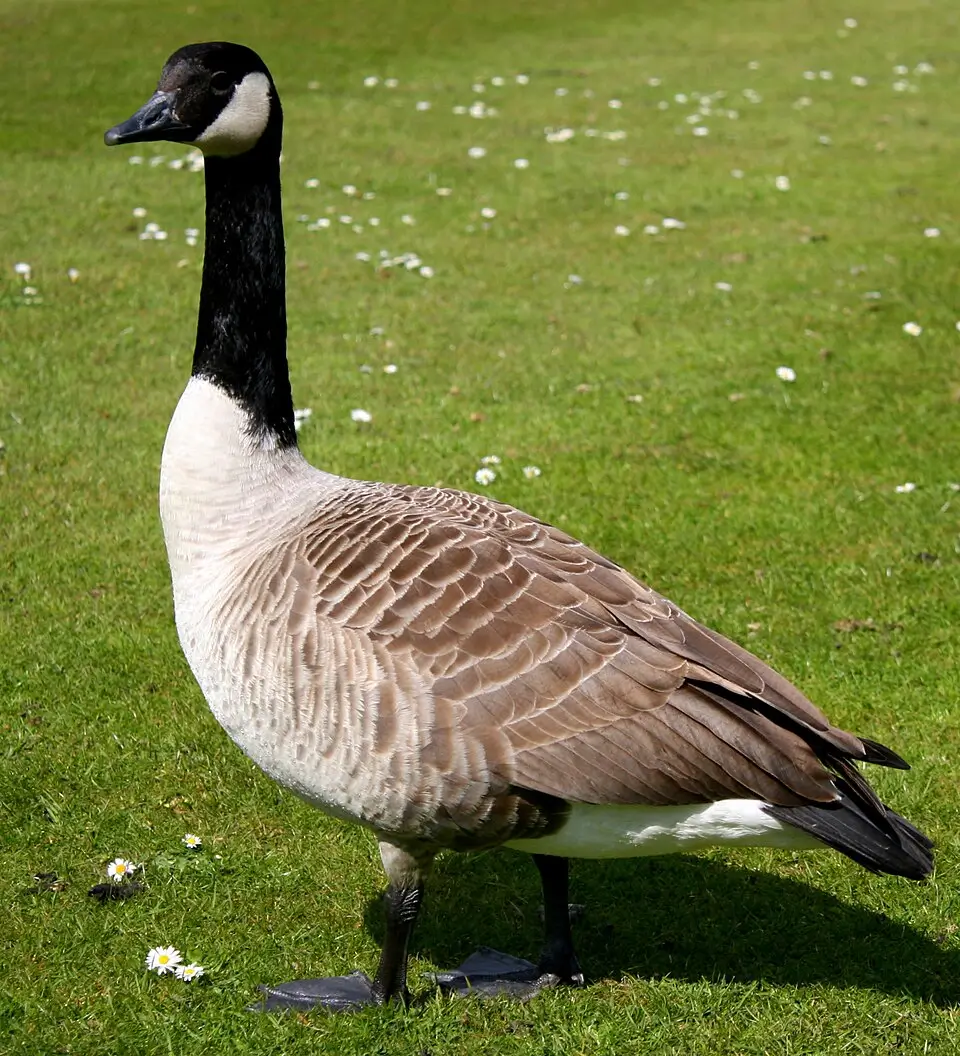
Canada geese are immediately recognizable by their distinctive coloration. Adults feature a black head and neck with a prominent white chin patch, or "chinstrap," that extends from cheek to cheek. The body is typically brownish-gray on the back and sides, with a lighter, often cream-colored breast and belly. The tail is black, and the rump is white. Both males (ganders) and females (geese) share similar plumage, making visual sex determination challenging in the field without observing behavioral cues.
In terms of size, Canada geese are notably large birds. Body length can range from roughly 30 to 43 inches, with wingspans extending impressively. Ganders are typically larger than females, a form of sexual dimorphism common among waterfowl. Their strong, broad wings make them powerful and efficient fliers, capable of traveling hundreds of miles during migration.
One of the Canada goose's most distinctive features is its voice. The loud, two-syllable honk — often transcribed as "ah-honk" — is deeply associated with the changing seasons and is frequently heard before the birds are even seen. These vocalizations serve important social functions, helping flocks maintain cohesion during flight and communicating alarm or aggression on the ground.
Canada geese are highly social animals. Outside of the breeding season, they congregate in large flocks that can number in the hundreds or even thousands. They are also famously loyal partners — pairs typically bond for life, and a goose may not re-mate for a year or more after losing a partner. This monogamous behavior reinforces the species' strong pair bonds and contributes to its success as a nesting species.
The species is also notable for its intelligence and adaptability. Canada geese are quick to learn and remember safe areas, predator threats, and food sources. This cognitive flexibility has allowed the species to thrive in an extraordinary range of environments, from remote wilderness lakes to suburban parks and golf courses.
Habitat & Range
The Canada goose has one of the most extensive ranges of any waterfowl species in North America. The species breeds across much of Canada and the northern United States and winters throughout much of the lower 48 states and into northern Mexico. Their migration routes, known as flyways, are well-established corridors that generations of birds have followed for thousands of years.
In Wyoming, Canada geese are present throughout much of the year. The state's geography — which includes the Rocky Mountains in the western portion, the high plains to the east, and numerous rivers such as the North Platte, Green, and Yellowstone — creates a mosaic of habitats that geese readily exploit. Reservoirs, lakes, ponds, wetland marshes, and the broad river valleys that cut through Wyoming's landscape all provide feeding, resting, and nesting opportunities.
Canada geese are generalist feeders, consuming a wide variety of plant materials including grasses, sedges, aquatic vegetation, grains, and agricultural crops. This dietary flexibility is a key reason for their success across such varied landscapes. In agricultural areas — of which Wyoming has many — geese readily feed on harvested grain fields and hay meadows, building energy reserves for migration or sustaining year-round resident populations.
In recent decades, a subset of the Canada goose population — often referred to as "resident" or "non-migratory" geese — has expanded dramatically across North America. These birds have established year-round territories in areas with favorable conditions, particularly where mild winters, open water, and abundant food exist. Wyoming's varied elevations mean that while high mountain birds typically migrate to lower elevations or out of state for winter, resident populations in lower valleys and near warmer water sources may remain throughout the year.
Hunting Information
The Canada goose holds a storied place in North American hunting tradition. Waterfowl hunting, and goose hunting in particular, is a pursuit steeped in heritage, requiring skill, patience, and a thorough understanding of goose behavior. Hunters employ a variety of techniques to pursue Canada geese, including field decoy spreads, layout blinds, pit blinds, and calling — the latter being a particularly refined skill that successful goose hunters spend years developing.
Canada geese are managed as migratory waterfowl under the Migratory Bird Treaty Act, which means their hunting is regulated at both the federal and state levels. The U.S. Fish and Wildlife Service sets framework seasons, and individual states like Wyoming establish specific season dates, bag limits, and licensing requirements within those frameworks.
For hunters in Wyoming, Canada geese represent one of the most exciting and accessible waterfowl opportunities in the state. Wyoming's agricultural fields, river bottoms, and reservoirs concentrate geese during migration and throughout the season, providing ample opportunity for hunters willing to scout and set up properly.
Important note for hunters: Because specific season dates, bag limits, and license requirements were not available in the source data consulted for this article, hunters are strongly encouraged to consult the Wyoming Game and Fish Department directly for the most current and accurate regulations before heading afield. Regulations can change from year to year based on population assessments and conservation goals, and compliance with all applicable state and federal rules is essential.
Hunting Canada geese typically requires a valid state hunting license and a federal Migratory Bird Hunting and Conservation Stamp — commonly known as the "Duck Stamp." Again, hunters should verify all requirements with Wyoming Game and Fish to ensure full compliance.
Beyond the regulatory framework, ethical hunting practices are a cornerstone of the waterfowl community. Respecting landowners, practicing firearm safety, retrieving downed birds promptly, and honoring the wildlife resource are all hallmarks of the responsible goose hunter.
Conservation
The Canada goose is a conservation success story of the first order. By the mid-20th century, some populations of Canada geese — particularly the Giant Canada goose (Branta canadensis maxima), once thought to be extinct — had declined significantly due to overhunting and habitat loss. Concerted conservation efforts, including habitat restoration, regulated hunting seasons, and protective legislation under the Migratory Bird Treaty Act, helped populations recover dramatically.
Today, Canada goose populations across North America are robust and in many areas thriving. This recovery stands as a testament to what science-based wildlife management, hunter-funded conservation, and regulatory frameworks can achieve. Programs funded in part through the Pittman-Robertson Act — which directs excise taxes on firearms and ammunition toward wildlife conservation — have played a meaningful role in preserving the wetland habitats that Canada geese and countless other species depend upon.
In Wyoming, state wildlife managers work to maintain healthy waterfowl populations while balancing the interests of hunters, farmers, and the broader public. The Wyoming Game and Fish Department monitors goose populations and adjusts management strategies to reflect current conditions.
For individual wildlife enthusiasts and hunters, supporting wetland conservation organizations, purchasing Duck Stamps (even non-hunters can buy them as a conservation contribution), and advocating for clean water and healthy habitat are meaningful ways to contribute to the ongoing success of the Canada goose and the ecosystems it inhabits.
Conclusion
The Canada goose — Branta canadensis — is far more than a familiar face at the local park pond. It is a symbol of wildness, seasonal change, and the enduring resilience of North American wildlife. In Wyoming's wide-open landscapes, the sight and sound of Canada geese evokes everything that makes the American West worth celebrating and protecting.
Whether you pursue them with a shotgun on a cold October morning or simply pause to watch a flock rise from a mountain reservoir at dusk, the Canada goose rewards attention. It is a bird worthy of study, pursuit, and deep respect — a living connection to the natural heritage that defines states like Wyoming and the broader continent we share.