Overview
Few animals embody the wild spirit of North American landscapes quite like the bobcat. Secretive, adaptable, and fiercely independent, the bobcat (Lynx rufus) is the continent's most common and widely distributed wild cat. From the dense forests of the Pacific Northwest to the sun-baked deserts of the Southwest, from the swamps of the Deep South to the wind-swept plains and mountain ranges of Wyoming, this remarkable feline has carved out a successful existence across an astonishing variety of environments. Despite its relatively modest size, the bobcat is a highly effective predator, a fascinating subject of wildlife study, and a prized quarry for hunters and trappers alike.
In Wyoming — a state defined by its vast open spaces, rugged mountain terrain, and extraordinary biodiversity — the bobcat occupies a particularly important ecological niche. Wyoming's sheer size and low human population density (the state is the least populous in the nation, with an estimated 587,618 residents as of 2024) create ideal conditions for wildlife to thrive with minimal disturbance. The state's sprawling landscapes, which border Montana, South Dakota, Nebraska, Idaho, Utah, and Colorado, support a rich tapestry of ecosystems that bobcats call home.
Whether you are a hunter, a naturalist, a wildlife photographer, or simply an outdoor enthusiast curious about the animals that share Wyoming's wild places, understanding the bobcat is a rewarding endeavor. This article offers a comprehensive look at this iconic predator — its biology, its habitat, its behavior, and its relationship with hunters and conservationists.
Biological Traits
The bobcat belongs to the family Felidae and the genus Lynx, making it a close relative of the Canada lynx (Lynx canadensis), the Eurasian lynx (Lynx lynx), and the Iberian lynx (Lynx pardinus). Its scientific name, Lynx rufus, reflects its characteristic coloration — rufus is Latin for "red" or "reddish," a nod to the animal's tawny, reddish-brown coat.
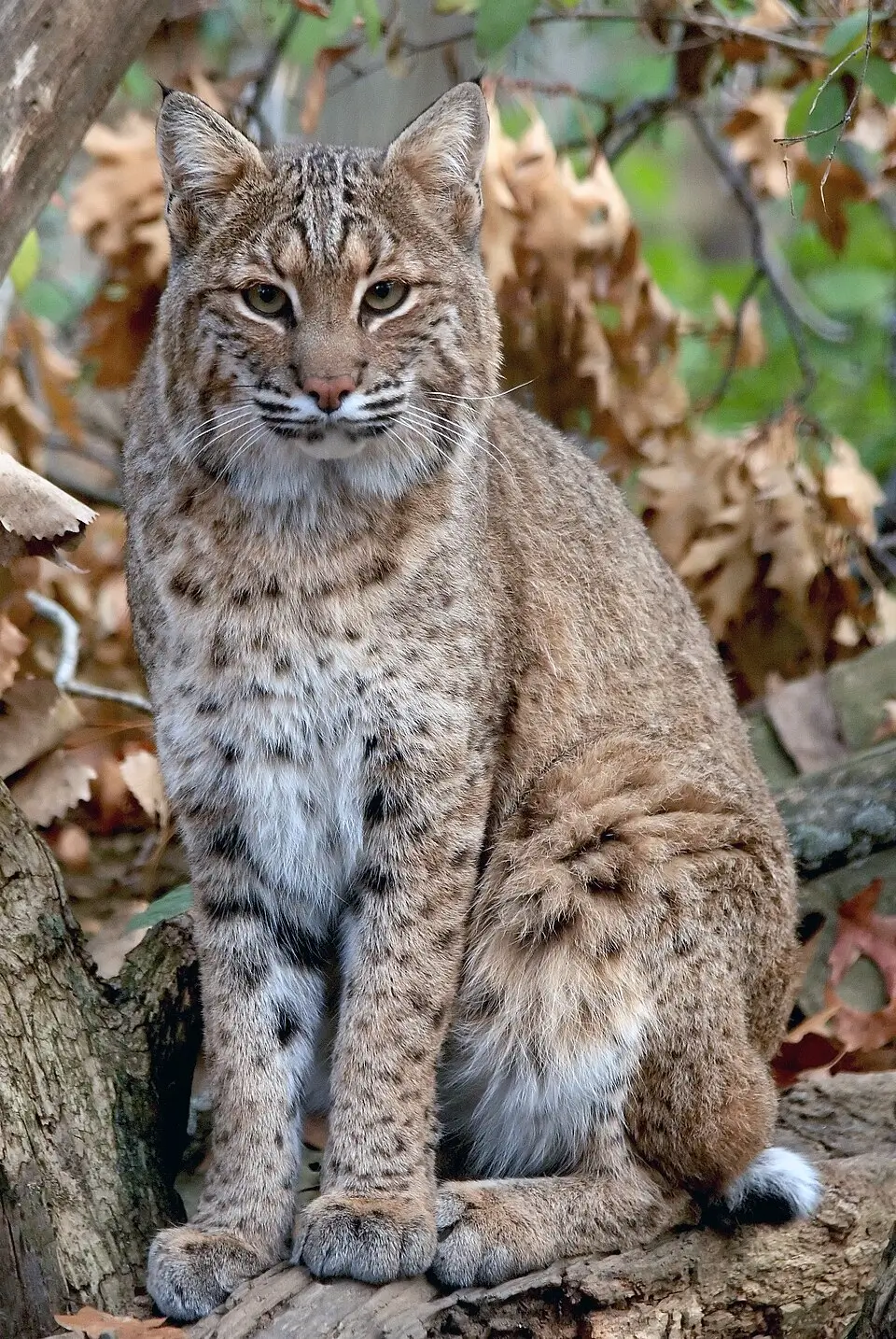
The bobcat's most recognizable feature is, of course, its short, stubby tail — the source of its common name. This distinctive "bobbed" tail typically measures only a few inches in length and is marked with black bands and a black tip on the upper surface, while the underside is white. The coat itself is a masterwork of natural camouflage, featuring a base of tawny or brownish fur overlaid with dark streaks and spots that help the animal blend seamlessly into its surroundings. The belly is typically white and spotted, and the face is framed by a ruff of fur that gives the bobcat a slightly lion-like appearance.
Bobcats are medium-sized cats, significantly larger than a domestic cat but smaller than a mountain lion or cougar. Adult males are generally larger than females, a characteristic known as sexual dimorphism. The ears are pointed and tipped with short tufts of black fur — less pronounced than those of the Canada lynx but still distinctive. The eyes are large and yellow, with vertical slit pupils that are highly adapted for low-light conditions, reflecting the bobcat's predominantly crepuscular and nocturnal habits.
As a predator, the bobcat is both versatile and efficient. Its primary prey varies by region and season but most commonly includes rabbits and hares, which form the backbone of its diet throughout much of its range. However, the bobcat is an opportunistic hunter capable of taking a wide variety of prey, including squirrels, mice, rats, birds, and occasionally deer — particularly fawns or weakened adults. This dietary flexibility is one of the key reasons the bobcat has been so successful across such a diverse range of habitats.
Bobcats are solitary animals, with the exception of mating season and the period when mothers are raising kittens. They are highly territorial, maintaining home ranges that they mark with scent, scratch marks on trees, and other visual and olfactory signals. Males typically have larger home ranges than females, and these ranges often overlap with the territories of multiple females. Breeding typically occurs in late winter to early spring, and after a gestation period of roughly 60 to 70 days, females give birth to litters of two to four kittens. The young are born blind and helpless but develop quickly, beginning to accompany their mother on hunts before eventually dispersing to establish their own territories.
Habitat & Range
The bobcat's range is among the most expansive of any wild cat in the Western Hemisphere. It is found throughout most of the contiguous United States, southern Canada, and northern and central Mexico. This broad distribution is a testament to the species' remarkable adaptability — bobcats have demonstrated the ability to thrive in forests, deserts, swamps, scrublands, grasslands, and even suburban and semi-urban environments where human development has encroached upon natural habitats.
In Wyoming, the bobcat finds an exceptionally diverse array of suitable habitats. The state's geography includes towering mountain ranges such as the Wind River Range, the Absaroka Range, and the Teton Range, as well as vast sagebrush flats, river bottoms, badlands, and high desert plateaus. Bobcats in Wyoming are often associated with rocky terrain, brushy draws, and riparian corridors — areas that provide both suitable cover for stalking prey and denning sites for raising young. Rocky outcroppings and cave systems serve as preferred den locations, offering shelter from Wyoming's harsh winters.
The bobcat's ability to exploit a wide range of prey species is directly tied to its habitat flexibility. In Wyoming's sagebrush country, black-tailed jackrabbits and cottontail rabbits are abundant, providing reliable food sources. In forested mountain zones, the bobcat may shift its diet toward snowshoe hares, squirrels, and birds. Along river bottoms and wetland edges, waterfowl and other small animals may supplement the diet.
Unlike the Canada lynx, its close relative, the bobcat does not have highly specialized feet for deep snow travel. This limits its presence in areas with persistent, deep snowpack — conditions that favor the lynx. In Wyoming, bobcat populations tend to be denser at lower elevations and in areas with less extreme winter snow accumulation, though they are certainly capable of navigating mountainous terrain.
Hunting Information
The bobcat has a long tradition as a quarry species for hunters and trappers across North America. Its thick, beautifully patterned fur has been valued in the fur trade for generations, and the challenge of pursuing such a wary, elusive predator makes bobcat hunting a pursuit that demands skill, patience, and intimate knowledge of the animal's habits.
Traditional methods of bobcat hunting include the use of hounds — specially trained dogs that track and tree or bay the cat — as well as calling techniques, in which hunters use predator calls imitating wounded prey to lure bobcats into range. Trapping is another widely practiced method and has historical roots stretching back to the earliest days of the North American fur trade.
In Wyoming, anyone interested in pursuing bobcat should contact the Wyoming Game and Fish Department directly for the most current and accurate information regarding seasons, licensing requirements, bag limits, and any applicable regulations. Hunting regulations are subject to change from year to year, and it is always the responsibility of the individual hunter or trapper to obtain the most up-to-date official guidance before heading afield. The Wyoming Game and Fish Department maintains comprehensive resources both online and through regional offices throughout the state.
Given Wyoming's vast public lands — including millions of acres managed by the Bureau of Land Management, the U.S. Forest Service, and various state agencies — there is no shortage of accessible terrain for those pursuing bobcats. The state's combination of suitable habitat, relatively low hunting pressure compared to more densely populated states, and a healthy bobcat population makes Wyoming an attractive destination for predator hunters.
Conservation
The bobcat's conservation status is a genuine success story in North American wildlife management. The species is currently classified as a species of least concern by the International Union for Conservation of Nature (IUCN), reflecting its stable and widespread populations across the continent. This is in stark contrast to many other wild cat species globally, which face serious threats from habitat loss, prey depletion, and human persecution.
The bobcat's resilience is rooted in several key biological traits: its dietary flexibility, its ability to adapt to human-altered landscapes, its relatively high reproductive rate compared to larger felids, and its capacity to thrive across a vast range of habitat types. These characteristics have allowed bobcat populations to recover in areas where they were previously depleted by unregulated hunting and trapping during the nineteenth and early twentieth centuries.
Regulated hunting and trapping have played a meaningful role in the sustainable management of bobcat populations across the United States. Most states with established bobcat hunting seasons, including Wyoming, manage the species through science-based frameworks that set harvest limits based on population monitoring and ecological data. This approach ensures that recreational hunting contributes to, rather than detracts from, the long-term health of the species.
Conservation organizations, state wildlife agencies, and hunting advocacy groups have generally aligned in their support for responsible bobcat management. The preservation of large, connected tracts of natural habitat remains the single most important factor in ensuring healthy bobcat populations for future generations. In a state like Wyoming, where undeveloped land is abundant and human population density is low, the outlook for bobcats is particularly positive.
Conclusion
The bobcat is one of North America's most captivating and successful wild predators. Its combination of physical elegance, behavioral adaptability, and ecological importance makes it a species worthy of admiration and careful stewardship. For hunters in Wyoming and beyond, the bobcat represents a challenging and rewarding quarry — a animal that demands respect, preparation, and woodsmanship. For conservationists and wildlife enthusiasts, it stands as a symbol of nature's resilience and the value of thoughtful wildlife management. Understanding and appreciating the bobcat enriches our relationship with the natural world and reinforces the importance of protecting the wild landscapes that sustain it.