Overview
Few creatures embody the spirit of the American wilderness quite like the wild turkey. Standing tall in forest clearings, strutting through misty mountain hollows, and filling the early morning air with their unmistakable gobble, wild turkeys (Meleagris gallopavo) are among the most recognized and celebrated game birds on the continent. From the hardwood ridges of Appalachia to the sweeping grasslands of the Great Plains, this remarkable bird has captured the imagination of naturalists, wildlife enthusiasts, and hunters alike for centuries.
In West Virginia — affectionately known as "Almost Heaven" — the wild turkey holds a special place in the outdoor tradition. The Mountain State's rugged terrain, dense hardwood forests, and rich biodiversity create an ideal environment for this magnificent bird to thrive. Whether you are a seasoned hunter who has spent decades chasing longbeards through the morning fog or a first-time visitor eager to explore West Virginia's wild places, understanding the wild turkey is an experience that deepens your connection to the natural world.
This article explores the biology, habitat, hunting traditions, and conservation story of the wild turkey, with a focus on what makes West Virginia such an exceptional destination for encountering this iconic species.
Biological Traits
The wild turkey, Meleagris gallopavo, is the heaviest member of the order Galliformes found in North America, and it is one of only two species in the genus Meleagris, the other being the ocellated turkey (Meleagris ocellata) of the Yucatán Peninsula. As a species, the wild turkey is a study in evolutionary success — a bird that has adapted over millennia to thrive across a diverse range of environments.
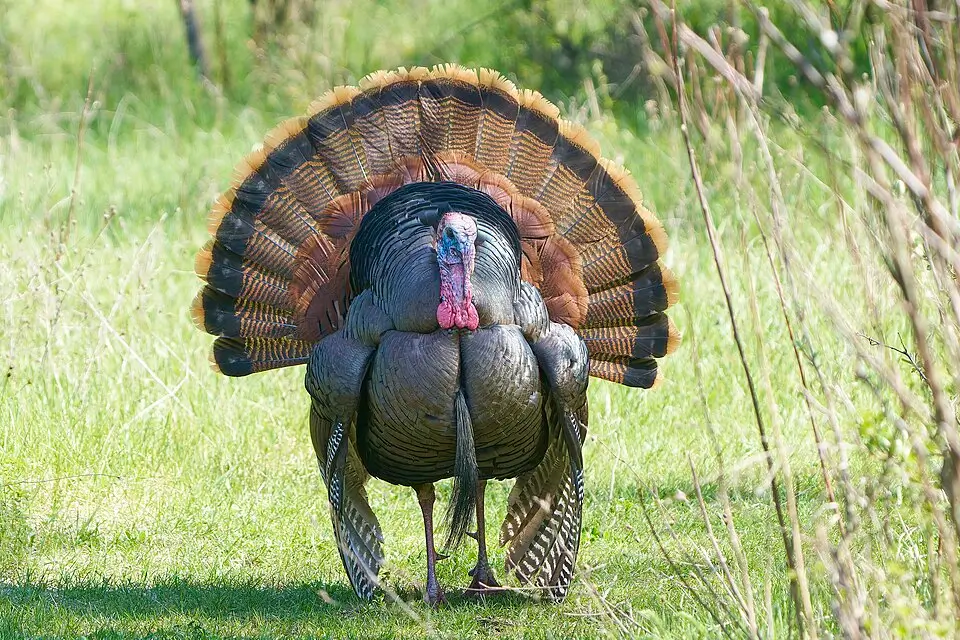
Adult male wild turkeys, known as "toms" or "gobblers," are imposing birds. They are covered in iridescent feathers that shimmer with hues of bronze, copper, green, and gold in the right light — a stunning display that serves an important role in attracting mates. Toms are well known for their striking physical features, including a fleshy red and blue head largely devoid of feathers, a prominent snood (the fleshy appendage that drapes over the beak), caruncles (the bumpy protrusions on the neck and head), and a distinctive beard — a tuft of modified feathers that projects from the chest. Some exceptional gobblers can weigh upward of 20 to 25 pounds, though averages are somewhat lower depending on the subspecies and region.
Female wild turkeys, called "hens," are considerably smaller and sport more muted plumage, which provides excellent camouflage during the nesting season. While hens lack the extravagant beard typical of toms, a small percentage do grow bearded feathers — a trait that makes them a unique trophy among hunters.
Young male turkeys are called "jakes," and they can be distinguished from mature toms by their shorter beards and the fact that their central tail feathers are noticeably longer than the surrounding ones — a useful field identification tip for hunters.
Wild turkeys are highly social birds. During the fall and winter months, they typically form flocks segregated by sex and age. Come spring, the breeding season brings dramatic behavioral changes. Toms will gobble loudly from roost trees before dawn, then fan their tail feathers and strut conspicuously in open areas — a display designed to attract hens and intimidate rival males. This gobbling behavior is at the heart of spring turkey hunting culture and is one of the most thrilling sounds in the American outdoors.
The wild turkey's diet is broad and opportunistic. Turkeys forage on the ground for a wide variety of foods including acorns, seeds, berries, insects, small reptiles, and amphibians. This dietary flexibility is one of the key reasons they can thrive across such a wide geographic range. Their sharp eyesight — widely regarded as among the keenest of any North American game animal — and cautious nature make them a true challenge to hunt and observe.
There are six recognized subspecies of wild turkey in North America: the Eastern (M. g. silvestris), Osceola (M. g. osceola), Rio Grande (M. g. intermedia), Merriam's (M. g. merriami), Gould's (M. g. mexicana), and South Mexican (M. g. gallopavo). The Eastern wild turkey is by far the most widely distributed subspecies and is the bird that calls the forests of West Virginia home.
Habitat & Range
Wild turkeys are native to North America and have one of the broadest ranges of any upland game bird on the continent. Historically, they were found across much of what is now the eastern United States, as well as portions of the Midwest, Southwest, and Mexico. Through a combination of habitat loss, overhunting, and population decline, they disappeared from large portions of their original range by the early twentieth century. Thanks to successful reintroduction programs, wild turkeys are now found in all 49 continental states and parts of Canada.
Wild turkeys are most closely associated with mature hardwood and mixed hardwood-conifer forests, particularly those with abundant mast-producing trees such as oaks, hickories, and beeches. These trees provide the acorns and nuts that form the cornerstone of the turkey's diet during fall and winter. Open areas — meadows, agricultural fields, forest edges, and clearings — are equally important, as turkeys rely on these spaces for foraging, strutting, and raising their young.
West Virginia's geography is particularly well suited to wild turkeys. The state is one of the most forested in the eastern United States, with millions of acres of hardwood forest blanketing its mountains and valleys. The Appalachian ridges and hollows of the Mountain State provide an abundance of oak and hickory mast, interspersed with open meadows and creek bottoms that turkeys favor throughout the year. The Monongahela National Forest, the numerous Wildlife Management Areas maintained by the West Virginia Division of Natural Resources, and the vast tracts of public land scattered across the state all provide excellent turkey habitat.
Spring finds turkeys dispersed across the landscape, with gobblers actively seeking hens in forest openings, fields, and along logging roads. By summer, hens are raising broods of young poults in brushy areas rich with insects, which are essential protein sources for growing chicks. As autumn arrives, turkeys shift their focus toward mast crops, often congregating in large flocks wherever acorns are plentiful.
Hunting Information
Wild turkey hunting holds a deep and respected place in West Virginia's outdoor heritage. The Mountain State's diverse terrain — from the high plateau country of Pocahontas and Randolph counties to the lower ridges and hollows of the western counties — offers hunters a wide variety of settings in which to pursue the Eastern wild turkey.
West Virginia offers both spring and fall turkey hunting seasons, giving hunters multiple opportunities to experience the challenge of pursuing this wary game bird. Spring hunting, which coincides with the breeding season, is widely considered the pinnacle of the turkey hunting experience. Hunters use calls — mouth calls, box calls, slate calls, and others — to mimic the vocalizations of hens, attempting to lure lovesick gobblers within shooting range. The interplay between a skilled caller and a fired-up gobbler is one of the most exciting and emotionally engaging experiences in all of hunting.
Fall turkey hunting offers a different but equally rewarding challenge. Rather than relying on breeding behavior, fall hunters often work to locate and scatter flocks, then use assembly calls to bring birds back together — a technique that requires patience, woodsmanship, and an understanding of turkey behavior.
Hunters in West Virginia are required to obtain the appropriate licenses and follow all applicable regulations set forth by the West Virginia Division of Natural Resources. Prospective hunters — particularly those new to the Mountain State — are encouraged to consult the official West Virginia Hunting Guide, which provides up-to-date information on seasons, bag limits, licensing requirements, and legal equipment. The state makes purchasing a hunting license more convenient than ever, with options available for both residents and non-residents. First-time hunters in West Virginia are especially encouraged to review the state's helpful introductory resources before heading afield.
Safety, ethical behavior, and respect for the land and the animal are fundamental values of the West Virginia hunting community. Turkey hunters are advised to wear blaze orange or camouflage depending on the season, use appropriate shot sizes for ethical harvests, and always positively identify their target before shooting.
Conservation
The story of the wild turkey's recovery is one of the great conservation success stories in American history. By the early 1900s, wild turkey populations had been decimated across much of their original range due to habitat destruction and unregulated hunting. Populations that once numbered in the tens of millions had been reduced to just a few hundred thousand birds scattered across isolated pockets of suitable habitat.
The turnaround began in earnest in the mid-twentieth century, driven by a combination of improved game management practices, habitat restoration, and one of the most ambitious trap-and-transfer programs ever undertaken for a game species. State wildlife agencies, working in partnership with organizations such as the National Wild Turkey Federation (NWTF), captured wild-trapped birds and relocated them to suitable habitats across the country. This approach proved far more successful than earlier attempts using pen-raised birds, which lacked the survival skills needed to thrive in the wild.
Today, wild turkey populations across the United States are estimated to exceed six million birds — a remarkable recovery that stands as a testament to what science-based wildlife management and hunter-driven conservation can achieve. In West Virginia, the wild turkey is a thriving resident of the state's forests, and its presence is a point of pride for hunters, wildlife managers, and outdoor enthusiasts across the state.
The continued health of wild turkey populations depends on maintaining quality habitat — particularly mature hardwood forests with abundant mast production, clean water sources, and open areas for nesting and brood-rearing. Hunters, landowners, and conservation organizations all play important roles in ensuring that the forests and fields of West Virginia remain productive habitat for wild turkeys and the many other species that share their world.
Conclusion
The wild turkey is more than a game bird — it is a living symbol of the American landscape and the enduring power of conservation. In West Virginia, where forested mountains stretch in every direction and the call of a gobbling tom echoes through misty spring hollows, the wild turkey is very much at home. Whether you are pursuing one with a shotgun or bow, watching a flock feed through an autumn meadow, or simply marveling at a strutting gobbler in full display, the experience of encountering Meleagris gallopavo in the wild is one that leaves a lasting impression.
West Virginia's public lands, diverse habitats, and rich hunting traditions make it one of the finest destinations in the eastern United States for experiencing the wild turkey in its natural element. For hunters and nature lovers alike, "Almost Heaven" truly lives up to its name when the turkeys are gobbling.