Overview
Few animals in the natural world command as much respect, fascination, and hunting tradition as the wild boar. Known scientifically as Sus scrofa, the wild boar is one of the most widely distributed and ecologically significant large mammals on the planet. With a history intertwined with human civilization dating back thousands of years, this robust and intelligent animal has earned its place as both a prized game species and a subject of serious wildlife study.
For hunters, the wild boar represents one of the most challenging and rewarding pursuits available in North America and around the world. Its sharp senses, unpredictable nature, and formidable physical presence make it a quarry that demands preparation, patience, and skill. Whether you are a seasoned hunter looking for your next great challenge or a curious naturalist seeking to understand one of nature's most adaptable creatures, the wild boar deserves your full attention.
In states like West Virginia — a rugged, mountainous landscape nestled in the heart of Appalachia — the wild boar and its feral domestic relatives occupy a complex niche in both the ecosystem and the hunting culture. This guide will explore the biology, habitat, hunting opportunities, and conservation considerations surrounding this iconic animal, offering an informative and engaging look at one of the world's most remarkable wild creatures.
Biological Traits
The wild boar, Sus scrofa, belongs to the family Suidae within the order Artiodactyla, which groups it alongside other even-toed ungulates. It is the direct wild ancestor of the domestic pig, and the two can and do interbreed, producing feral hybrid populations that are found across multiple continents.
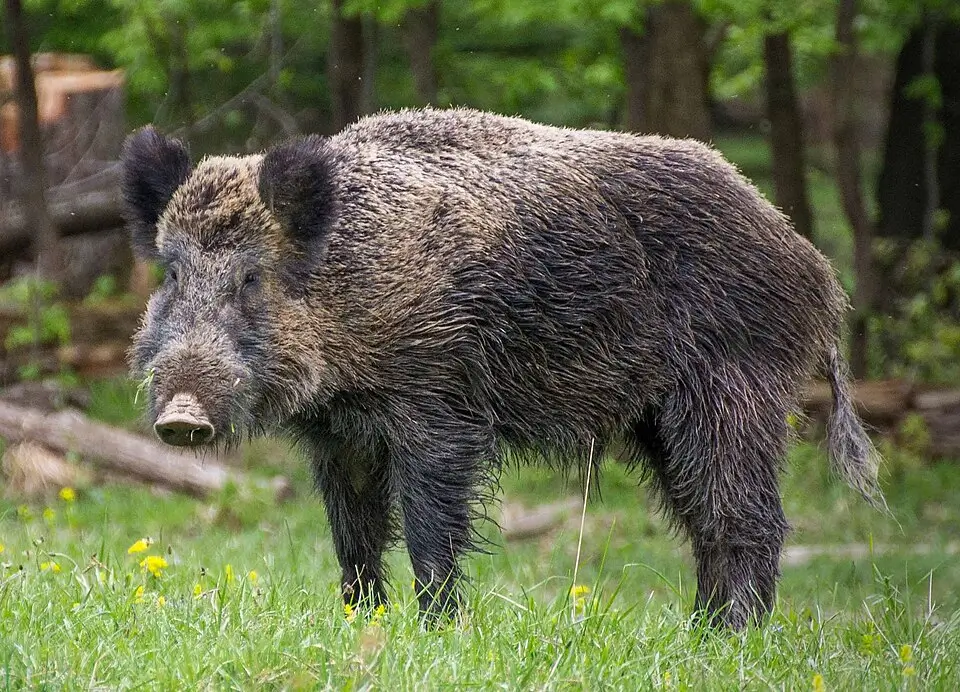
One of the most immediately recognizable features of the wild boar is its powerful, stocky build. Wild boars possess a large, wedge-shaped head that comprises a significant portion of their overall body mass. This anatomical trait is not merely cosmetic — it is a functional adaptation that allows the animal to root aggressively through soil, leaf litter, and rocky terrain in search of food. The elongated snout houses a tough cartilaginous disc that acts almost like a natural shovel, making the boar an extraordinarily effective forager.
Both male and female wild boars possess tusks, though the tusks of males — known as boars — are significantly more pronounced and can grow to impressive lengths. These tusks are actually canine teeth that grow continuously throughout the animal's life. In males, the upper and lower tusks rub against each other as the jaw moves, naturally honing them into sharp, dangerous weapons used in combat with rivals and as defense against predators.
Wild boars are covered in a coarse, bristly coat that typically ranges from dark brown to black or grayish in coloration, though regional and individual variation does occur. A distinctive ridge of longer, stiffer hair often runs along the spine, becoming especially pronounced when the animal is alarmed or agitated — giving rise to the classic image of the bristling, charging boar. Juveniles are born with distinctive striped coats of tan and brown, a pattern that provides effective camouflage in dappled forest light during their earliest weeks of life.
In terms of size, adult wild boars are substantial animals. While exact measurements vary by region and population, mature males are considerably larger than females. The species is known for its surprising speed and agility despite its bulky frame, and it is fully capable of charging at short distances with considerable force.
Wild boars are omnivores with a remarkably broad diet. They consume roots, tubers, fungi, fruit, nuts — particularly acorns and beechnuts during mast seasons — as well as insects, small vertebrates, carrion, and agricultural crops. This dietary flexibility is a key factor in the species' extraordinary adaptability and its success in colonizing such a wide range of environments.
The reproductive capacity of Sus scrofa is one of the most significant aspects of its biology. Females, known as sows, can reach sexual maturity in as little as eight to ten months under favorable conditions. Litter sizes typically range from four to six piglets, though larger litters are not uncommon. With multiple breeding cycles possible per year under ideal conditions, wild boar populations can rebound quickly from hunting pressure — a fact that has important implications for wildlife management.
Wild boars are also highly intelligent animals. Research and field observation consistently demonstrate sophisticated problem-solving abilities, strong social memory, and complex group behaviors. Sows and their offspring typically form social units called sounders, while mature males tend to live more solitary lives outside of the breeding season.
Habitat & Range
The wild boar is one of the most geographically widespread terrestrial mammals on Earth. Its native range spans a vast territory from Western Europe and North Africa across Asia to the Indonesian archipelago. Through a combination of natural dispersal, deliberate introduction, and the escape or release of domestic pigs, feral populations of Sus scrofa have become established on every continent except Antarctica.
In North America, feral and hybrid wild boar populations have expanded dramatically over recent decades and are now found in a large number of states. The species demonstrates an impressive ability to thrive in a wide variety of habitat types, including deciduous and mixed forests, wetlands, river bottoms, shrublands, and agricultural margins.
Wild boars show a particular affinity for habitats that offer a combination of dense cover for bedding and security, reliable water sources, and abundant food resources. Mast-producing forests — those dominated by oaks, beeches, and hickories — are especially attractive during the fall and winter months when acorns and nuts represent a high-calorie food source critical for building fat reserves.
West Virginia, with its heavily forested mountains, numerous river drainages, and varied topography, provides habitat characteristics that are broadly compatible with the environmental preferences of wild boar and feral swine populations. The state's landscape, shaped by the rugged Appalachian highlands, includes extensive hardwood forests that produce substantial annual mast crops. The state is bordered by Pennsylvania and Maryland to the northeast, Virginia to the southeast, Kentucky to the southwest, and Ohio to the northwest, and its interior is characterized by a mosaic of forested ridges, river valleys, and rural agricultural lands — a landscape that the adaptable wild boar is well-suited to exploit.
Hunting Information
Hunting wild boar is a tradition with deep historical roots across Europe, Asia, and increasingly in North America. For hunters in the United States, feral hogs and wild boar represent one of the few large game animals that can often be pursued with fewer seasonal restrictions than white-tailed deer or wild turkey, reflecting both the ecological concerns associated with expanding feral populations and the desire to promote hunting as a management tool.
In West Virginia, prospective hunters are encouraged to consult the official West Virginia Hunting Guide for the most current information regarding licenses, seasons, and regulations. The state's Division of Natural Resources manages hunting programs across its varied landscape, and purchasing a West Virginia hunting license is described as more convenient than ever before, with options available for both residents and non-residents.
For those new to hunting in West Virginia — a state that proudly markets itself as "Almost Heaven" — the state provides a dedicated first-time hunter guide to help newcomers navigate the experience of pursuing game in its remarkable landscapes. Hunters are advised to read all relevant guidelines, purchase the appropriate license, and select a hunting destination carefully before heading afield.
Wild boar hunting typically demands specific equipment and strategies. Many hunters favor medium to large caliber rifles capable of delivering significant energy on a dense-bodied, thick-skinned animal. Shotguns with slugs, crossbows, and traditional archery equipment are also used by experienced hunters pursuing this challenging quarry. Shot placement is critical, as wild boars possess a tough cartilaginous shield — sometimes called a "shield" — over their shoulder area, which can deflect poorly placed shots.
Hunting methods for wild boar vary widely. Some hunters pursue boar with dogs, using hounds to locate and bay the animal before the hunter moves in for a close-range shot or harvest. Still hunting and spot-and-stalk approaches are also effective, particularly in forested terrain where knowledge of travel corridors, wallows, and feeding areas can put a hunter in the right position at the right time. Baiting is another common technique in jurisdictions where it is legally permitted, as wild boars readily return to established food sources.
Conservation
The conservation picture surrounding wild boar is genuinely complex. As a native species across much of Europe and Asia, Sus scrofa is an important part of natural ecosystems, contributing to soil disturbance and nutrient cycling through its rooting behavior and serving as prey for large predators. In its native range, the wild boar is not a conservation concern and in many areas represents a healthy, sustainably harvested game species.
In regions where feral hog and wild boar populations have become established outside their native range — including many parts of North America — the situation requires careful wildlife management attention. Feral swine can have substantial impacts on native vegetation, soil stability, and wildlife communities, and population monitoring is an ongoing priority for wildlife agencies.
In this context, regulated hunting plays a genuinely valuable role as a wildlife management tool. Hunters who pursue wild boar and feral hogs contribute to population monitoring through mandatory check-in programs and harvest data, and their participation supports the broader goals of wildlife conservation agencies at both the state and federal level. West Virginia, like many states, requires hunters to check in game as part of its wildlife management framework.
The wild boar also holds significant cultural and ecological value in its native range. In European traditions especially, boar hunting has long been considered a noble and demanding pursuit, celebrated in art, literature, and oral tradition across many centuries.