Overview
Few animals in North America are as instantly recognizable — or as universally respected — as the striped skunk (Mephitis mephitis). With its bold black-and-white coloring and legendary chemical defense, this fascinating mustelid-relative has carved out a unique niche in the ecosystems of the continent. Found from southern Canada all the way through the United States and into northern Mexico, the striped skunk is a creature that commands attention wherever it roams. Despite its reputation, the striped skunk plays a vital and often underappreciated role in the natural world, serving as a skilled predator of insects and small rodents while simultaneously supporting larger predators as prey.
In West Virginia — the mountain state known affectionately as "Almost Heaven" — the striped skunk is a familiar presence across a wide variety of landscapes. From the dense hardwood forests of the Appalachian highlands to the agricultural valleys and suburban fringes that define much of the state's lower elevations, this adaptable omnivore thrives in the diverse environments that West Virginia has to offer. For hunters, naturalists, and wildlife enthusiasts alike, the striped skunk is a species well worth knowing.
Biological Traits
The striped skunk (Mephitis mephitis) belongs to the family Mephitidae, a group of mammals commonly known as skunks. The scientific name Mephitis is derived from the Latin word for a noxious or poisonous gas — an apt designation for a creature whose primary defense mechanism is one of the most effective chemical deterrents in the animal kingdom.
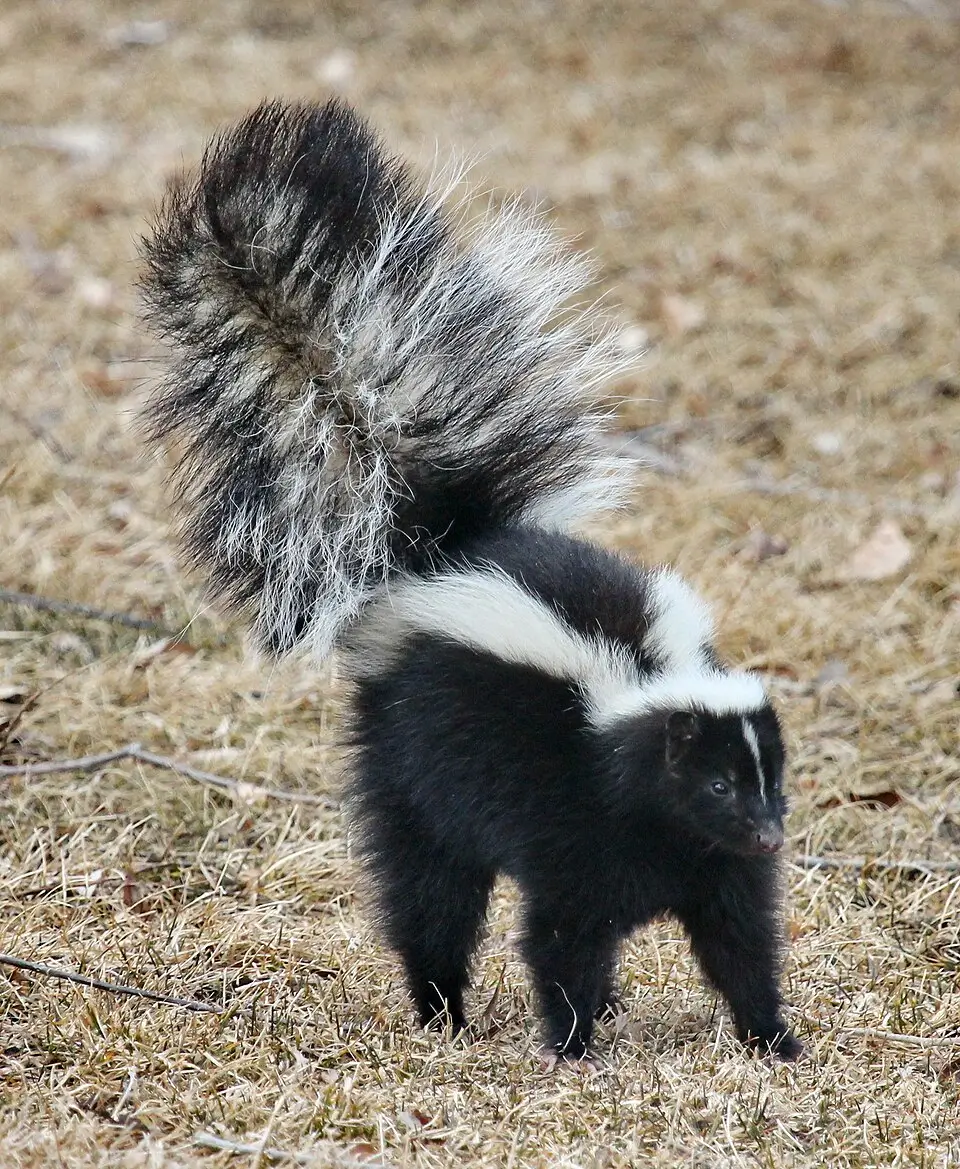
In terms of physical appearance, the striped skunk is a medium-sized mammal, typically comparable in size to a house cat. Adults generally weigh between four and ten pounds, with males tending to be larger than females. The body is stout and low-slung, supported by short but powerful legs equipped with long, sharp claws that are well-adapted for digging. The tail is long and bushy, and when threatened, it is raised high as a warning signal before the animal deploys its defensive spray.
The most distinctive visual feature of the striped skunk is, of course, its coloration. The base coat is a deep, glossy black, set off by two prominent white stripes that run from the nape of the neck down the length of the back, converging near the base of the tail. This bold pattern is not accidental — it represents a form of aposematic coloration, a biological strategy in which an animal uses vivid, high-contrast markings to warn potential predators of its chemical defenses. Most experienced predators learn quickly to avoid animals bearing this distinctive pattern.
The chemical defense of the striped skunk is produced by a pair of highly developed anal scent glands capable of projecting a sulfur-containing chemical compound called thiol — specifically a mixture of sulfur-containing thiols and thioacetates — with remarkable accuracy. A skunk can spray this oily, volatile liquid with precision at distances of up to ten feet, and the odor is detectable by the human nose from much farther away. Before spraying, skunks typically issue a series of clear warning signals, including foot stamping, hissing, and raising the tail. These warnings give potential threats an opportunity to retreat before the animal is forced to use its primary defense.
Despite this formidable reputation, the striped skunk is a remarkably curious and intelligent animal. It is omnivorous, feeding on a wide variety of food sources depending on the season. During warmer months, insects — particularly beetles, grasshoppers, and grubs — make up a large portion of the diet. Skunks are highly proficient at digging up ground-dwelling insect larvae, and their activity often benefits gardens and lawns by reducing pest populations. Small mammals, bird eggs, frogs, crayfish, fruits, berries, and carrion round out the diet, making the striped skunk one of the more generalist feeders in North American wildlife.
One of the more interesting aspects of striped skunk biology is its approach to winter. Skunks are not true hibernators but enter a state of torpor during the coldest months, retreating to dens — which may be self-dug burrows, abandoned burrows of other animals, or sheltered spaces beneath structures — and reducing their activity significantly. During mild winter spells, it is not uncommon to observe skunks emerging briefly from their dens to forage. Skunks may share communal dens during winter, particularly females and juveniles grouping together for warmth.
Mating typically occurs in late winter or early spring, and females give birth to litters of four to seven young — called kits — after a gestation period of approximately 60 to 75 days. The kits are born blind and helpless but develop rapidly, and by late summer they are largely independent. Female skunks are devoted mothers and will aggressively defend their young.
The striped skunk has a relatively short lifespan in the wild, typically living two to four years, though individuals in captivity have been known to survive considerably longer. Natural predators include great horned owls — one of the few animals with a sufficiently poor sense of smell to regularly prey on skunks — as well as coyotes, bobcats, foxes, and occasionally large raptors.
Habitat & Range
The striped skunk is one of the most widely distributed mustelid-relatives in North America, ranging from southern Canada through virtually the entire continental United States and into the northern regions of Mexico. This broad range is a testament to the species' remarkable adaptability.
Striped skunks are highly tolerant of human-modified landscapes and can be found in agricultural areas, suburban neighborhoods, open forests, brushy fields, wetland margins, and mixed woodlands. They tend to favor edge habitats — transitional zones between different habitat types — where food resources are abundant and denning opportunities are plentiful. They generally avoid dense, unbroken forest interiors and extremely arid environments.
In West Virginia, with its varied topography encompassing rugged mountain terrain, river valleys, rolling farmland, and extensive mixed hardwood forests, the striped skunk finds a wealth of suitable habitat. The state's agricultural areas and forest edges are particularly favorable, offering the combination of open foraging ground and wooded cover that skunks prefer. West Virginia's rich biodiversity and relatively low human population density outside of its small cities mean that wildlife like the striped skunk can thrive across large portions of the state.
Hunting Information
The striped skunk has a long history as a furbearer in North America. Historically, skunk fur was commercially valuable, and skunk trapping was a meaningful part of the North American fur trade during the 19th and early 20th centuries. While the commercial fur market has changed considerably over the decades, striped skunks remain classified as furbearers in many states and are subject to hunting and trapping regulations.
For hunters and trappers interested in pursuing striped skunks in West Virginia, it is essential to consult the current West Virginia Hunting Guide for the most up-to-date information on seasons, licenses, and regulations. West Virginia offers hunting licenses for both residents and non-residents, and purchasing a license is described by the state as more convenient than ever, with options available for all types of hunters. The West Virginia Division of Natural Resources manages wildlife populations and establishes regulations to ensure sustainable harvest of furbearers, including skunks.
As with all furbearer hunting and trapping, responsible and ethical practices are paramount. Hunters and trappers should familiarize themselves with all applicable state regulations, use appropriate equipment, and handle harvested animals safely given that skunks, like other wild mammals, can occasionally carry rabies and should be handled with proper precautions.
Conservation
The striped skunk is currently classified as a species of least concern by wildlife conservation authorities, reflecting the species' broad range, adaptability, and generally stable population levels. The striped skunk has demonstrated a notable capacity to coexist with human development, and populations remain robust across much of North America.
That said, skunks face a number of challenges in the modern landscape. Vehicle collisions represent a significant source of mortality, as skunks frequently forage along roadsides and are not fast-moving animals. Habitat loss and fragmentation, while less acute for skunks than for many more specialized species, can reduce carrying capacity in some areas. Disease — particularly rabies, distemper, and other viral infections — can periodically affect local populations.
Conservation of the striped skunk is best served by maintaining healthy, diverse ecosystems that support the full range of prey species on which skunks depend, as well as by protecting wildlife corridors that allow animals to move between suitable habitat patches. Responsible management of furbearer harvest ensures that hunting and trapping activity remains sustainable over the long term.
In West Virginia, the state's strong tradition of wildlife management and its commitment to conserving diverse habitats bode well for the long-term outlook of the striped skunk and the many other wildlife species that call the Mountain State home.