Overview
Few sights in the natural world are as stirring as a flock of Sandhill cranes moving across an open sky, their bugling calls echoing across fields and wetlands. Among the oldest living bird species on Earth, the Sandhill crane (Grus canadensis) has endured for millions of years, carving out a niche in the ecological fabric of North America that few other birds can match. Tall, elegant, and unmistakably distinctive, these birds captivate birdwatchers, wildlife enthusiasts, and hunters alike. From the sweeping prairies of the Midwest to the wetlands and open fields of the Eastern United States, the Sandhill crane is a living testament to the resilience of wildlife and the importance of thoughtful conservation.
Whether you encounter them in vast migratory flocks numbering in the hundreds of thousands or spot a lone pair wading through a misty marsh at dawn, Sandhill cranes never fail to leave a lasting impression. This article explores everything you need to know about this remarkable species — its biology, habitat, behavior, its relationship with hunters and wildlife managers, and its status in states like West Virginia.
Biological Traits
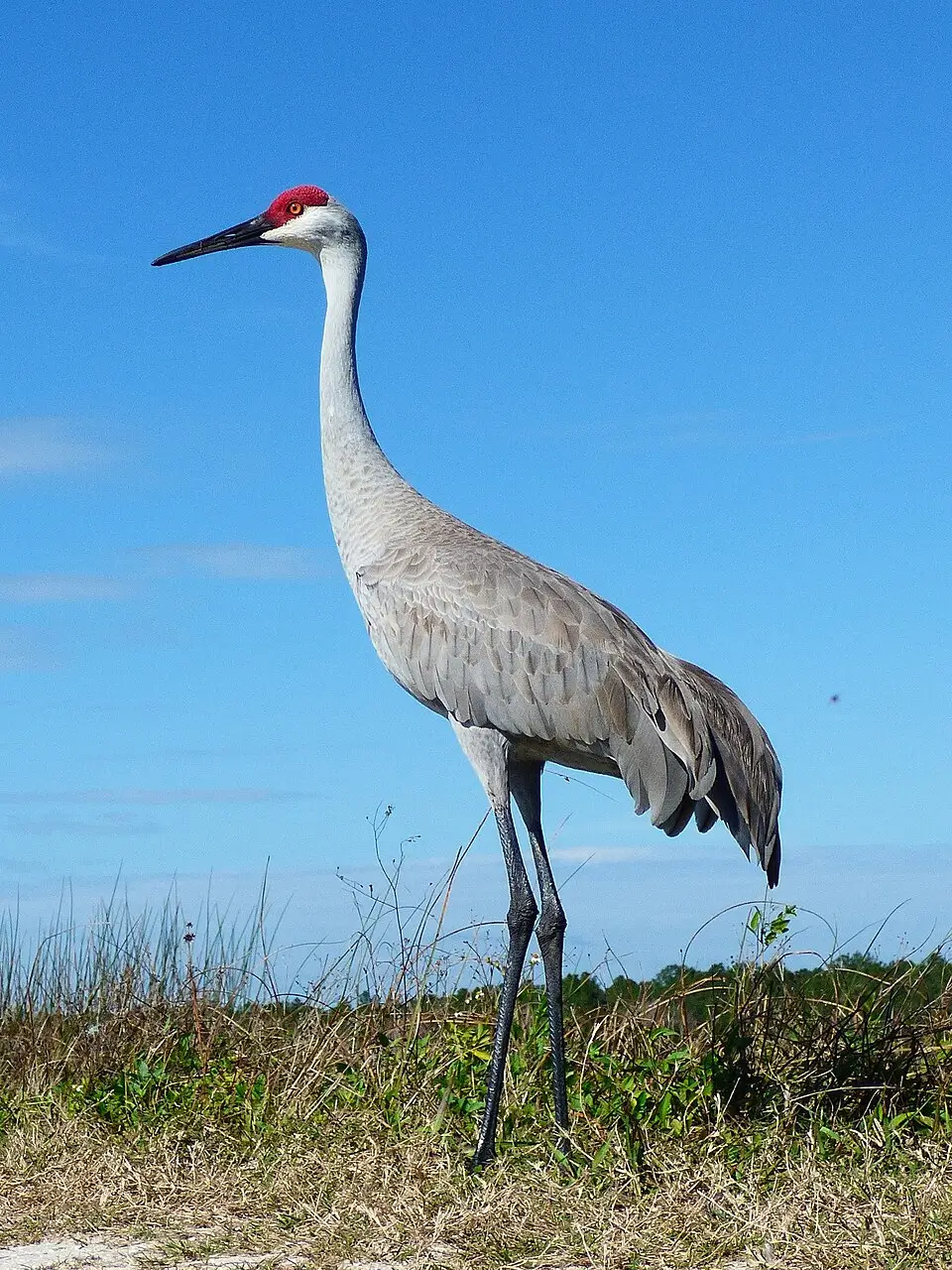
The Sandhill crane is a large, long-legged wading bird belonging to the family Gruidae. Standing roughly three to four feet tall with a wingspan that can reach up to six or seven feet, these birds are among the largest in North America. Adults are primarily gray in plumage, though their feathers are often stained a rusty or brownish-red hue due to the birds preening with iron-rich mud — a behavior observed particularly during the breeding season. The most distinctive feature of the adult Sandhill crane is the vivid red patch of bare skin on the forehead and crown, which contrasts sharply against the gray and white of the face and body.
One of the most biologically remarkable aspects of the Sandhill crane is its longevity. In the wild, these birds can live for 20 years or more, and captive individuals have been known to live even longer. This long lifespan is matched by a slow reproductive rate. Sandhill cranes typically form monogamous pair bonds that can last for many years, sometimes for life. Pairs generally produce one to two eggs per clutch, and both parents share incubation duties over a period of approximately 30 days. Young cranes, called colts, are precocial — meaning they are mobile and alert shortly after hatching — but they remain dependent on their parents for many months as they learn to forage and navigate the world.
Sandhill cranes are famous for their elaborate courtship dances, which involve jumping, wing-flapping, bowing, and calling. These dances are not only performed during breeding season but can occur at any time of year, serving as both a bonding mechanism and a form of communication between partners. Their calls — a loud, rattling, bugling sound produced by an elongated trachea coiled within the sternum — can carry for miles and are one of the most recognizable sounds in the natural world.
Six subspecies of Sandhill crane are currently recognized, ranging from the migratory Greater Sandhill crane to the non-migratory Florida Sandhill crane and the critically small-population Mississippi Sandhill crane. These subspecies vary slightly in size, range, and migratory behavior, but all share the core biological characteristics that make this species so fascinating.
Habitat & Range
Sandhill cranes occupy a remarkably diverse array of habitats across North America, from the Arctic tundra of Alaska and Canada to the freshwater wetlands of Florida and the grassy meadows of the Great Plains. What these environments share is generally open terrain near water, as Sandhill cranes require both wetland areas for roosting and nesting and open upland fields for foraging.
During the breeding season, Sandhill cranes nest in marshes, bogs, wet meadows, and shallow lake margins, building large platform nests from aquatic vegetation. Outside of the breeding season, and especially during migration, these birds are commonly found in agricultural fields, prairies, and grasslands, where they forage opportunistically on grains, berries, insects, small vertebrates, and other food sources. Their omnivorous diet makes them highly adaptable foragers.
Migration is one of the most spectacular wildlife events associated with this species. Each spring, hundreds of thousands of Sandhill cranes converge on the Platte River in Nebraska, one of the most famous wildlife spectacles in North America, before dispersing northward to breeding grounds across Canada and Alaska. In the fall, birds move southward along several flyways to wintering areas in the southern United States, Mexico, and Cuba.
In the Eastern United States, including states like West Virginia, Sandhill cranes are most commonly observed as transient migrants passing through during spring and fall. West Virginia, with its mountainous terrain and diverse mix of forests, open valleys, and river floodplains, does not represent prime Sandhill crane habitat in the traditional sense. However, increasing sightings of cranes in West Virginia and surrounding states suggest that populations may be expanding their range eastward, a trend observed in recent decades across the Eastern flyway. Open agricultural valleys, river bottomlands, and reclaimed surface mine lands within the Mountain State can occasionally provide suitable stopover habitat for migrating birds.
Hunting Information
Sandhill cranes hold a special place in the hunting community. Where seasons exist, they are often called the "ribeye of the sky" by hunters who have had the opportunity to pursue and harvest them, a testament to the quality of the table fare they provide. Hunting Sandhill cranes is considered a challenging and rewarding pursuit that requires calling skills, decoy spreads, and a good understanding of crane behavior and movement patterns.
In many states across the Central and Pacific flyways — where Sandhill crane populations are robust — regulated hunting seasons have been established by wildlife management agencies in coordination with the U.S. Fish and Wildlife Service. These seasons are carefully managed to ensure that harvest levels remain sustainable and that population goals for each crane management zone are met. Hunters pursuing Sandhill cranes typically need a valid hunting license along with any applicable state and federal permits or stamps required for migratory bird hunting, such as the Federal Duck Stamp.
As for West Virginia specifically, the state's official hunting guide indicates that licensing and regulatory information is available through the West Virginia Division of Natural Resources. Prospective hunters interested in pursuing Sandhill cranes in West Virginia should consult the most current West Virginia Hunting Guide and contact the state's wildlife management agency directly to confirm current season dates, licensing requirements, and any applicable regulations. Because season structures and species availability can change from year to year based on population assessments and flyway management decisions, it is always advisable to verify the latest information directly from official state and federal sources before planning a hunt.
Given that West Virginia lies in the Eastern flyway and crane sightings in the state are still relatively uncommon compared to Midwestern states, hunters with a serious interest in Sandhill crane hunting may wish to explore opportunities in states with more established crane hunting traditions. However, as Eastern populations continue to grow and expand, opportunities in states like West Virginia may develop over time.
Conservation
The conservation story of the Sandhill crane is largely a positive one. Overall, most subspecies of Sandhill crane are considered to have stable or growing populations, a remarkable outcome for a large, long-lived bird species that once faced serious pressures from habitat loss and unregulated hunting in the late 19th and early 20th centuries. Protective legislation, habitat conservation efforts, and well-managed hunting programs have all contributed to the recovery and stability of crane populations across North America.
That said, not all Sandhill crane subspecies share the same optimistic outlook. The Mississippi Sandhill crane, a non-migratory subspecies found in a small area of coastal Mississippi, remains critically endangered, with only a small number of individuals surviving in the wild. Intensive conservation efforts, including captive breeding and release programs, habitat restoration, and predator management, are ongoing to help this subspecies recover.
For the broader Sandhill crane population, wetland conservation remains a key priority. As the birds depend on wetlands for nesting, roosting, and as migratory stopover sites, the preservation of these ecosystems is essential to their long-term well-being. Organizations such as the National Wildlife Federation, Ducks Unlimited, and the International Crane Foundation work alongside state and federal agencies to protect and restore the wetland habitats that cranes and countless other species depend upon.
Wildlife enthusiasts and hunters both have a role to play in supporting these conservation efforts. Purchasing hunting licenses, federal duck stamps, and supporting habitat conservation organizations all contribute directly to the funding that keeps wildlife programs running. In this way, hunters and conservationists often find themselves natural allies in the shared goal of protecting species like the Sandhill crane for future generations to enjoy.
Conclusion
The Sandhill crane is one of North America's most enduring natural treasures. With its ancient lineage, spectacular migrations, elaborate courtship displays, and increasing presence across the Eastern United States, this bird continues to inspire wonder in all who encounter it. Whether you are a birdwatcher scanning the skies during migration season, a wildlife photographer hoping to capture that perfect shot, or a hunter interested in one of North America's most unique migratory bird pursuits, the Sandhill crane offers something truly extraordinary. In West Virginia and beyond, staying informed through official state and federal wildlife resources is the best way to ensure you can enjoy this magnificent species responsibly and legally for years to come.