Overview
Few birds capture the imagination of hunters and wildlife enthusiasts quite like the Ruffed Grouse (Bonasa umbellus). Known by many nicknames — "the king of game birds," "the partridge," or simply "ruffie" to those who pursue it with devoted passion — this medium-sized bird of the forest has earned a reputation as one of North America's most challenging and rewarding upland game species. Whether you encounter it while hiking through a stand of young aspens in the upper Midwest, or flushing it from a hillside thicket in the mountains of West Virginia, the explosive takeoff of a Ruffed Grouse is an experience that leaves an indelible impression.
The species has been a cornerstone of North American woodland ecology and hunting tradition for centuries. Native peoples relied on Ruffed Grouse as a food source, and European settlers quickly recognized their value both as table fare and as an indicator of healthy forest habitat. Today, the Ruffed Grouse continues to captivate hunters, birders, and wildlife biologists alike, serving as an important symbol of wild, forested landscapes across the continent.
West Virginia, with its rugged Appalachian terrain, dense second-growth forests, and rich hunting heritage, represents some of the finest Ruffed Grouse habitat in the eastern United States. The state's commitment to outdoor recreation and wildlife conservation makes it a prime destination for grouse hunters from across the region. Understanding the biology, habitat needs, and hunting traditions surrounding this remarkable bird is essential for anyone hoping to pursue or appreciate it fully.
Biological Traits
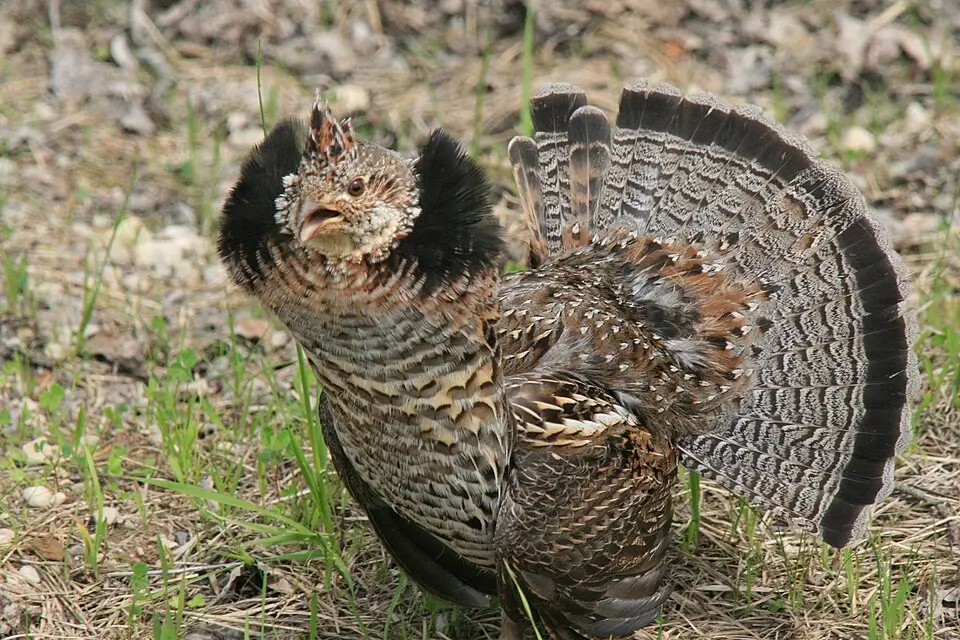
The Ruffed Grouse (Bonasa umbellus) belongs to the family Phasianidae — the same broad family that includes pheasants, turkeys, and quail — and is classified within the order Galliformes. The genus name Bonasa is derived from the Latin word for "bison," likely a reference to the thunderous drumming sound the male bird produces, while umbellus refers to the umbrella-like ruff of dark feathers around the bird's neck that gives the species its common name.
Ruffed Grouse are medium-sized birds, stocky in build with a relatively short, rounded tail that is often fanned out during display behaviors. They exhibit two distinct color morphs — gray and brown — with gray morphs more commonly found in northern populations and brown morphs more prevalent in the Appalachian region, including West Virginia. This coloration provides remarkable camouflage against the leaf litter and bark of the forest floor, making these birds notoriously difficult to spot when they choose to hold still rather than flush.
One of the most iconic behaviors of the Ruffed Grouse is the male's "drumming," performed most frequently in the spring breeding season. A male grouse will perch on a fallen log or other elevated surface, brace himself with stiffened tail feathers against the log, and beat his wings rapidly in a motion that creates a distinctive low-frequency thumping sound that accelerates from slow beats into a rapid blur. This drumming serves as both a territorial proclamation and an advertisement to potential mates. The sound can carry surprisingly far through dense forest, and experienced hunters learn to locate birds by listening for it in the spring months.
Female Ruffed Grouse are ground-nesters, laying clutches that typically number around nine to twelve eggs in a shallow depression lined with leaves and feathers. Incubation is carried out solely by the hen, and the precocial chicks are capable of moving and feeding themselves shortly after hatching — an important survival adaptation in a species that faces numerous predators. The chicks grow quickly through the summer months, and by autumn they have dispersed from their natal areas in what is often referred to as the "fall shuffle" — a period of population redistribution that can make hunting both exciting and unpredictable.
Ruffed Grouse are omnivores whose diet shifts with the seasons. In summer and early fall, they consume a wide variety of insects, berries, seeds, and green vegetation. As winter approaches and food sources become scarcer, they increasingly rely on the buds and catkins of trees such as aspen, birch, and alder — plants that are critical components of quality grouse habitat. In deep winter, grouse may actually dive beneath the surface of soft snow to roost, using the insulating properties of a snow burrow to survive frigid temperatures. This behavior, combined with the species' heavy feathering including feathered feet, makes them well-adapted to cold northern winters.
Habitat and Range
The Ruffed Grouse has one of the broadest ranges of any North American upland game bird, extending from Alaska and northern Canada south through the Rocky Mountains and across the Great Lakes region, New England, and down through the Appalachian Mountains into parts of Georgia and Alabama. This vast range speaks to the species' adaptability, though it remains fundamentally tied to forested landscapes with a diverse structure of young and mature timber.
Ideal Ruffed Grouse habitat is often described as a mosaic — a patchwork of young regenerating forest, shrubby edges, mature timber, and wetland areas that together provide everything the bird needs for food, cover, nesting, and winter survival. Early successional forest — stands of young trees and dense shrubs that spring up after logging, fire, or natural disturbance — is particularly important because it offers both dense protective cover and abundant food in the form of buds, berries, and insects. As forest stands mature and the canopy closes, they become less suitable for grouse, which is why active forest management and natural disturbances play such an important role in maintaining healthy grouse populations.
In West Virginia, the mountainous terrain of the Allegheny Highlands and the extensive second-growth hardwood forests create excellent conditions for Ruffed Grouse. The state's abundant public lands, including the Monongahela National Forest and numerous state forests and wildlife management areas, provide vast tracts of suitable habitat. Elevation also plays a role in West Virginia's grouse distribution, with birds often found at higher elevations where cooler temperatures and forest composition more closely mirror the northern habitats the species prefers. Dense stands of rhododendron, common throughout the state's mountain ridges, provide important winter and thermal cover for grouse in the Appalachian region.
Hunting Information
The Ruffed Grouse is widely regarded as one of the most demanding birds to hunt in North America, a reputation that has earned it a fiercely loyal following among upland hunters. Unlike open-country game birds that can be spotted from a distance and approached methodically, grouse inhabit thick, tangled cover where shooting opportunities are brief, unpredictable, and often obscured by branches and brush. The explosive flush — a sudden, thunderous burst of wingbeats as a bird rockets through dense timber — demands quick reflexes and instinctive shooting.
Hunting Ruffed Grouse is traditionally done on foot, often with the assistance of a well-trained flushing or pointing dog. Breeds such as the English Setter, Brittany, and German Shorthaired Pointer have long been associated with grouse hunting, and there is a deep cultural tradition surrounding the partnership between grouse hunter and bird dog. The hunting involves long days of walking through challenging terrain, pushing through thick brush, and being ever-alert for the telltale sound of a departing bird.
West Virginia offers grouse hunters a combination of rugged mountain terrain, extensive public lands, and a strong tradition of upland hunting. The state's Division of Natural Resources oversees hunting regulations, and prospective hunters are encouraged to consult the current West Virginia Hunting Guide for up-to-date information on license requirements, season dates, and any applicable bag limits or special regulations. Licenses can be purchased conveniently through the state's online licensing system, making it easier than ever to prepare for a grouse hunting trip to Almost Heaven.
The best hunting is typically found in areas with a mix of forest ages, particularly where logging, forest management, or natural disturbances have created patches of young, regenerating forest adjacent to older stands. Learning to read the landscape and identify these transitional zones is a key skill for any serious grouse hunter. Early mornings and late afternoons tend to be the most productive times, when birds are most actively moving to feed.
Conservation
The Ruffed Grouse has faced population pressures in parts of its range, particularly in regions where forest succession has led to a decline in the early successional habitat the species depends upon. Conservation organizations such as the Ruffed Grouse Society have worked for decades to promote active forest management practices that benefit grouse and the broader community of wildlife that shares their habitat. These efforts include advocating for timber harvesting practices that create and maintain young forest structure, as well as supporting research into grouse population dynamics.
Hunters themselves have long been important contributors to Ruffed Grouse conservation, both through license fees that fund state wildlife management programs and through active involvement with habitat improvement projects. The close relationship between hunters and this species has helped ensure that Ruffed Grouse management remains a priority for wildlife agencies across its range.
In West Virginia, the state's rich forested landscape and ongoing commitment to sustainable forest management provide a strong foundation for healthy grouse populations. The combination of public land access, active habitat management, and a passionate community of hunters and conservationists positions West Virginia as an important stronghold for Ruffed Grouse in the southern Appalachians.