Overview
Few sounds in the American countryside carry the same nostalgic charm as the clear, whistled "bob-WHITE!" call echoing across a brushy field on a warm summer morning. That distinctive two-note song belongs to the Northern bobwhite (Colinus virginianus), one of North America's most recognized and cherished upland game birds. Whether you are a seasoned hunter, a passionate birdwatcher, or simply someone who appreciates the rich tapestry of American wildlife, the Northern bobwhite holds a special place in the outdoor tradition of this continent.
Known affectionately simply as "quail" across much of its range, the Northern bobwhite has been a cornerstone of American hunting culture for generations. From the pine flatwoods of Georgia to the rolling grasslands of Kansas, and from the Appalachian foothills of West Virginia to the brushy river bottoms of Texas, this small but spirited bird has captured the hearts of hunters and naturalists alike. Understanding the biology, habitat needs, hunting traditions, and conservation challenges surrounding the Northern bobwhite is essential for anyone who wants to appreciate or pursue this remarkable species.
Biological Traits
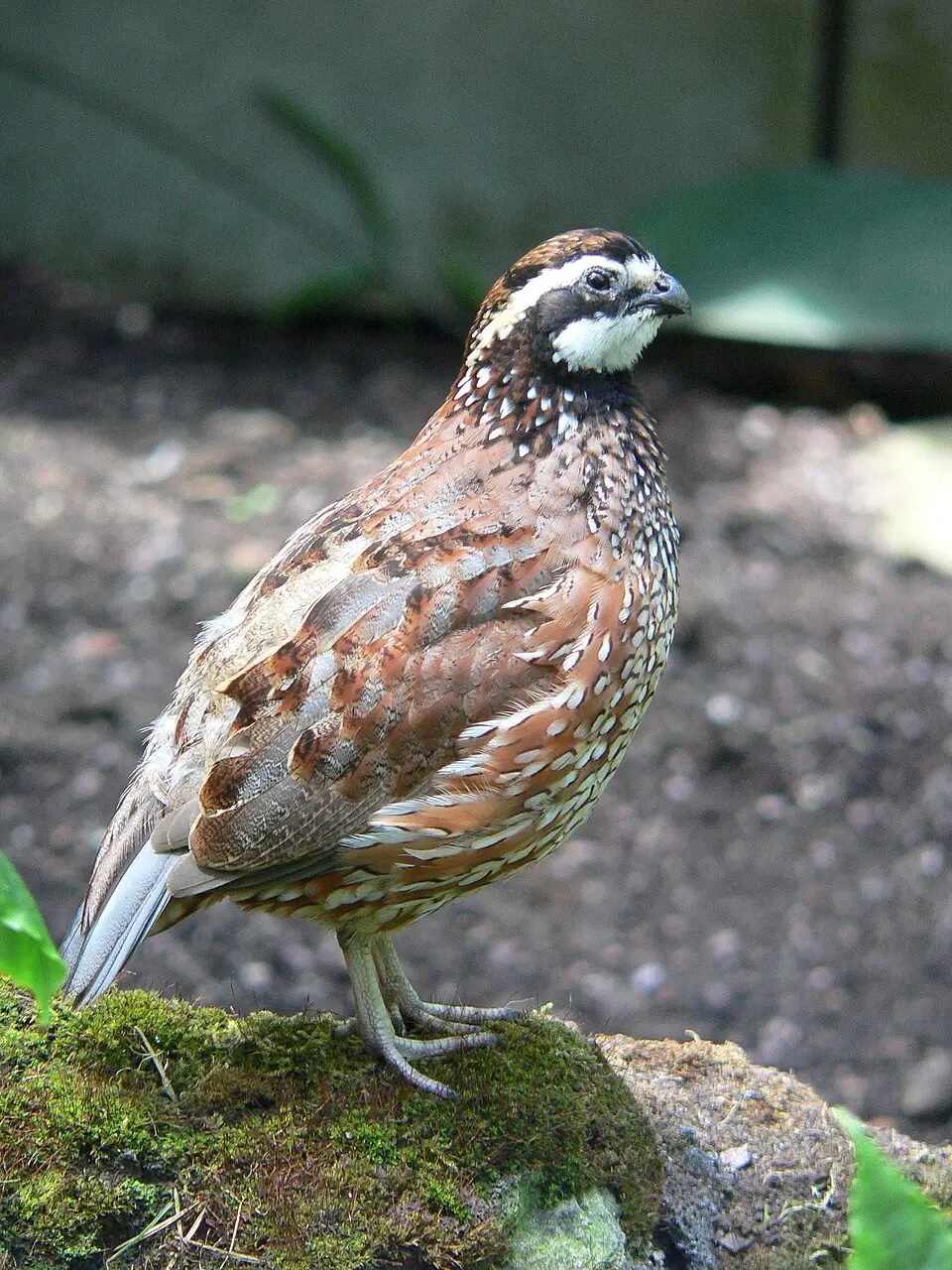
The Northern bobwhite (Colinus virginianus) is a member of the family Odontophoridae, the New World quails. It is a compact, rotund bird, roughly the size of a man's fist, with a short tail and rounded wings built for explosive, short-distance flight rather than long sustained travel. This body design makes the bird perfectly adapted to its life among dense ground cover, where bursts of speed and sudden, thunderous flushes are its primary defenses against predators.
Males are distinguished by a bold white supercilium — the stripe above the eye — and a white throat patch, both sharply bordered by black markings that give the male bobwhite a striking, masked appearance. Females display a similar but more subdued pattern, with buff or tan coloration replacing the bright white of the male's facial markings. Both sexes share the warm, reddish-brown, black, and buff patterning across their back and flanks that provides excellent camouflage among leaf litter and dry grasses.
The bobwhite's plumage is not merely decorative. The intricate streaking and barring across the bird's body allows it to disappear almost magically into the surrounding vegetation when danger approaches. Before flushing, a covey of bobwhites will often sit motionless and rely entirely on this cryptic coloration to avoid detection — a strategy that works remarkably well until a pointing dog locks up just a few feet away.
Northern bobwhites are highly social birds for much of the year. During fall and winter, they gather in groups called coveys, typically consisting of anywhere from a handful to over a dozen birds. Covey life provides numerous survival advantages, including more eyes and ears watching for predators and the ability to huddle together in a tight roosting circle on cold nights — each bird facing outward to maximize the group's awareness while sharing body heat at the center.
During the breeding season, bobwhites transition into pairs. The species has a fascinating and somewhat unusual reproductive strategy in that males frequently take on significant incubation and chick-rearing duties. After a female lays a clutch of eggs — typically around 12 to 15 eggs in a nest carefully concealed in dense vegetation — the male may incubate the eggs and brood the chicks, sometimes while the female moves on to nest again with another mate. This flexible mating system, which can include monogamy, polygyny, and polyandry depending on local conditions, allows bobwhite populations to take full advantage of good breeding seasons and potentially produce multiple broods in a single year.
The diet of the Northern bobwhite shifts with the seasons. During summer, insects form an important part of the diet, especially for growing chicks, which require high levels of protein in their early weeks of life. As the year progresses into fall and winter, seeds become the staple food source. Bobwhites are particularly associated with legume seeds, weed seeds, and the seeds of native grasses, though they will also consume small fruits and agricultural grains where available.
The Northern bobwhite's iconic call is one of its most memorable traits. The loud, ascending whistle — "bob-WHITE!" or sometimes rendered as a three-syllable "bob-bob-WHITE!" — is primarily a male advertisement call used during the breeding season to attract mates and establish territory. It is one of those sounds that, once heard, is never forgotten, and it has given the species its common name across its entire range.
Habitat & Range
The Northern bobwhite is native to the eastern and central United States, ranging from southern Maine and the Great Lakes region southward through the Gulf Coast states and into Mexico and Cuba. The species is most abundant across the southeastern United States, particularly in states like Georgia, Florida, Alabama, Mississippi, and Texas, where a combination of warm climate, open farmland, and early successional habitat has historically provided ideal conditions.
In West Virginia, the Northern bobwhite occupies the lower-elevation agricultural and brushy edge habitats found primarily in the eastern panhandle and the lower valleys and ridges of the state. West Virginia's mountainous terrain, dominated by forested hillsides and steep hollows, limits the amount of prime bobwhite habitat compared to states in the Deep South, but the patchwork of farmland, old fields, brushy fencerows, and forest edges found in the state's valleys and lowlands does support bobwhite populations in suitable areas.
The ideal bobwhite habitat is a mosaic of open areas and dense cover in close proximity. Bobwhites need grassy or weedy areas with relatively open ground beneath the vegetation for easy movement and foraging, thick shrubby cover or briar patches for escape and loafing cover, and woody edge cover for roosting. Agricultural landscapes that include small grain fields, pastures, brushy fencerows, and hedgerows have traditionally been excellent bobwhite country. Early successional habitats — areas that have been recently disturbed and are growing back with native grasses, forbs, and shrubs — are particularly important.
Hunting Information
The Northern bobwhite is one of the most storied upland game birds in American hunting history. Hunting bobwhites with pointing dogs is a tradition that stretches back centuries, and for many hunters, a crisp autumn morning spent walking behind a well-trained pointer or setter through frost-covered fields represents the very pinnacle of the upland hunting experience. When a covey erupts from underfoot in a thunderous, heart-stopping flush, it demands quick reflexes and smooth gun-handling — and more than a few shots are missed in the excitement of the moment.
West Virginia offers bobwhite quail hunting opportunities for residents and non-residents alike. Those interested in hunting bobwhite in West Virginia should consult the West Virginia Hunting Guide for the most current information regarding licenses, seasons, and regulations, as these details are subject to change annually. The West Virginia Division of Natural Resources manages hunting regulations in the state, and purchasing the appropriate license is a straightforward process, with both resident and non-resident licenses available online and through authorized vendors across the state.
Hunters pursuing bobwhites in West Virginia should focus their efforts on the lower-elevation agricultural areas and edge habitats where quail populations are most likely to be found. Permission from landowners is essential when hunting on private property, and building respectful relationships with local farmers and landowners is a time-honored part of the quail hunting tradition.
For those new to bobwhite hunting, working with an experienced dog is enormously helpful. A pointing dog that locates and pins a covey allows hunters to approach in an organized manner and prepare for the flush, which significantly improves both the hunting experience and shot opportunity. Flushing dogs and hunting without dogs are also viable approaches, particularly in dense cover where birds may be concentrated.
Conservation
The Northern bobwhite has faced significant population pressures across much of its range over the past several decades. Changes in land use practices — including the loss of hedgerows, the conversion of fallow fields to intensively managed crops, and the suppression of fire in southeastern pine forests — have reduced and fragmented the early successional habitats that bobwhites depend upon. Wildlife managers and conservation organizations have worked extensively on habitat restoration programs designed to reverse these trends, including promoting the use of native warm-season grasses, restoring brushy field borders, and reintroducing prescribed fire to pine woodland systems.
In West Virginia, the mountainous landscape means that bobwhite habitat is naturally limited compared to the coastal plain and piedmont regions further south, but conservation-minded landowners and state wildlife managers continue to work toward maintaining and improving habitat in the valleys and agricultural areas where quail are present. Hunters play an important role in bobwhite conservation through license fees, excise taxes on sporting goods under the Federal Aid in Wildlife Restoration Act (Pittman-Robertson Act), and direct participation in habitat stewardship programs.
The future of the Northern bobwhite depends on a partnership between hunters, landowners, wildlife managers, and conservation organizations. By supporting good land stewardship practices, advocating for policies that benefit early successional habitat, and participating in the regulated harvest of this renewable natural resource, hunters and wildlife enthusiasts alike contribute to the long-term health of bobwhite populations across the eastern United States.