Overview
Few animals embody the spirit of North American wetlands quite like the muskrat (Ondatra zibethicus). This semi-aquatic rodent has long captured the attention of trappers, naturalists, wildlife enthusiasts, and hunters alike, earning a reputation as one of the continent's most adaptable and resourceful small mammals. Found across a vast geographic range that stretches from the Arctic tundra of Canada to the Gulf Coast marshes of the American South, the muskrat has thrived in virtually every type of freshwater habitat the continent has to offer. In states like West Virginia, where rivers wind through ancient mountains and wetlands dot the valleys, the muskrat is a familiar and valued part of the natural landscape.
Despite its modest size, the muskrat punches well above its weight in terms of ecological importance. It shapes the very wetland environments it calls home, creating habitat for countless other species while serving as a vital food source for predators ranging from mink and otters to hawks and great horned owls. For centuries, muskrat fur was a cornerstone of the North American fur trade, and the animal continues to hold cultural and economic significance for trappers and hunters throughout its range. Understanding this remarkable creature — its biology, habits, and role in the ecosystem — offers a deeper appreciation for the wetlands it inhabits and the outdoor traditions it supports.
Biological Traits
The muskrat (Ondatra zibethicus) is the sole member of its genus, Ondatra, making it a unique representative within the family Cricetidae. Despite being commonly referred to alongside beavers and nutria in wetland settings, the muskrat is more closely related to voles and lemmings than to those larger semi-aquatic mammals. Its scientific name, zibethicus, is derived from a Latin word relating to musk, a direct reference to the musky secretions the animal produces from specialized perineal glands. These secretions play a role in communication, territorial marking, and mate attraction — much the same as the musk glands found in other wildlife species.
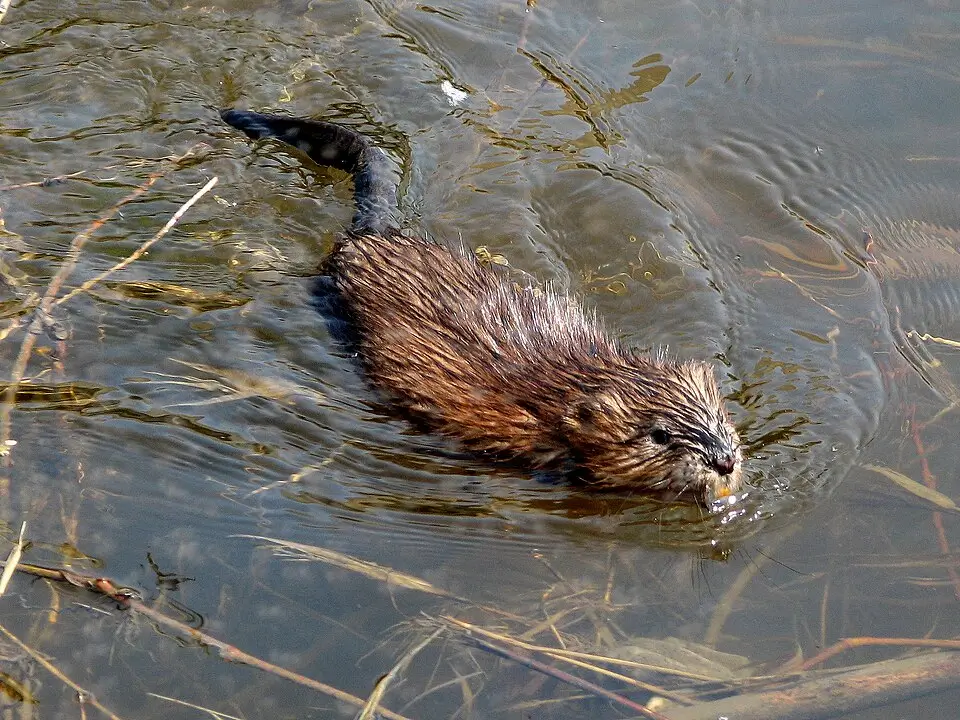
In terms of physical appearance, muskrats are stocky, medium-sized rodents covered in dense, waterproof fur that ranges in color from dark brown on the back to a lighter, grayish-brown on the belly. This double-layered coat consists of a coarse outer layer of guard hairs overlying a dense, soft underfur that traps air and provides insulation in cold water. It is this luxuriously soft underfur that made muskrat pelts so valuable to the fur trade industry. The animal's most distinctive anatomical feature is its laterally flattened tail, which acts as a rudder during swimming. Combined with partially webbed hind feet, the muskrat is a surprisingly agile swimmer, capable of remaining submerged for extended periods.
Muskrats are well-adapted to a life divided between land and water. Their eyes, ears, and nostrils are positioned to remain above the waterline while most of the body is submerged — an adaptation shared with other semi-aquatic mammals. They are primarily herbivores, feeding on aquatic vegetation such as cattails, sedges, rushes, and water lilies, though they will opportunistically consume freshwater mussels, fish, frogs, and crayfish when plant material is scarce. This dietary flexibility contributes significantly to their success across a wide range of environments.
Muskrats are prolific breeders, a trait common among small rodents that face significant predation pressure. Females can produce multiple litters per year, with litter sizes ranging from roughly four to eight young. The young are born blind and hairless but develop rapidly, and by the time autumn arrives, the offspring from spring litters are largely independent. This reproductive strategy allows muskrat populations to rebound quickly from periods of environmental stress or heavy harvest, making them a resilient species in both natural and managed landscapes.
Habitat & Range
As a species, Ondatra zibethicus demonstrates remarkable habitat versatility. The muskrat's native range encompasses most of North America, from Alaska and northern Canada southward through the contiguous United States, reaching into parts of northern Mexico. Beyond its native range, the muskrat has also been introduced — sometimes deliberately, sometimes accidentally — to parts of Europe and Asia, where it has established significant populations.
The animal's preferred habitat is defined by the presence of water and emergent aquatic vegetation. Marshes, swamps, ponds, lakes, rivers, streams, and drainage ditches all provide suitable living conditions, provided there is adequate food and shelter. Muskrats construct two primary types of dwellings: bank burrows, which are excavated into the banks of rivers and streams, and lodge structures, which are dome-shaped mounds of vegetation built in shallow water, reminiscent in concept (though not in scale) of a beaver lodge. These lodges serve as both living quarters and refuges from predators and cold weather.
In West Virginia, a state characterized by its rugged Appalachian terrain, muskrats are found along the many rivers, streams, and wetland areas that wind through the mountains and valleys. The state's geography, shaped by the Allegheny Mountains and numerous river drainages including the Kanawha, Ohio, Potomac, and New River systems, provides varied but suitable habitat for muskrat populations. Wetland areas in the state's broader valleys and lowland areas tend to support the highest concentrations of these animals, while muskrats in more mountainous drainages may be found in lower densities along suitable stream corridors.
The species is notably tolerant of human-altered environments. Agricultural drainage ditches, farm ponds, and even urban waterways frequently support healthy muskrat populations, provided that water quality and vegetation remain adequate. This adaptability has allowed muskrats to persist in areas where many other wetland-dependent species have struggled.
Hunting and Trapping Information
The muskrat has a long and storied history in the traditions of North American hunting and trapping. For generations of outdoorspeople, pursuing muskrats — whether by trapping or hunting — has been a foundational experience, teaching woodsmanship, patience, and an intimate knowledge of wetland ecosystems. Muskrat fur was among the most commonly traded pelts in the historic fur trade, and it continues to hold value in contemporary fur markets.
In West Virginia, hunting and trapping are deeply embedded in the state's cultural identity. The West Virginia Division of Natural Resources (WVDNR) oversees the management of furbearer species including the muskrat, and hunters and trappers in the state are required to obtain the appropriate licenses and follow applicable regulations. West Virginia's official hunting guide outlines the licensing requirements and regulations that govern the pursuit of furbearers, and prospective muskrat hunters and trappers are strongly encouraged to consult the current West Virginia Hunting Guide for the most up-to-date season dates, bag limits, and licensing information, as these details are subject to change from year to year.
Purchasing a hunting or trapping license in West Virginia is straightforward, with the state offering convenient online purchasing options as well as in-person sales through licensed agents. Both residents and non-residents are able to purchase the appropriate licenses to participate in legal hunting and trapping activities. For those new to hunting in West Virginia — a state that proudly markets itself as "Almost Heaven" — official resources and guides are available to help first-time hunters navigate the licensing process and find suitable hunting destinations.
From a practical standpoint, muskrats are typically pursued through trapping rather than traditional hunting, though both methods can be effective. Traps are commonly set along runs — the paths muskrats habitually use when moving between water and feeding areas — as well as near lodge entrances and burrow openings. Understanding muskrat behavior, reading sign such as feeding platforms (rafts of chewed vegetation on the water's surface), and identifying travel routes are essential skills for successful muskrat harvest.
For hunters who pursue muskrats by shooting, a small-caliber rifle or a .22 is typically the firearm of choice. Early morning and late afternoon hours, when muskrats are most active, offer the best opportunities for observation and harvest. Patience and a thorough knowledge of local wetland habitats are invaluable assets in any muskrat hunting or trapping endeavor.
Conservation
Despite facing pressures from habitat loss, water quality degradation, and fluctuating fur market demand, muskrat populations across North America have shown considerable resilience. The species is currently classified by wildlife authorities as a species of least concern, reflecting the stability of its populations across the broad sweep of its natural range. The muskrat's high reproductive rate, dietary flexibility, and ability to colonize a wide variety of aquatic habitats have all contributed to this stability.
From an ecological standpoint, the muskrat is a keystone species in many wetland ecosystems. Through its feeding activities — particularly its harvesting of emergent aquatic vegetation — the muskrat creates open water areas within dense marsh vegetation, a process sometimes referred to as "eat-outs." These open patches increase habitat diversity within wetlands, creating space for waterfowl, wading birds, and other species that require open water. In this way, muskrat activity actively maintains the health and biodiversity of the wetland ecosystems it inhabits.
Conservation of wetland habitat is the single most important factor in ensuring the long-term viability of muskrat populations. Efforts to protect and restore marshes, swamps, and riparian corridors benefit not only muskrats but the entire community of plants and animals that depend on these environments. In West Virginia and across the nation, sportsmen and sportswomen who participate in regulated hunting and trapping contribute directly to conservation through license fees and taxes on sporting goods, funding that is directed toward wildlife management and habitat protection programs.
Responsible, regulated harvest of muskrats, when conducted within the framework of science-based wildlife management, poses no threat to long-term population viability and in fact serves as a valuable management tool. By participating in regulated trapping and hunting seasons, West Virginia's outdoor community plays an active and meaningful role in the stewardship of the state's natural resources.