A Complete Guide to Zenaida macroura for Wildlife Enthusiasts and Hunters in West Virginia and Beyond
Few birds evoke the spirit of the American outdoors quite like the mourning dove. With its soft, mournful cooing drifting across open fields in the early morning light, this graceful bird has captured the hearts of birdwatchers, wildlife enthusiasts, and hunters alike for generations. The mourning dove (Zenaida macroura) is one of the most widely recognized and abundant birds in North America, and its presence in West Virginia's rolling mountains, river valleys, and open farmland makes it a special part of the "Almost Heaven" experience.
Whether you're a seasoned wingshooter who looks forward to dove season each fall, a naturalist who appreciates the bird's gentle demeanor, or simply someone who has heard its distinctive call on a quiet morning and wondered about the creature behind it, this guide is for you. The mourning dove is a bird worth knowing well — not just for its sporting value, but for its remarkable biology, its adaptability, and its deep cultural significance across the continent.
Biological Traits
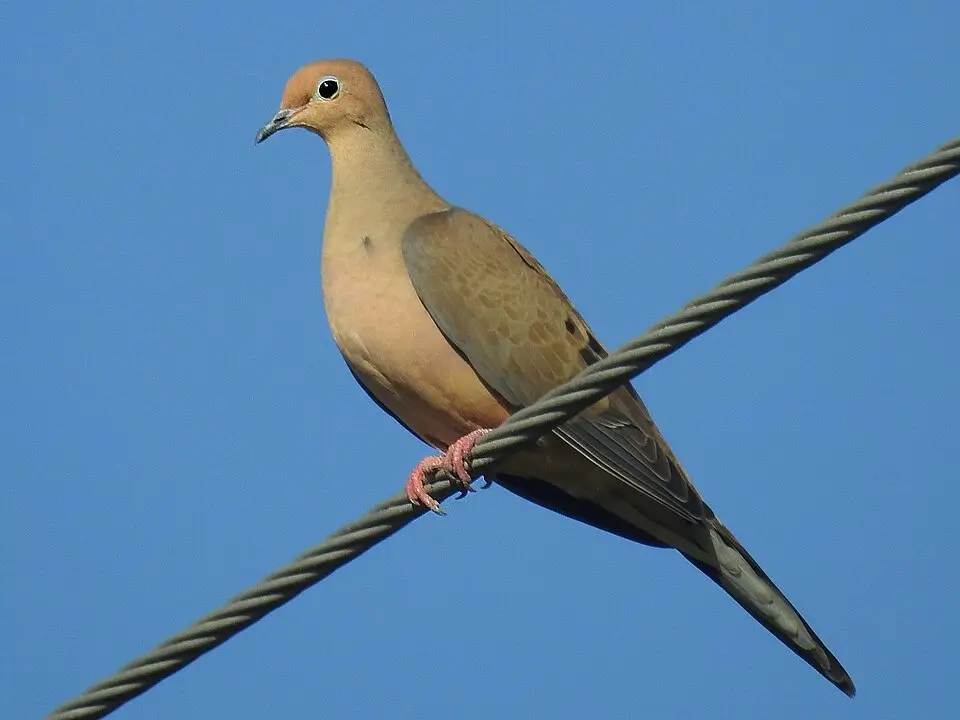
The mourning dove is a member of the family Columbidae, the same family that includes pigeons and other doves. It is a medium-sized bird, slender in build, with a small, rounded head that is characteristic of the dove family. The bird's plumage is predominantly a soft, buffy tan on the underparts, while the upperparts display a warm grayish-brown tone. One of its most distinctive markings is the small black spot located just below and behind the eye. The wings are decorated with black spots, and the tail is notably long and pointed — a key field identification feature that sets it apart from similar species.
The mourning dove takes its evocative name from its call, a slow, haunting series of coos that many people describe as melancholy or mournful. This vocalization is produced primarily by males and serves as both a territorial announcement and a courtship signal. The call is often mistaken for the hooting of an owl by those unfamiliar with it, but once learned, it becomes one of the most instantly recognizable sounds in the North American natural world.
In terms of size, mourning doves are relatively lightweight birds, which contributes to their reputation as swift, agile fliers. They are capable of reaching impressive speeds in flight, and their aerodynamic body shape allows them to execute sudden, darting maneuvers — a trait that makes them both remarkable to observe and genuinely challenging to hunt. The wingbeats of a mourning dove in flight produce a distinctive whistling sound, which is created by air moving through specially modified wing feathers. This sound serves as an alarm signal to other doves nearby.
Mourning doves are primarily seed eaters. The vast majority of their diet consists of seeds from grasses, grains, and wild plants. They forage almost exclusively on the ground, often in open areas where seeds are abundant and visibility is good. They are known to consume large quantities of seeds in a single feeding session, storing them in a specialized part of the digestive system called the crop before returning to a safe perch to digest. This feeding behavior makes them highly dependent on open habitats where seed sources are readily available.
One of the most fascinating aspects of mourning dove biology is their reproductive strategy. Unlike many birds that nest only once or twice per season, mourning doves are prolific breeders capable of producing multiple broods throughout the spring, summer, and into fall. A typical clutch consists of just two eggs, and both parents share incubation duties. The eggs hatch in approximately two weeks, and the young — called squabs — develop rapidly. Parent doves feed their young a unique substance called "crop milk," a protein- and fat-rich secretion produced in the adult bird's crop. This remarkable adaptation allows the young to grow quickly and be ready to fledge in a matter of weeks. This high reproductive rate plays a significant role in sustaining mourning dove populations even with substantial hunting pressure.
Habitat & Range
The mourning dove is one of the most widely distributed birds in North America. Its range extends from southern Canada through the continental United States, Mexico, and into Central America and the Caribbean. In the United States, it is found in virtually every state, thriving in a broad array of environments. This adaptability is one of the mourning dove's defining characteristics as a species.
The mourning dove favors open and semi-open habitats. It is commonly found in agricultural areas, open woodlands, forest edges, suburban neighborhoods, roadsides, and grasslands. The bird tends to avoid dense, unbroken forest, preferring instead the transitional zones where open ground meets scattered trees — areas that provide both good foraging conditions and accessible perching and nesting sites. Orchards, grain fields, hedgerows, and weedy meadows are all classic mourning dove habitats.
In West Virginia, the mountainous and often heavily forested landscape presents a somewhat different environment than the flat, agricultural plains where doves are most commonly associated. However, West Virginia's river valleys, farmland, cleared fields, and the edges where agriculture meets the mountains provide excellent habitat for mourning doves. The state's diverse topography — ranging from the relatively flat Eastern Panhandle to the rugged highlands of the Allegheny Mountains — creates a variety of niches where doves can thrive during the warmer months. River bottoms, hayfields, grain stubble fields, and suburban areas with adequate open ground all attract mourning doves throughout the state.
Like many migratory birds, mourning doves undertake seasonal movements. Northern populations tend to move southward in autumn as temperatures drop and food becomes scarce, while populations in warmer southern regions may remain year-round. West Virginia serves as both a breeding ground for resident summer populations and a migratory corridor for birds moving through the region.
Hunting Information
The mourning dove holds a distinguished place in American hunting culture. It is considered the most hunted migratory bird in North America, with millions of hunters taking to the fields each year to pursue this fast-flying and challenging target. Dove hunting is often regarded as an excellent introduction to wingshoooting for new hunters, offering an exciting, social, and accessible experience. At the same time, the bird's speed and erratic flight patterns challenge even the most experienced shotgunners, making it a rewarding pursuit at every skill level.
For hunters in West Virginia, mourning dove hunting represents a cherished late-summer and early-fall tradition. The state's diverse landscape, with its combination of farmland, open fields, and forested ridges, provides plenty of opportunity for hunters willing to scout for the right locations. Classic dove hunting setups include harvested grain fields, sunflower fields, water sources, and power line cuts — anywhere that doves congregate in numbers to feed or roost.
West Virginia hunters interested in pursuing mourning doves should consult the West Virginia Hunting Guide and the official West Virginia Division of Natural Resources for current license requirements, season dates, and bag limits. Purchasing a hunting license is straightforward and, according to the West Virginia Hunting Guide, more convenient than ever before, with both residents and non-residents able to obtain licenses through official state channels. Because the mourning dove is a migratory species, it is managed under the federal Migratory Bird Treaty Act as well as state regulations, meaning hunters must comply with both state and federal rules. It is always the hunter's responsibility to verify current regulations before the season opens, as dates, limits, and requirements can change from year to year.
When it comes to equipment, mourning dove hunting is typically conducted with a shotgun. Popular choices include 12-gauge and 20-gauge shotguns loaded with light field loads. Because migratory bird hunting regulations prohibit the use of lead shot in some contexts, hunters should confirm current ammunition requirements with state and federal wildlife agencies. A hunting vest with a good-sized game bag, plenty of shells, and a comfortable shooting stool or chair round out a typical dove hunter's kit.
Dove hunting is renowned as much for its social atmosphere as for its sporting challenge. It is common to see groups of hunters spread around the edges of a field, enjoying conversation between flushes and celebrating good shots together. For many families, a dove shoot on opening day is a beloved annual tradition that brings generations of hunters together.
Conservation
The mourning dove's conservation status is a testament to the success of science-based wildlife management in the United States. Despite being the most heavily hunted migratory bird on the continent, mourning dove populations remain robust and widespread. This population resilience is largely attributed to the species' high reproductive rate, broad habitat adaptability, and the careful management frameworks established under the Migratory Bird Treaty Act of 1918.
The Migratory Bird Treaty Act is one of the most important pieces of wildlife legislation in American history. It established federal protections for migratory birds, including mourning doves, and created the framework under which hunting seasons and bag limits are set based on annual population surveys and scientific data. The U.S. Fish and Wildlife Service, in coordination with state wildlife agencies like the West Virginia Division of Natural Resources, conducts regular Breeding Bird Surveys and Call Count Surveys to monitor mourning dove populations and inform management decisions.
Habitat conservation is also a critical component of mourning dove management. The availability of open agricultural land, native grasslands, and weedy fields directly influences the carrying capacity of dove populations. Conservation programs that encourage landowners to maintain hedgerows, manage fields for native seed-producing plants, and leave grain stubble in harvested fields all contribute positively to dove habitat. In West Virginia, where the landscape can shift rapidly from open farmland to dense forest, maintaining a patchwork of open and semi-open habitats is particularly important for sustaining local dove populations.
Hunters themselves play a meaningful role in conservation. Through the purchase of hunting licenses and federal duck stamps, hunters fund a substantial portion of the wildlife management programs that benefit not only game species but also non-game wildlife and their habitats. The relationship between regulated hunting and conservation is one of the cornerstones of the North American Model of Wildlife Conservation, a system widely regarded as among the most successful wildlife management frameworks in the world.
The mourning dove, beloved by birdwatchers and hunters alike, stands as a symbol of this successful partnership between people and nature. In West Virginia and across the continent, this gentle, swift-winged bird continues to thrive — a reassuring presence in fields and forests, its mournful call a timeless soundtrack to the American outdoors.