A Complete Guide to Anas platyrhynchos — Biology, Habitat, and Hunting in West Virginia
Few birds are as universally recognized as the mallard. Whether gliding across a glassy farm pond at dawn, paddling through a city park lake, or bursting from a flooded cornfield in a flurry of wings, the mallard (Anas platyrhynchos) is the quintessential duck of the Northern Hemisphere. It is the species against which all other dabbling ducks are measured, and for millions of waterfowl hunters across North America, it is the bird that defines the sport.
The mallard's story is one of remarkable adaptability. It thrives in wilderness wetlands and urban reservoirs alike. It has colonized nearly every corner of the globe where freshwater exists. Its populations number in the tens of millions, making it the most abundant duck in North America and arguably the most abundant duck in the world. For hunters, wildlife enthusiasts, and conservationists, the mallard represents both the health of wetland ecosystems and the enduring tradition of waterfowl hunting that has shaped American culture for centuries.
In West Virginia — a state defined by its rugged mountain terrain, winding river valleys, and abundant waterways — the mallard holds a special place in the hearts of waterfowl hunters. Though West Virginia is not a state typically associated with the vast duck marshes of the Mississippi Flyway or the Prairie Pothole Region, its rivers, reservoirs, farm ponds, and bottomland wetlands provide meaningful habitat for mallards throughout the fall and winter months. Understanding this bird's biology, behavior, and habitat preferences is essential for anyone who hopes to pursue it successfully in the Mountain State.
Biological Traits
The mallard is a member of the family Anatidae, the large and diverse family that encompasses all ducks, geese, and swans. Within that family, it belongs to the genus Anas and is classified as a dabbling duck — a group of waterfowl that feed primarily by tipping forward in shallow water to reach submerged vegetation, invertebrates, and seeds, rather than diving beneath the surface.
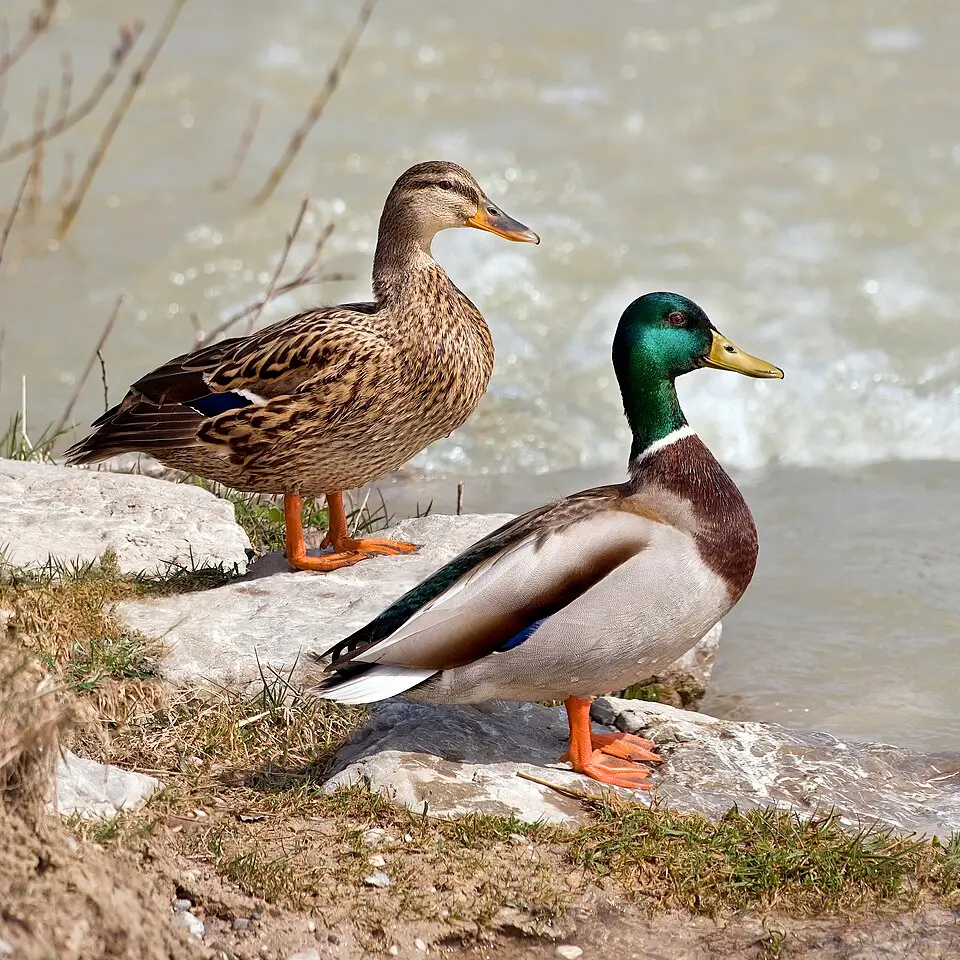
One of the mallard's most distinctive features is the dramatic difference in appearance between the sexes, a phenomenon known as sexual dimorphism. The male, or drake, is arguably one of the most handsome birds in North America. During breeding season, he sports an iridescent green head that seems to shift in color depending on the light, catching everything from deep forest green to flashes of blue and teal. His neck is encircled by a clean white collar that separates the green head from a rich chestnut-brown chest. His body is predominantly gray above and pale below, and his tail feathers curl upward in a distinctive curl that is one of the most recognizable features in the waterfowl world. His bill is a bright, waxy yellow-orange.
The female, or hen, is far more subtly colored — and for good reason. Dressed in mottled shades of brown, buff, and black, she is beautifully camouflaged against the nests of dried grasses and leaf litter where she incubates her eggs. Her bill is orange with dark splotching. Both sexes share a striking iridescent blue-purple speculum — a patch of color on the secondary wing feathers — bordered by white, which flashes brilliantly in flight and is an excellent field identification marker.
Mallards are medium to large-sized ducks. Adult birds typically weigh between two and three pounds, though well-fed individuals can exceed this. Their wingspan ranges roughly from about 32 to 39 inches, giving them a strong, powerful flight. They are capable of reaching considerable speeds in the air, and hunters who have missed a cupped-wing drake decelerating into a decoy spread know firsthand that even a "slow" mallard can be deceptively quick.
Vocalizations differ between the sexes. The hen produces the classic, loud, descending quack that most people associate with ducks in general — a sound so iconic that it has become the default sound effect for any duck in popular culture. The drake, by contrast, produces a much quieter, raspy, reedy call that sounds almost like a soft grunt compared to the hen's resonant quack.
Mallards are highly gregarious birds, especially outside of the breeding season. They gather in large flocks on feeding grounds and roosting waters, and their social nature is one reason they respond so readily to decoys and calls — instincts that waterfowl hunters have exploited for generations.
Habitat & Range
The mallard's range is staggering in its extent. Across the Northern Hemisphere, it breeds from Iceland and Greenland in the northwest, across all of Europe, through much of Asia, and throughout nearly all of North America from Alaska and Canada south through the continental United States. It has also been introduced — sometimes controversially — to parts of the Southern Hemisphere, including Australia and New Zealand, where it has hybridized extensively with native duck species.
In North America, mallards breed most prolifically in the Prairie Pothole Region, a vast landscape of glacially formed wetlands spanning the Dakotas, Minnesota, and the Canadian prairies. This region produces the majority of the continent's mallard population each year, and the health of these prairie wetlands is directly tied to the overall abundance of mallards across the flyways.
When it comes to habitat preferences, the mallard is nothing short of a generalist. It is equally at home on large, open reservoirs, small farm ponds, flooded agricultural fields, river backwaters, marshes, swamps, beaver impoundments, and even ornamental park lakes in urban centers. This flexibility is the cornerstone of the species' success. Where other, more specialized waterfowl require specific and often threatened habitat types, the mallard makes do with almost any freshwater environment that provides food and reasonable cover.
In West Virginia, mallards utilize the state's extensive river systems — including the Ohio, Kanawha, New, Greenbrier, and Potomac rivers and their tributaries — as well as its numerous lakes and reservoirs. Flood-prone bottomlands along these waterways, particularly where adjacent agricultural fields provide waste grain, can attract significant concentrations of mallards during migration and throughout the winter months. The state's location along the Atlantic Flyway means it receives birds migrating from breeding grounds to the north, and mild weather years can hold good numbers of birds through much of the hunting season.
Hunting Information
Mallard hunting is among the most celebrated traditions in American outdoor culture. The pursuit of greenheads — the colloquial term for mature drake mallards — has inspired a rich culture of craftsmanship in decoy carving, dog training, blind building, and calling that is unique in the world of hunting.
The fundamentals of mallard hunting revolve around a few core strategies. Decoys are used to attract birds to a specific location, mimicking the appearance of resting or feeding ducks and triggering the mallard's social instincts. Duck calls, particularly hen mallard calls, are used to communicate with passing birds and coax them to commit to the decoy spread. Concealment is critical — mallards have excellent eyesight and will flare at the slightest unnatural movement or color contrast.
Hunting spots in West Virginia for mallards often center on the river corridors and bottomland areas described above. Farm ponds surrounded by agricultural land, oxbow lakes along major river systems, and flooded timber or field edges can all be productive locations. Scouting — the practice of observing where ducks are feeding, loafing, and roosting before the hunt — is arguably the single most important factor in consistent waterfowl hunting success.
A well-trained retriever is an invaluable partner for the duck hunter. Labrador Retrievers, Chesapeake Bay Retrievers, and Golden Retrievers are among the most popular breeds for waterfowl work, and the Chesapeake Bay Retriever has a particularly strong regional connection to the Mid-Atlantic area that includes West Virginia. These dogs mark fallen birds, brave cold water and icy conditions, and recover ducks that would otherwise be lost.
Hunters in West Virginia pursuing mallards should consult the West Virginia Hunting Guide for current licensing requirements, season dates, and regulations, as these details are updated annually and vary by zone, species, and bag limits. Purchasing a license is straightforward and, according to the West Virginia Division of Natural Resources, more convenient than ever, with options available for both residents and non-residents.
Conservation
The mallard's conservation story is, in many ways, a positive one — though not without its complexities. The species remains abundant, and its populations have shown resilience when wetland habitats are protected and managed thoughtfully. Much of the credit for this resilience belongs to the conservation framework built around the North American waterfowl hunting community.
Organizations like Ducks Unlimited have invested billions of dollars over decades into the conservation and restoration of wetland habitats across the continent — habitats that benefit not only mallards but hundreds of other species of wildlife. The Federal Duck Stamp program, which requires waterfowl hunters to purchase an annual stamp whose proceeds go directly to wetland acquisition and conservation, has protected millions of acres of critical habitat. This hunter-funded conservation model has been widely recognized as one of the most successful wildlife conservation programs in history.
Wetland loss remains the primary long-term threat to mallard populations. Drainage for agriculture, urban development, and altered hydrology have reduced wetland acreage significantly across North America over the past century. Climate variability affecting the Prairie Pothole Region can also have dramatic short-term effects on breeding success. These challenges make the ongoing work of wetland conservation organizations and state wildlife agencies all the more essential.
In West Virginia, the preservation of riparian corridors, bottomland hardwood forests, and flood-prone agricultural areas contributes meaningfully to the habitat available for wintering mallards and other waterfowl. Conservation-minded hunters, landowners, and wildlife managers working together represent the best hope for ensuring that future generations have the opportunity to watch a flock of mallards cup their wings and drop into a decoy spread on a cold winter morning.