A Complete Guide to Marmota monax — Biology, Habitat, and Hunting in West Virginia
Few animals in North America carry the cultural weight of the groundhog. Every February 2nd, the eyes of an entire nation turn toward Punxsutawney, Pennsylvania, where a rotund, sleepy mammal named Phil is ceremoniously pulled from his burrow to predict the coming of spring. Yet beyond the folklore and fanfare, the groundhog — scientifically known as Marmota monax — is a genuinely fascinating creature with a rich ecological story to tell. It is a skilled engineer, a capable climber, a surprisingly strong swimmer, and one of the few North American mammals that enters true hibernation. For hunters across the eastern United States, including the rugged hills and hollows of West Virginia, the groundhog is also a rewarding and challenging quarry that sharpens marksmanship skills and contributes meaningfully to wildlife management.
Whether you are a lifelong outdoorsman or someone newly discovering the joys of hunting in the Mountain State, understanding the biology and behavior of Marmota monax will deepen your appreciation for this remarkable animal. This guide covers everything from the groundhog's physical characteristics and habitat preferences to its ecological role and its place in the hunting traditions of West Virginia.
Biological Traits
The groundhog belongs to the order Rodentia and the family Sciuridae — the same family that includes squirrels, chipmunks, and prairie dogs. Within this family, groundhogs are classified as marmots, making Marmota monax the largest member of the squirrel family commonly found in the eastern United States. They are sometimes called woodchucks, a name derived not from any wood-chucking behavior but likely from the Algonquian word wuchak, used by Indigenous peoples of North America.
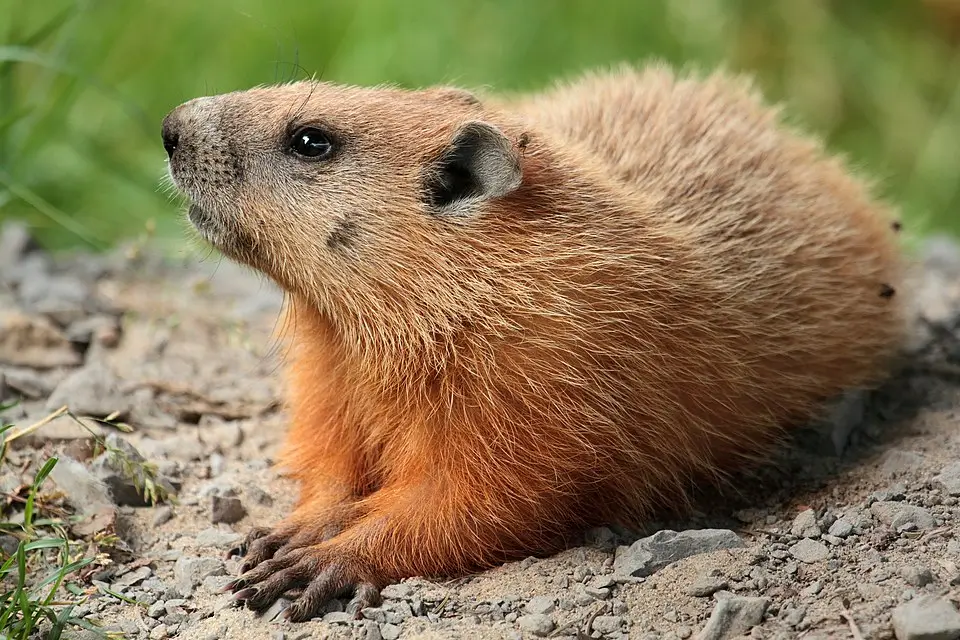
Adult groundhogs are stocky, powerfully built animals with short legs, a broad, flat head, and a medium-length, bushy tail. Their fur is coarse and typically ranges in color from dark brown on the back to a lighter, sometimes reddish-buff on the undersides. The feet are dark brown or black, and the incisors — like those of all rodents — are continuously growing and self-sharpening. These powerful teeth allow groundhogs to gnaw through roots and tough vegetation with ease.
One of the most remarkable biological features of the groundhog is its capacity for true hibernation. Unlike many animals that enter torpor or light sleep during winter months, groundhogs experience a dramatic physiological transformation. Their body temperature drops significantly, their heart rate slows to just a few beats per minute, and their breathing becomes extremely shallow. During this period, which typically begins in late fall and ends in late winter or early spring, the animal survives entirely on fat reserves accumulated during the warmer months. A groundhog may lose as much as half its body weight over the course of winter hibernation — a testament to just how deep and metabolically extreme this dormant state truly is.
Groundhogs are also accomplished diggers. Using their strong forelimbs and curved claws, they excavate elaborate burrow systems that can extend several feet underground and span considerable distances horizontally. These burrows often feature multiple entrances and chambers, including dedicated areas for sleeping and even waste disposal. The engineering work of the groundhog is not just impressive — it is ecologically valuable, as abandoned burrows frequently serve as shelter for a wide variety of other animals, including foxes, rabbits, skunks, and several species of snakes.
Though primarily herbivorous, feeding on grasses, clovers, dandelions, and a wide range of garden and agricultural crops, groundhogs are capable of climbing trees and swimming when necessary. They are generally solitary animals outside of the mating season, which occurs in early spring, shortly after the animals emerge from hibernation. Females typically give birth to a litter of young — known as kits or pups — several weeks after mating. The young grow rapidly and are typically independent by late summer, dispersing to establish their own territories and begin building burrows of their own.
Habitat & Range
The groundhog has one of the broadest distributions of any North American marmot species. Its range extends from the southeastern United States northward through Canada, reaching as far as Alaska in some accounts. Across this vast territory, Marmota monax is most commonly associated with open and semi-open habitats — meadows, pastures, forest edges, roadsides, and agricultural fields. The species thrives in areas where grassy clearings are adjacent to woodland cover, which provides both foraging opportunities and escape routes from predators.
West Virginia, with its mosaic of forested ridges, river bottoms, agricultural valleys, and rolling pastureland, provides an ideal patchwork of groundhog habitat. The Mountain State's terrain — characterized by the Appalachian highlands, the Ridge and Valley province, and the heavily forested interior — supports healthy groundhog populations throughout much of the state. Farmers and landowners in the state's more pastoral regions are often quite familiar with the groundhog's burrowing activities, particularly in hayfields and pastures where burrow entrances can pose hazards to livestock and farm equipment.
The groundhog's preference for habitat edges — the transitional zones between open areas and wooded cover — makes it a species that benefits, to some degree, from human land use patterns. Forest clearing for agriculture and development has historically expanded the amount of edge habitat available, which has supported robust groundhog populations across much of the eastern United States. In turn, groundhog burrows and foraging activities contribute to soil aeration and vegetation diversity, reinforcing the animal's role as a quiet but meaningful contributor to ecosystem health.
Hunting Information
In West Virginia, groundhog hunting is a beloved warm-weather tradition that attracts both seasoned hunters and newcomers looking to hone their skills in the field. The groundhog's habit of sitting upright on elevated mounds or fence posts while scanning for danger makes it a classic target for precision rifle shooting, and many hunters consider groundhog season — which runs through the warmer months when big game seasons are closed — an essential opportunity to practice long-range marksmanship before deer and turkey seasons arrive.
West Virginia's hunting culture is deeply embedded in the state's identity. The West Virginia Division of Natural Resources (WVDNR) oversees hunting regulations and licensing in the state, and the official West Virginia Hunting Guide serves as the primary resource for hunters seeking information on seasons, licenses, and regulations. Hunters planning to pursue groundhogs in West Virginia are encouraged to consult the most current version of the West Virginia Hunting Guide and to purchase the appropriate hunting license before heading afield. Licenses can be purchased conveniently through the WVDNR's online licensing system, making it easier than ever for both residents and non-residents to get properly licensed.
For those new to hunting in West Virginia, the state actively welcomes first-time hunters and provides guidance through resources like the "First Time Hunting in Almost Heaven" guide. The WVDNR's emphasis on accessibility and education reflects West Virginia's commitment to building the next generation of ethical, knowledgeable hunters.
Groundhog hunting is typically done with small-caliber centerfire rifles, though rimfire rifles and even air rifles are popular choices at shorter ranges. Hunters often glass open fields and pastures from a distance before making a careful approach or setting up a shooting position. Permission from landowners is essential when hunting on private property, and the groundhog hunter's success often depends as much on relationship-building with the farming community as it does on marksmanship skill.
For hunters interested in specific season dates, bag limits, and licensing requirements for groundhog hunting in West Virginia, the WVDNR's official resources are the authoritative and up-to-date source of information.
Conservation
The groundhog is currently listed as a species of least concern from a conservation standpoint. Its adaptability to a wide range of habitats, combined with its prolific reproductive capacity and broad geographic range, means that Marmota monax populations across North America remain healthy and stable. The species has demonstrated a remarkable ability to coexist with human activity and, in many cases, to thrive in human-modified landscapes.
From an ecological perspective, the groundhog plays a meaningful role in the food web. It serves as prey for a variety of predators, including hawks, eagles, foxes, coyotes, bobcats, and weasels. Its burrow systems, as noted earlier, provide critical shelter for dozens of other species. And its foraging activities, while sometimes frustrating for farmers and gardeners, contribute to the cycling of nutrients and the structure of plant communities.
Regulated hunting of groundhogs, when conducted responsibly and in accordance with state regulations, supports the broader goal of wildlife management and helps maintain population levels that are sustainable and compatible with agricultural land use. Hunters who engage with the land, respect private property, and pursue their quarry ethically are among the most dedicated stewards of North America's wildlife heritage.
Conclusion
The groundhog is far more than a weather-forecasting celebrity or a garden pest. It is a biologically sophisticated mammal with a storied place in North American ecology, culture, and hunting tradition. In West Virginia — a state defined by its mountains, its wildlife, and its deep outdoor heritage — the groundhog offers hunters of all experience levels an accessible, rewarding, and skill-building pursuit. Whether you are glassing a sunlit meadow in the Eastern Panhandle or sitting at a field edge in the heart of the Allegheny highlands, hunting Marmota monax connects you to the rhythms of the natural world in a way that few other outdoor pursuits can match.