Overview
Few animals embody the quiet mystique of the North American woodland quite like the gray fox (Urocyon cinereoargenteus). Sleek, secretive, and surprisingly agile, this remarkable canid has roamed the forests, brushlands, and rocky hillsides of the Americas for millions of years. Unlike many of its more celebrated relatives in the dog family, the gray fox tends to avoid the spotlight, slipping through the underbrush with a cat-like grace that has earned it admiration among naturalists, hunters, and wildlife enthusiasts alike.
In a state like West Virginia — with its dense hardwood forests, rugged mountain terrain, and sprawling hollows — the gray fox finds itself very much at home. The "Almost Heaven" state offers an ideal blend of habitat types that this adaptable species thrives in, making it a fascinating subject for anyone interested in the region's rich wildlife heritage. Whether you are a seasoned hunter heading into the West Virginia backcountry, a wildlife watcher hoping to catch a glimpse of a wild canid, or simply someone curious about the creatures that share our forests, the gray fox deserves a closer look.
Biological Traits
The gray fox belongs to the genus Urocyon, one of the oldest lineages of living canids in North America. Its scientific name, Urocyon cinereoargenteus, translates roughly to "ashen-silver tailed dog," a fitting description for an animal whose coat shimmers with a grizzled salt-and-pepper appearance. Unlike the red fox (Vulpes vulpes), which belongs to an entirely different genus, the gray fox represents a lineage that diverged from other canids approximately 9 to 10 million years ago, making it one of the most ancient members of the family Canidae still walking the continent.
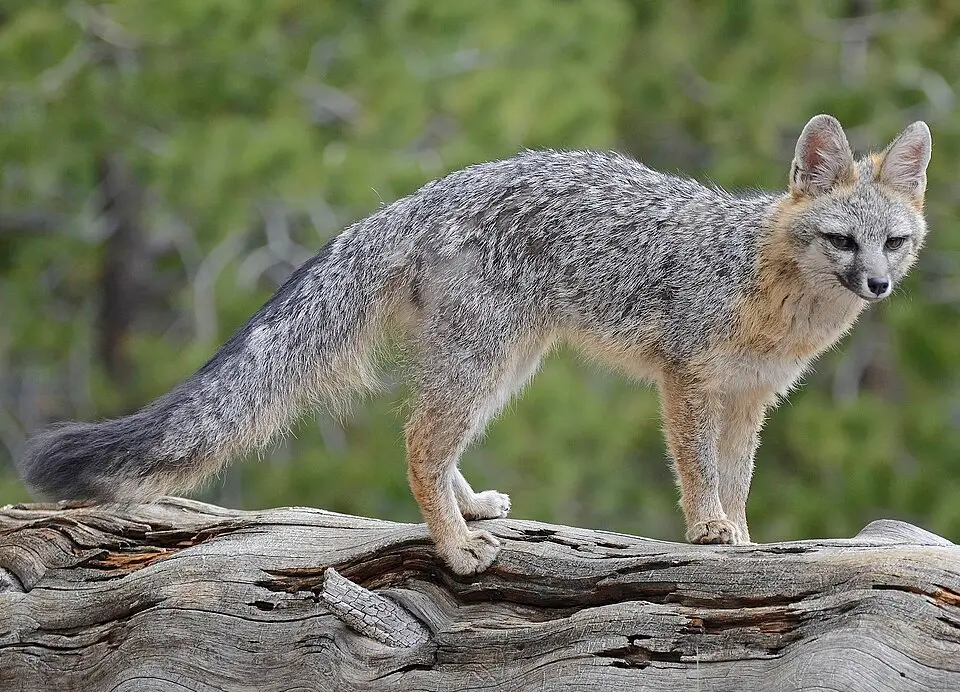
The gray fox's coat is one of its most distinctive features. Its back and sides are a mix of gray and black-tipped guard hairs, creating the characteristic grizzled appearance. The sides of the neck, the flanks, and the undersides of the tail are washed with a warm rufous or reddish-brown color. The throat, chest, and belly are typically white or pale. Perhaps most notably, the tail features a prominent black stripe running along its upper surface, ending in a black tip — a key visual distinction from the red fox, which famously sports a white-tipped tail.
One of the most extraordinary biological traits of the gray fox is its remarkable climbing ability. Alone among North American canids, the gray fox can climb trees with impressive skill. Its semi-retractable claws — a feature highly unusual in the dog family — allow it to grip bark and scale vertical trunks. This behavior serves multiple purposes: evading predators, accessing fruit and bird nests in the tree canopy, and simply resting on elevated limbs away from ground-level threats. This tree-climbing behavior has earned the gray fox the informal nickname "the tree fox," and it is one of the defining characteristics that sets it apart from every other member of the dog family found in North America.
Gray foxes are omnivores, which means their diet is broad and opportunistic. They consume small mammals such as cottontail rabbits and voles, birds and their eggs, insects, fruits, berries, and various plant material. This dietary flexibility is a major reason the species is so widespread and adaptable. Seasonally, plant foods such as persimmons, wild grapes, blackberries, and acorns can make up a substantial portion of their diet, particularly in late summer and autumn when these resources are abundant.
These foxes are primarily nocturnal and crepuscular, meaning they are most active around dawn, dusk, and through the night hours. Their senses are well-developed: keen hearing, a highly sensitive nose, and eyes adapted for low-light conditions all contribute to their effectiveness as hunters and foragers. Gray foxes are generally solitary outside of the breeding season, which typically occurs in late winter. After a gestation period of roughly 53 days, females give birth to litters that commonly range from three to five kits. Both parents are known to participate in raising the young, with the male providing food while the female nurses the kits. By autumn, young foxes typically disperse to establish their own territories.
Habitat and Range
The gray fox boasts one of the broadest geographic distributions of any American carnivore. Its range extends from southern Canada in the north all the way through the contiguous United States, Mexico, Central America, and into parts of northern South America. This enormous range speaks to the species' adaptability and resilience.
Within this range, the gray fox shows a strong preference for mixed hardwood forests, brushy woodlands, and areas with dense shrubby cover. It tends to favor more forested and broken terrain compared to the red fox, which is more commonly associated with open agricultural landscapes and meadow edges. Rocky outcrops, stream corridors, and overgrown field edges are also favored habitat components.
West Virginia, with its rugged Appalachian topography, dense second-growth forests, and abundance of brushy edge habitat along stream drainages and mountain hollows, provides excellent conditions for gray foxes throughout the state. The state's varied landscape — ranging from the high peaks of the Allegheny Mountains in the east to the rolling hills and river valleys of the western lowlands — supports gray fox populations across virtually all of its 55 counties. Forests of oak, hickory, maple, and tulip poplar provide both cover and a reliable food base in the form of acorns, nuts, and the small mammals and birds that inhabit these woodland ecosystems.
The gray fox is well-suited to the secondary and transitional forests that are characteristic of much of West Virginia's landscape, where timber management, farming, and natural succession create a patchwork of forest ages and structures. These varied habitats provide the combination of dense cover for denning and resting, open areas for hunting, and diverse food resources that gray foxes depend upon year-round.
Hunting Information
Gray fox hunting is a time-honored tradition in many parts of the eastern United States, and West Virginia is no exception. The state's extensive public lands, including national forests, state forests, and wildlife management areas, provide ample opportunity for hunters pursuing this species.
Gray foxes are commonly pursued through several methods. Calling — using electronic or mouth-blown predator calls that mimic the sounds of distressed prey animals such as cottontail rabbits or field mice — can be highly effective for attracting gray foxes within range. Their bold curiosity and opportunistic feeding habits make them responsive to well-executed calling sequences. Still hunting and hunting with hounds are also traditional methods employed in West Virginia's hills and hollows.
Hunters interested in pursuing gray foxes in West Virginia should consult the West Virginia Hunting Guide for current licensing requirements, season dates, and regulations, as these details can change from year to year. The West Virginia Division of Natural Resources manages hunting seasons and licensing for furbearers and non-game species, and purchasing the appropriate license has never been more convenient, with options available online and at licensed vendors throughout the state. The West Virginia Hunting Guide notes that purchasing a hunting or fishing license is more convenient than ever, with both resident and non-resident licenses available.
For those hunting gray foxes at night — a common approach given the species' nocturnal habits — it is especially important to review applicable regulations regarding the use of lights, firearms, and any specific furbearer season provisions that apply in West Virginia.
Conservation
The gray fox is currently listed as a species of Least Concern by wildlife conservation authorities, reflecting its broad distribution and generally stable populations across most of its range. Its adaptability to a wide range of habitats and its omnivorous diet make it resilient in the face of many forms of habitat change.
That said, gray fox populations can be affected by disease, habitat fragmentation, and in some regions, competition with or predation pressure from coyotes, which have expanded their range dramatically across eastern North America in recent decades. Responsible hunting, regulated by state wildlife agencies such as the West Virginia Division of Natural Resources, plays an important role in ensuring that gray fox populations remain healthy and sustainable for future generations.
Conservation of forest habitats in West Virginia — including the continued stewardship of the state's national and state forests — directly benefits gray fox populations by maintaining the woodland cover, denning sites, and prey communities that this species depends upon. Hunters, wildlife watchers, and land managers all contribute to the conservation of this remarkable animal by supporting sustainable land-use practices and respecting regulated harvest limits.
The gray fox is a living reminder of North America's ancient canid heritage — a species that has quietly persisted through millions of years of change. In the forests and hollows of West Virginia, this secretive climber continues to play its role in the web of life, hunting by moonlight and resting in the treetops as it has done for countless generations.