Overview
Few woodland creatures capture the imagination of naturalists, wildlife enthusiasts, and hunters quite like the fox squirrel. Known scientifically as Sciurus niger, the fox squirrel holds the distinction of being the largest tree squirrel native to North America. With its bold coloration, charismatic personality, and wide geographic distribution across much of the eastern and central United States, this remarkable animal has earned a place of prominence in the outdoor traditions of countless communities — including those nestled in the rugged, forested hills of West Virginia.
Whether you encounter one bounding along a split-rail fence in the Midwest, leaping between the hardwood canopies of a southern bottomland, or scurrying through the oak-hickory forests of the Appalachians, the fox squirrel is a creature that demands attention. Its size alone sets it apart — adults can appear almost surprisingly large compared to their more common cousin, the gray squirrel — but it is the animal's ecological role, behavioral quirks, and the hunting traditions it inspires that make Sciurus niger a truly special species.
This guide explores the biology, habitat, range, hunting significance, and conservation status of the fox squirrel, with specific attention to the state of West Virginia, where outdoor recreation and wildlife management are deeply woven into the cultural fabric of everyday life.
Biological Traits
The fox squirrel (Sciurus niger) belongs to the family Sciuridae, the broad family of squirrels that includes chipmunks, marmots, prairie dogs, and flying squirrels. Within this family, Sciurus niger represents the largest tree-dwelling species found anywhere in North America — a distinction that has fascinated biologists and wildlife managers for generations.
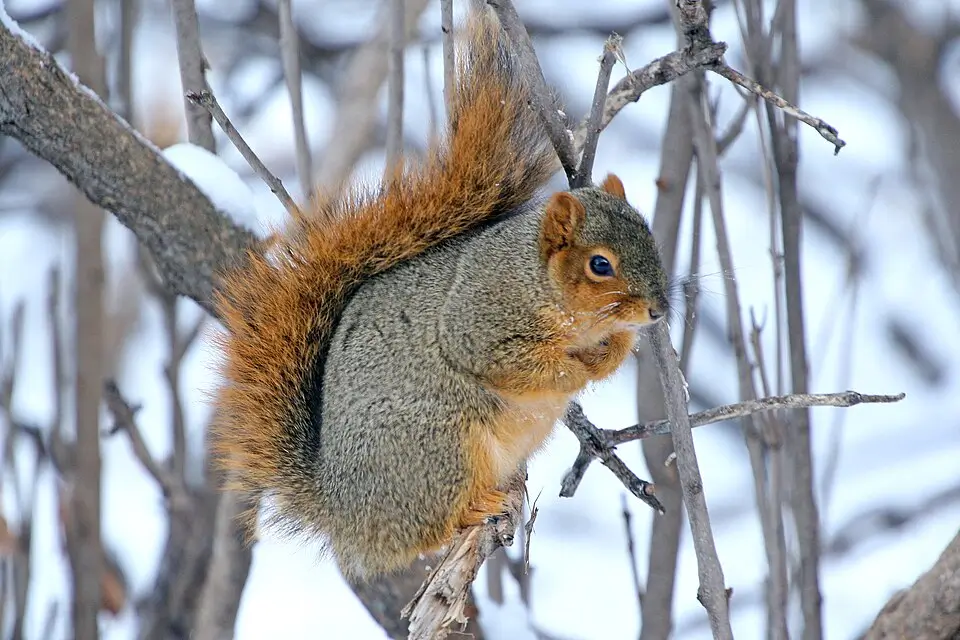
One of the most immediately striking features of the fox squirrel is its remarkable variation in coat color. Unlike many wildlife species that present a relatively uniform appearance across their range, fox squirrels can vary dramatically in coloration depending on geographic location and individual genetics. In many parts of their range, individuals display a rich, tawny-orange or rusty-red coloration on the underparts, with grizzled gray or brown tones across the back — a color pattern reminiscent of a red fox, which is almost certainly the source of the animal's common name. However, in other regions, particularly in parts of the South, melanistic (all-black) individuals are not uncommon, and some populations along the Atlantic coastal plain exhibit a distinctive black-and-white facial pattern.
Adult fox squirrels are considerably larger than the more familiar eastern gray squirrel (Sciurus carolinensis). Body length typically ranges from roughly 17 to 27 inches from nose to tail tip, and adults commonly weigh between 1.5 and 2.5 pounds, with some individuals reaching even greater sizes. The tail is long and bushy — a hallmark of tree squirrels — and serves multiple functions including balance, communication, and thermoregulation.
Fox squirrels are diurnal animals, meaning they are most active during daylight hours, with peak activity periods typically occurring in the morning and late afternoon. Unlike some other squirrel species, they tend to spend more time on the ground than one might expect from a "tree squirrel," often foraging along the forest floor for extended periods before retreating to the canopy.
Like other members of the genus Sciurus, fox squirrels are scatter-hoarders. They cache food — primarily mast crops such as acorns, hickory nuts, walnuts, and pecans — in numerous small, buried locations spread across their home range. This caching behavior plays an important ecological role, as not all buried nuts are retrieved, effectively making the fox squirrel an unintentional seed disperser and forest regenerator. Their diet is broad and seasonal, supplemented by fruits, berries, fungi, insects, and even bird eggs when available.
Breeding can occur twice per year in many parts of the fox squirrel's range, with peak breeding periods typically falling in winter and again in early to midsummer. Females give birth to litters typically ranging from two to four young after a gestation period of approximately 44 to 45 days. Young squirrels are born blind and hairless and are entirely dependent on their mother for the first several weeks of life. By the time they are weaned — generally around 10 to 12 weeks of age — they begin to develop the independent foraging behaviors that will sustain them throughout their lives. Fox squirrels in the wild can live up to 8 to 10 years under favorable conditions, though average lifespan in natural populations is often considerably shorter due to predation, disease, and environmental factors.
Habitat & Range
The fox squirrel is broadly distributed across a large swath of North America, ranging from the eastern seaboard westward through the Great Plains and into parts of the Rocky Mountain foothills, and from southern Canada south through the Gulf Coast states. Within this expansive range, however, the species shows distinct habitat preferences that differ subtly but importantly from those of the eastern gray squirrel.
Fox squirrels tend to favor more open, park-like woodland habitats compared to their gray squirrel cousins. They are frequently associated with open-canopy pine forests, oak savannas, forest edges, and agricultural landscapes interspersed with woodlots. They thrive in environments where there is a mix of mature mast-producing trees — particularly oaks, hickories, and pecans — combined with open ground beneath the canopy. This preference for more open woodland means that fox squirrels are often found at lower densities in the dense, closed-canopy forests that typify much of the central and eastern Appalachians.
In West Virginia, the landscape is defined by its dramatic topography — a state so dominated by ridges, hollows, and wooded slopes that it has been called "Almost Heaven" by its residents and tourism promoters alike. The state's forests are predominantly mixed hardwood, with oak and hickory species forming a critical component of the mast-producing ecosystem. Fox squirrels can be found in suitable habitats throughout the state, particularly in areas where the forest canopy opens somewhat and mature mast trees are present in abundance. Forest edges along agricultural fields, power line corridors, and stream bottoms with open hardwood galleries can all provide productive fox squirrel habitat in the Mountain State.
The species makes extensive use of tree cavities for denning, particularly during winter and breeding season. Large, mature trees with natural cavities — the kind found in older, less heavily managed forest stands — are therefore a critical habitat component for sustaining healthy fox squirrel populations.
Hunting Information
Squirrel hunting is one of the most time-honored hunting traditions in the Appalachian region, and in West Virginia, small game hunting occupies a cherished place in the state's outdoor heritage. The fox squirrel, by virtue of its larger size and more deliberate, ground-dwelling behavior compared to gray squirrels, presents a distinctive and rewarding hunting experience for small game enthusiasts.
Fox squirrel hunting typically rewards the patient, observant hunter who is willing to still-hunt or sit quietly at the edge of a productive mast grove, waiting for activity to develop as the morning light filters through the canopy. Because fox squirrels tend to be somewhat less skittish and faster-moving than gray squirrels, they often allow a more measured opportunity for the careful hunter. Hunters in West Virginia and throughout the Appalachian region commonly pursue fox squirrels with .22 rimfire rifles, small-bore shotguns loaded with light shot, or even traditional archery equipment for those seeking an additional challenge.
Early fall, when mast crops are freshly falling and squirrels are actively foraging and caching food for winter, is widely regarded as a prime time to pursue fox squirrels. Locating productive stands of oak and hickory is generally the first step to a successful outing. A forest edge where mature oaks border an open field or a south-facing slope with heavy mast production can be particularly productive locations.
West Virginia offers hunting licenses and small game permits through the West Virginia Division of Natural Resources. Hunters are encouraged to consult the current West Virginia Hunting Guide for the most up-to-date information on seasons, bag limits, licensing requirements, and regulations, as these details are subject to change on an annual basis. Purchasing a license is described as more convenient than ever, with options available for both residents and non-residents of the state.
Conservation
The fox squirrel's conservation status varies considerably across its range. While the species as a whole is not considered globally threatened, certain subspecies have experienced significant population declines and are afforded special protections. The Delmarva fox squirrel (Sciurus niger cinereus), once found across much of the Delmarva Peninsula, experienced severe range contraction due to habitat loss and was listed under the United States Endangered Species Act, though conservation efforts have led to meaningful population recovery in recent decades.
More broadly, fox squirrel populations benefit from forest management practices that maintain open-canopy conditions, preserve mature mast-producing trees, and protect large den trees. The species' tendency to exist at lower population densities than gray squirrels makes it somewhat more sensitive to habitat degradation and forest fragmentation, underscoring the importance of thoughtful land management.
In West Virginia, the state's extensive public lands — including portions of the Monongahela National Forest and numerous state wildlife management areas — provide important habitat refugia for fox squirrels and the broader suite of wildlife that depends on healthy Appalachian hardwood forests. Hunters, wildlife managers, and conservation organizations all play vital roles in sustaining these ecosystems for future generations.