Overview
Few animals are as universally recognized across the forests and neighborhoods of eastern North America as the Eastern gray squirrel (Sciurus carolinensis). Whether you've spotted one darting across a woodland trail, watched one raiding a backyard bird feeder, or pursued one through the golden-leafed hardwood forests of West Virginia's mountains, this charismatic and resourceful creature has earned a permanent place in the American outdoor experience. For hunters and wildlife enthusiasts alike, the Eastern gray squirrel represents one of the most accessible and rewarding connections to the natural world — a small but spirited quarry that has tested the patience and woodsmanship of generations of hunters.
West Virginia, known as "Almost Heaven" for its stunning mountain scenery and abundant natural resources, provides exceptional habitat for the Eastern gray squirrel. The state's rugged, heavily forested landscape — covering millions of acres of hardwood forest — creates near-perfect conditions for squirrel populations to thrive. For new and experienced hunters alike, squirrel hunting in West Virginia offers an outstanding entry point into the state's rich hunting heritage.
This guide covers everything you need to know about Sciurus carolinensis: its biology, behavior, habitat preferences, and how to pursue it responsibly in the Mountain State.
Biological Traits
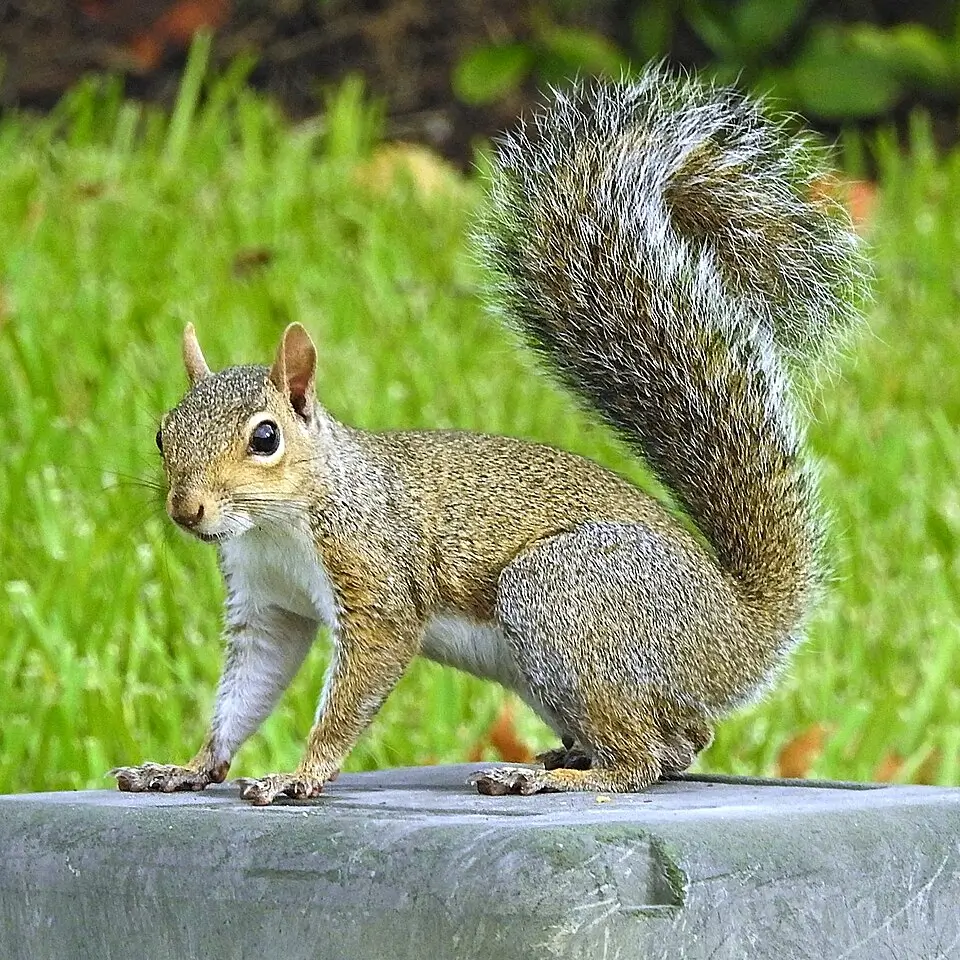
The Eastern gray squirrel is a medium-sized tree squirrel belonging to the family Sciuridae, the broader group that includes all squirrels, chipmunks, marmots, and prairie dogs. As its common name suggests, the species is predominantly gray in coloration, typically featuring a salt-and-pepper gray coat on its back and sides, with a pale white or cream-colored underside. The bushy, well-known tail is often edged with white-tipped hairs that give it a silvery, frosted appearance — a distinctive feature that makes this animal immediately identifiable in the field.
It is worth noting that the Eastern gray squirrel does exhibit some color variation across its range. Melanistic (all-black) individuals are not uncommon in certain areas, and while this darker coloration may seem unusual, these animals are simply part of the same species displaying a natural genetic variant. Albino individuals are extremely rare but have been documented.
Like all members of the squirrel family, Sciurus carolinensis is a highly active, diurnal mammal — meaning it is most active during daylight hours, particularly in the early morning and late afternoon. This behavioral pattern is particularly useful for hunters and wildlife observers who plan their outings accordingly.
One of the most fascinating aspects of Eastern gray squirrel biology is its relationship with food and energy storage. This species is a scatter hoarder, meaning it buries individual nuts and seeds across a wide area rather than stockpiling them in a single cache. The squirrel relies on its exceptional spatial memory to relocate these buried stores during winter months when food is scarce. Interestingly, not every buried acorn or hickory nut is recovered — and the squirrel's forgetfulness, intentional or otherwise, plays a meaningful ecological role. Uneaten, buried nuts often germinate and grow into new trees, making the Eastern gray squirrel an important and active contributor to forest regeneration.
The Eastern gray squirrel is primarily herbivorous, feeding on a wide variety of plant material including acorns, hickory nuts, walnuts, seeds, berries, fungi, and buds. During spring and early summer, when hard mast is not yet available, squirrels may supplement their diet with insects, bird eggs, or other protein sources — a testament to their adaptability.
Reproduction in Sciurus carolinensis typically occurs twice per year, with breeding seasons generally occurring in late winter (January through February) and again in midsummer (June through July). Females give birth to litters of two to four young after a gestation period of approximately 44 days. The young are born blind and hairless, entirely dependent on the mother. They begin venturing out of the nest at around seven to eight weeks of age and are typically weaned and largely independent by about ten to twelve weeks. This two-cycle reproductive strategy allows gray squirrel populations to recover relatively quickly from natural mortality and hunting pressure.
Their nests, commonly called dreys, are constructed from leaves, twigs, and other plant material, typically built high in the fork of a hardwood tree. Squirrels may also use natural tree cavities for shelter, particularly in the colder months, as these enclosed spaces provide superior insulation against harsh winter temperatures.
Habitat & Range
The Eastern gray squirrel's range spans much of the eastern half of North America, from southern Canada through the eastern United States and into parts of the Gulf Coast and northern Florida. The species has also been introduced to parts of western North America, Europe, and beyond — though in some regions, its introduction has raised ecological concerns regarding native squirrel species.
Within its native range, Sciurus carolinensis shows a strong preference for mature hardwood and mixed hardwood-conifer forests. The species is closely associated with mast-producing trees — oaks, hickories, beeches, and walnuts — which provide the rich, calorie-dense nuts that form the backbone of its diet. A forest with an abundance of these tree species will almost certainly support a healthy squirrel population.
West Virginia is an ideal study in Eastern gray squirrel habitat. The state is one of the most heavily forested in the entire nation, with vast tracts of hardwood forest covering its mountains, hollows, and river valleys. The Appalachian hardwood forests that blanket much of West Virginia's terrain — including mixed oak-hickory stands, beech-maple forests, and rich bottomland woods — are among the most productive squirrel habitats in the eastern United States. Elevations vary dramatically across the state, from river valleys to peaks exceeding 4,000 feet, creating a mosaic of forest types that support squirrel populations year-round.
The Eastern gray squirrel is also remarkably adaptable and has successfully colonized suburban and urban environments wherever mature trees are present. Parks, college campuses, and leafy neighborhoods throughout West Virginia host thriving squirrel populations — a testament to the species' behavioral flexibility.
Hunting Information
Squirrel hunting holds a special and storied place in Appalachian hunting culture, and West Virginia is no exception. For many West Virginians, pursuing gray squirrels through the hardwood hollows and ridgelines of "Almost Heaven" represents a cherished tradition passed down through generations. It is also widely regarded as one of the best ways for new hunters to develop fundamental skills — patience, stealth, marksmanship, and woodsmanship — that will serve them throughout a lifetime of hunting.
The Eastern gray squirrel is a legal and popular small game species in West Virginia. According to the West Virginia Hunting Guide, prospective hunters must first obtain a valid West Virginia hunting license before heading afield. Licenses can be purchased conveniently through official state channels, and the process has been made easier than ever for both residents and non-residents. The state's hunting guide specifically notes that first-time hunters in West Virginia will find the process straightforward and welcoming.
For specific season dates, bag limits, and detailed regulations pertaining to squirrel hunting, hunters should consult the current West Virginia Hunting Guide or contact the West Virginia Division of Natural Resources (WVDNR) directly, as these details can change from year to year and accurate, up-to-date information is essential for legal and responsible hunting.
In terms of technique, squirrel hunting is accessible with a variety of firearms and equipment. Many hunters prefer a .22 caliber rifle for its accuracy and minimal meat damage, while a 20-gauge or .410 shotgun offers advantages in heavier cover where shots may be quick and close. Some traditionalists enjoy squirrel hunting with archery equipment — a genuine test of patience and skill.
The most effective time to hunt squirrels is early morning, shortly after first light, when squirrels are most active and feeding in the treetops. Sitting quietly at the base of a large oak or hickory and waiting for movement in the canopy above is a time-tested and rewarding approach. Hunters who move slowly and deliberately through the woods, stopping frequently to watch and listen, will often be rewarded with close encounters.
Squirrel meat is nutritious and flavorful, and many hunters consider it a prized table fare. Traditional Appalachian recipes — squirrel and dumplings, Brunswick stew, and pan-fried squirrel — have sustained families in West Virginia and throughout the region for centuries.
Conservation
The Eastern gray squirrel is currently listed as a species of least concern by wildlife conservation authorities, reflecting its large, stable population across its native range. The species has demonstrated a remarkable capacity to adapt to changing landscapes, including fragmented forests and suburban environments. Responsible hunting, managed through state regulations and licensing requirements, plays an important role in ensuring squirrel populations remain healthy and sustainable for future generations.
Forest conservation efforts in West Virginia and throughout Appalachia directly benefit gray squirrel populations by protecting and restoring the mature hardwood forests that the species depends upon. Hunters, through license fees and excise taxes on sporting equipment (under programs like the Federal Aid in Wildlife Restoration Act, commonly known as the Pittman-Robertson Act), contribute significant funding to wildlife management and habitat conservation efforts. This makes hunters not only participants in, but genuine supporters of, the long-term conservation of species like Sciurus carolinensis.
By respecting seasons, limits, and regulations set forth by the West Virginia Division of Natural Resources, hunters can continue to enjoy this beloved small game tradition while ensuring that gray squirrel populations remain robust for decades to come.