Overview
Few animals embody the spirit of wild adaptability quite like the coyote (Canis latrans). Celebrated in Native American folklore as a trickster and survivor, this medium-sized member of the dog family has earned every bit of its legendary reputation. Once largely confined to the open plains and deserts of western North America, the coyote has expanded its range dramatically over the past century, now inhabiting nearly every corner of the continent — from the frozen tundra of Alaska to the sun-baked streets of Los Angeles, and from the wide-open prairies of the Midwest to the rugged, forested mountains of West Virginia.
The coyote's remarkable success story is one of the most fascinating chapters in modern wildlife biology. As forests were cleared, apex predators like wolves were eliminated from large portions of their historic range, and human settlements spread across the landscape, the coyote didn't retreat — it thrived. Today, Canis latrans stands as one of the most widespread and ecologically significant wild carnivores on the continent, playing a vital role in maintaining healthy ecosystems wherever it roams.
For hunters, wildlife enthusiasts, and naturalists alike, the coyote offers a compelling subject of study and pursuit. In states like West Virginia, where dramatic mountain terrain meets dense hardwood forests, the coyote has firmly established itself as a year-round resident and a challenging quarry for hunters who pursue it. Understanding this animal — its biology, its behaviors, its habitat preferences, and its place within the broader ecosystem — is the first step toward appreciating just how extraordinary this creature truly is.
Biological Traits
The coyote (Canis latrans), whose name derives from the Nahuatl word coyotl, is a member of the family Canidae, sharing that lineage with domestic dogs, wolves, and foxes. In terms of size, coyotes are smaller than gray wolves but larger than most foxes, typically weighing between 20 and 50 pounds depending on geographic location, sex, and season. Eastern coyotes — which include those found in West Virginia — tend to be somewhat larger than their western counterparts, a trait that researchers have partly attributed to historic hybridization with wolves and domestic dogs.
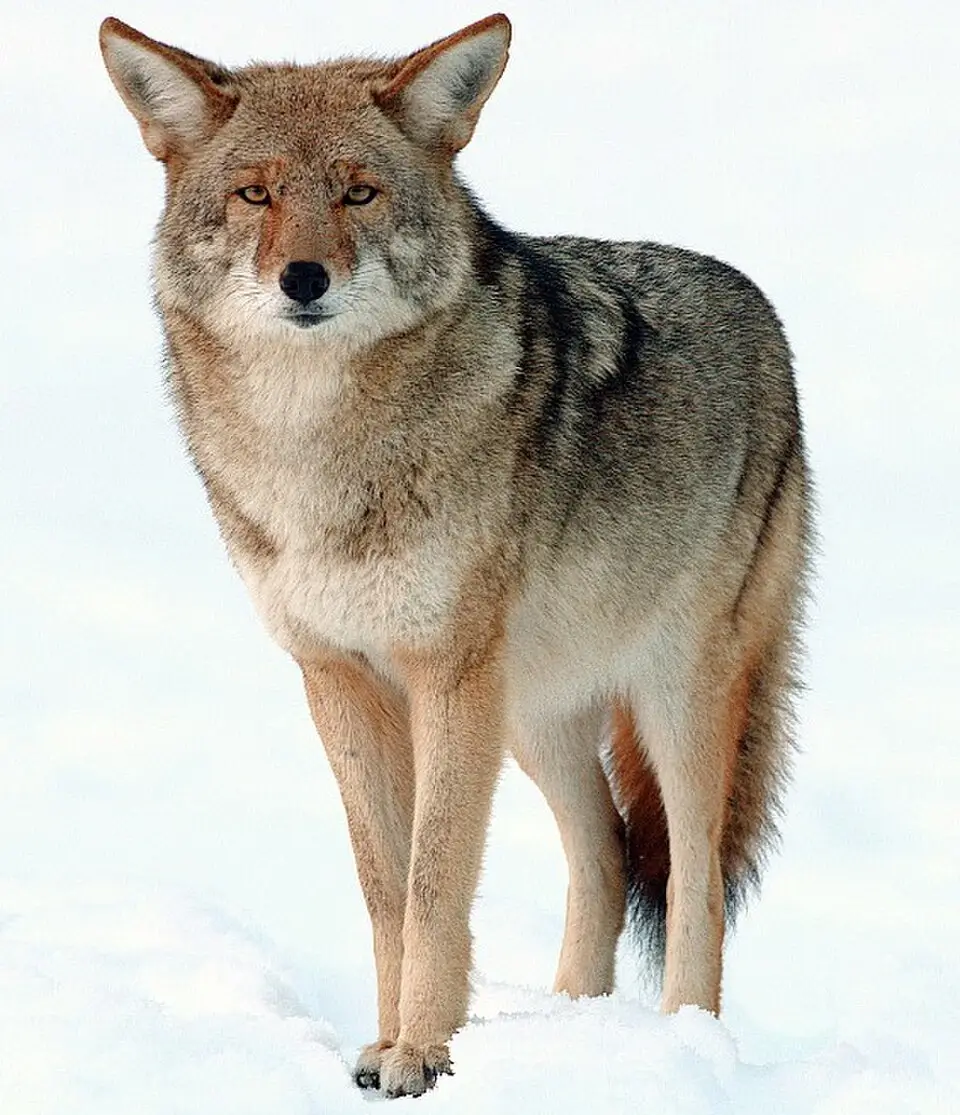
The coyote's coat is typically a grizzled gray or reddish-brown across the back and sides, with a lighter, often cream-colored underside. The fur is dense and coarse, well-suited to a wide range of climates. A bushy tail with a black tip is one of the most distinctive identifying features of the species, and unlike wolves, coyotes carry their tails low or between their legs while running rather than held high.
Coyotes are highly vocal animals, and their nighttime serenades — a combination of howls, yips, barks, and wails — are among the most recognizable sounds in the North American wilderness. These vocalizations serve multiple purposes, including communicating territorial boundaries, coordinating with pack members, and maintaining contact between mated pairs. A chorus of coyotes can sound like a far larger group than it actually is, a phenomenon that has contributed to the species' somewhat mystical reputation.
As opportunistic omnivores, coyotes possess one of the most varied diets in the animal kingdom. Their menu includes small mammals such as rabbits, mice, voles, and squirrels; birds and their eggs; reptiles; insects; fruits and berries; carrion; and occasionally deer — particularly fawns during the spring birthing season or weakened adults during harsh winters. This dietary flexibility is central to the coyote's survival success across such a wide variety of environments.
Coyotes are primarily crepuscular and nocturnal, meaning they are most active during the twilight hours of dawn and dusk and throughout the night. However, they are frequently observed during daylight hours as well, especially in areas where human disturbance is minimal. Their senses are acute — sharp eyesight, an excellent sense of smell, and highly attuned hearing all combine to make the coyote an extraordinarily effective hunter and survivor.
Reproductively, coyotes are monogamous, and mated pairs often bond for multiple years or even for life. Breeding typically occurs in late winter, with pups born in the spring after a gestation period of approximately 63 days. Litter sizes commonly range from four to seven pups, though larger litters have been recorded. Both parents participate actively in raising the young, and older offspring from previous litters sometimes assist as well — a behavior known as cooperative breeding. This strong family structure contributes significantly to the coyote's population resilience.
Habitat & Range
The coyote's original range was centered on the Great Plains and arid regions of western North America, but over the course of the twentieth century, the species expanded dramatically eastward and northward. Today, coyotes are found in every U.S. state, all Canadian provinces, and throughout much of Central America. They thrive in deserts, grasslands, shrublands, agricultural areas, suburban neighborhoods, and dense forests — a breadth of habitat use that is virtually unmatched among North American carnivores.
In the eastern United States, coyotes have adapted particularly well to the patchwork of forests, farmlands, and suburban areas that characterize the region. West Virginia, with its deeply forested ridges, river valleys, agricultural clearings, and vast expanses of public land, provides excellent coyote habitat. The Mountain State's rugged topography — dominated by the Allegheny Mountains and the Ridge and Valley physiographic province — offers abundant prey, ample denning sites, and the kind of wild, undisturbed terrain that coyotes favor for raising their young.
Coyotes in forested eastern environments like West Virginia often behave somewhat differently from their western relatives. They tend to be more secretive and rely more heavily on forest cover, adapting their hunting strategies to pursue white-tailed deer fawns, wild turkey, and the various small mammals that populate Appalachian woodlands. The availability of hard mast crops like acorns and berries also supplements their diet during the fall and winter months.
Hunting Information
Hunting coyotes is a popular and widely practiced pursuit across North America, and West Virginia is no exception. The coyote's combination of sharp senses, unpredictable behavior, and elusive nature makes it one of the most challenging and rewarding animals a hunter can pursue. Predator hunting, as it is broadly known, demands a high level of skill, patience, and woodsmanship — qualities that resonate deeply with West Virginia's proud hunting culture.
Hunters in West Virginia interested in pursuing coyotes should always begin by consulting the West Virginia Hunting Guide and purchasing the appropriate licenses and permits through the official state channels. The West Virginia Division of Natural Resources manages hunting regulations in the state, and licenses can be purchased conveniently online or through authorized agents. As regulations can change from year to year, it is essential that hunters verify current season dates, legal methods of take, and any applicable restrictions before heading into the field.
Common techniques for hunting coyotes include electronic and mouth-blown calls that mimic the sounds of distressed prey animals such as rabbits or rodents, as well as howling calls that appeal to the coyote's territorial instincts. Decoys, camouflage clothing, and disciplined scent control all improve a hunter's odds against this keenly aware predator. Many experienced coyote hunters prefer to set up on field edges, ridgelines, or open areas where visibility is maximized, calling at intervals and waiting patiently for a response.
Rifles chambered in flat-shooting calibers, shotguns loaded with appropriate shot, and archery equipment are all commonly used for coyote hunting depending on the terrain and hunting style. Night hunting, where permitted, has become increasingly popular and often involves the use of thermal or night-vision optics. Hunters should always confirm the legal status of specific equipment and hunting methods with West Virginia's current regulations.
For those new to hunting in West Virginia, the state provides helpful resources through its official hunting guide — an excellent starting point for understanding what the Mountain State has to offer. Whether you are a seasoned predator hunter or a first-timer eager to experience the thrill of calling in a coyote from the West Virginia hills, the experience is one that will leave a lasting impression.
Conservation
Despite being one of the most hunted and trapped wild animals in North America, the coyote has demonstrated a remarkable capacity to maintain and even grow its populations in the face of sustained human pressure. This resilience is due in large part to the coyote's reproductive flexibility — when populations are reduced, surviving animals tend to produce larger litters, helping populations rebound quickly.
From a conservation standpoint, coyotes play an important ecological role as mesopredators. By regulating populations of rodents, rabbits, and other small mammals, they contribute to the health and balance of the ecosystems they inhabit. They also serve as scavengers, helping to clean up carrion and reduce the spread of disease. In regions where larger apex predators have been extirpated, the coyote has partially filled that ecological niche, providing ecosystem services that benefit biodiversity broadly.
The coyote's current conservation status is of Least Concern according to the International Union for Conservation of Nature (IUCN), reflecting its wide distribution, large population, and continued expansion. Wildlife managers across North America, including those in West Virginia, monitor coyote populations as part of broader predator-prey management programs, ensuring that hunting and other management activities remain sustainable over the long term.
Respecting the coyote — as both a worthy hunting quarry and as a vital component of North American ecosystems — reflects the broader conservation ethic that defines responsible hunting and wildlife stewardship. In the hills and hollows of West Virginia and beyond, Canis latrans will undoubtedly continue to howl for generations to come.