Overview
Few animals capture the imagination of wildlife enthusiasts, hunters, and naturalists quite like the cougar. Known by many names — mountain lion, puma, panther, and catamount, among dozens of others — this remarkable feline holds the distinction of having more common names than virtually any other mammal in the Western Hemisphere. Scientifically classified as Puma concolor, the cougar is a testament to nature's capacity for adaptability, resilience, and raw, elegant power. Across centuries of human settlement, habitat loss, and intensive hunting pressure, this large cat has persisted across an extraordinary range of environments, earning its reputation as one of North America's most iconic and elusive predators.
The cougar is the largest wild cat native to North America and the second-largest in the Western Hemisphere, trailing only the jaguar. Its sleek, tawny coat, powerful musculature, and secretive nature have made it a figure of reverence and fascination across Indigenous cultures, frontier folklore, and modern wildlife science alike. Understanding this magnificent animal — its biology, behavior, range, and relationship with human beings — is essential not only for hunters and outdoors enthusiasts but for anyone who appreciates the wild places of North America.
Biological Traits
The cougar (Puma concolor) belongs to the family Felidae and the subfamily Felinae, placing it more closely in relation to smaller cats than to the roaring big cats like lions and tigers. Despite its imposing size, the cougar is technically classified among the "small cats" in terms of its vocal anatomy — it cannot roar but is capable of producing a wide range of vocalizations including hisses, growls, whistles, and a haunting, high-pitched scream that has startled many a wilderness traveler.
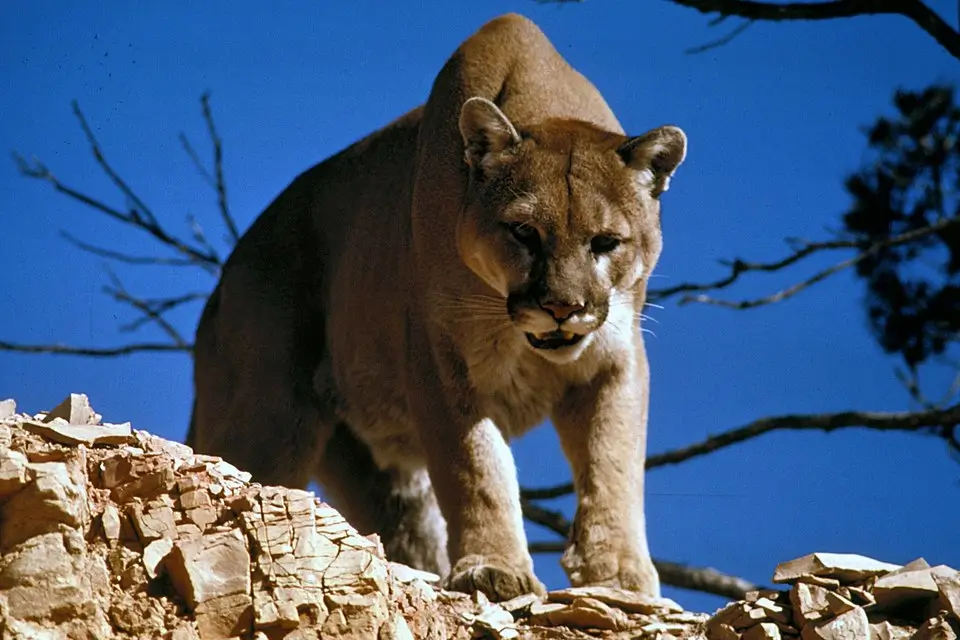
Adult males are substantially larger than females, a characteristic known as sexual dimorphism. Male cougars can weigh anywhere from roughly 115 to over 200 pounds, while females are typically more compact, generally ranging from around 75 to 130 pounds. Body length, including the tail, can reach up to eight feet in large males. The tail itself is notably long — often accounting for nearly a third of the animal's total length — and serves as a critical counterbalance during high-speed pursuits and agile maneuvers across rugged terrain.
The cougar's coat is typically a uniform tawny-brown or tawny-gray on the back and sides, fading to a lighter cream or buff on the underside. Cubs, by contrast, are born with distinctive spotted coats — a pattern that fades as they mature into adulthood. The face displays characteristic dark markings around the muzzle and behind the ears, giving the animal a distinctive and recognizable appearance.
Cougars are solitary animals by nature, with the exception of mothers raising cubs. Males maintain large territories that may overlap with the ranges of several females but rarely tolerate other males within their space. Communication is achieved through scent markings, scratch posts on trees, and vocalizations. These animals are primarily crepuscular and nocturnal hunters, meaning they are most active during dawn, dusk, and the nighttime hours.
As apex predators, cougars are highly effective hunters. Deer constitute the primary prey species across most of their range, though they are opportunistic and will take a variety of prey including elk, bighorn sheep, wild boar, smaller mammals, and in some regions, livestock. The cougar's hunting strategy relies on stealth and ambush rather than sustained pursuit — it stalks its prey patiently before launching a swift, powerful strike, typically targeting the neck or base of the skull to dispatch prey quickly.
Reproduction in cougars is not tied to a specific breeding season; females can come into estrus at any time of year. After a gestation period of approximately 90 days, a female will give birth to a litter of one to six cubs, with two to three being most common. Cubs remain with their mother for an extended period — typically 12 to 24 months — during which time they learn the full range of hunting and survival skills required for independent life.
Habitat and Range
One of the most extraordinary attributes of Puma concolor is the sheer breadth of its geographic range and the diversity of habitats it can successfully occupy. Historically, the cougar ranged from the Yukon in northern Canada all the way to the southern tip of South America, making it the most widely distributed terrestrial mammal in the Western Hemisphere after humans. This remarkable range encompasses boreal forests, tropical rainforests, high-altitude mountain terrain, desert scrublands, coastal swamps, and grassland prairies.
In North America today, cougar populations are most robust in the western United States and Canada, where large tracts of wilderness provide adequate prey and cover. States such as California, Colorado, Montana, Idaho, Wyoming, and Washington support established and well-monitored populations. In recent decades, there has been documented evidence of cougar range expansion eastward, with confirmed sightings and even some breeding activity reported in the Midwest.
In terms of preferred habitat, cougars show a strong affinity for areas with dense vegetation or broken topography — features that support their ambush-based hunting strategy. Rocky canyons, dense forests, and areas with substantial deer populations are classic cougar country.
Hunting Information
Cougar hunting is a lawful and regulated activity in a number of western U.S. states and Canadian provinces, where established populations support sustainable harvest. In states with open seasons, cougar hunting is typically conducted using trained hounds — a traditional method that requires considerable skill, patience, and dedication from both hunter and dog. Spot-and-stalk hunting is also practiced in some regions.
Regulations governing cougar hunting vary significantly by state and province and are carefully managed by wildlife agencies to ensure population sustainability. Hunters interested in pursuing cougars should always consult the specific regulations for their target jurisdiction, as seasons, bag limits, licensing requirements, and legal methods of take differ considerably.
Cougar Hunting in West Virginia:
It is important for hunters and wildlife enthusiasts in West Virginia to understand the current status of cougars in the state. The eastern cougar subspecies (Puma concolor couguar) was historically native to the Appalachian region, including what is now West Virginia. However, the eastern cougar was officially declared extinct by the U.S. Fish and Wildlife Service. While there are occasional unverified reports and sightings from West Virginia's rugged mountain terrain — the state's dense hardwood forests and mountainous landscape would theoretically provide suitable habitat — no established, breeding population of cougars has been confirmed in the state.
As a result, West Virginia does not currently offer a regulated cougar hunting season. The West Virginia Hunting Guide provides comprehensive information on available hunting opportunities across the state, covering a wide range of species native to "Almost Heaven." Hunters planning to visit West Virginia are encouraged to purchase a valid West Virginia hunting license and review current regulations through official state channels, as regulations and available species can change over time. West Virginia's mountainous landscape, bordering states such as Pennsylvania, Virginia, Kentucky, Maryland, and Ohio, remains some of the most beautiful and productive hunting country in the eastern United States.
Conservation
The conservation story of the cougar is one of both challenge and cautious optimism. Intensive persecution during the 18th, 19th, and early 20th centuries — driven by concerns about livestock predation and misguided predator elimination programs — dramatically reduced cougar numbers and eliminated the species from vast portions of its historical range across the eastern United States.
Today, cougar conservation is supported by a combination of legal protections, regulated hunting, and ongoing scientific research. In states where hunting seasons are established, wildlife agencies carefully monitor population data to set sustainable harvest quotas. Modern conservation tools including GPS telemetry, camera trapping, and genetic analysis have vastly improved our understanding of cougar ecology, movement patterns, and population dynamics.
Public attitudes toward large predators have also evolved significantly over recent decades, with growing recognition of the vital ecological role cougars play as apex predators. By regulating deer and other ungulate populations, cougars contribute to the health of forest ecosystems in ways that benefit a wide range of other species.
The story of the cougar in America is far from over. With thoughtful management, continued research, and a commitment to preserving wild spaces, this magnificent animal will continue to roam the mountains, forests, and wild lands of the Western Hemisphere for generations to come.