A Complete Guide for Wildlife Enthusiasts and Hunters in West Virginia and Beyond
Few animals are as deeply woven into the fabric of American outdoor culture as the cottontail rabbit. From backyard gardens to sprawling forest edges, from the brushy hollows of Appalachia to the wide-open plains of the Midwest, the cottontail rabbit is a creature that virtually every American has encountered at some point in their lives. Familiar yet endlessly fascinating, the cottontail occupies a unique place in both the natural world and in the hearts of hunters, wildlife watchers, and nature lovers alike.
Belonging to the genus Sylvilagus, cottontail rabbits represent one of the most widespread and ecologically significant groups of small mammals in North America. The genus name Sylvilagus is derived from Latin and Greek roots meaning "forest rabbit," a fitting description for animals that thrive in the dense, brushy habitats found throughout the continent. West Virginia, with its rugged mountain terrain, rich hardwood forests, and abundance of brushy edge habitat, provides an exceptional home for these remarkable animals — and exceptional opportunities for those who pursue them afield.
Whether you are a seasoned small game hunter looking to reconnect with a cherished tradition, a first-time hunter preparing for your inaugural season in the Mountain State, or simply a wildlife enthusiast curious about the natural world around you, this guide will give you a thorough understanding of the cottontail rabbit — its biology, its habits, its habitat, and its role in both the ecosystem and the hunting heritage of West Virginia.
Biological Traits
The cottontail rabbit belongs to the order Lagomorpha and the family Leporidae, placing it alongside hares and pikas as one of the world's most successful groups of herbivorous mammals. The genus Sylvilagus encompasses multiple species found across North and South America, with the Eastern Cottontail (Sylvilagus floridanus) being by far the most commonly encountered species in the eastern United States, including West Virginia.
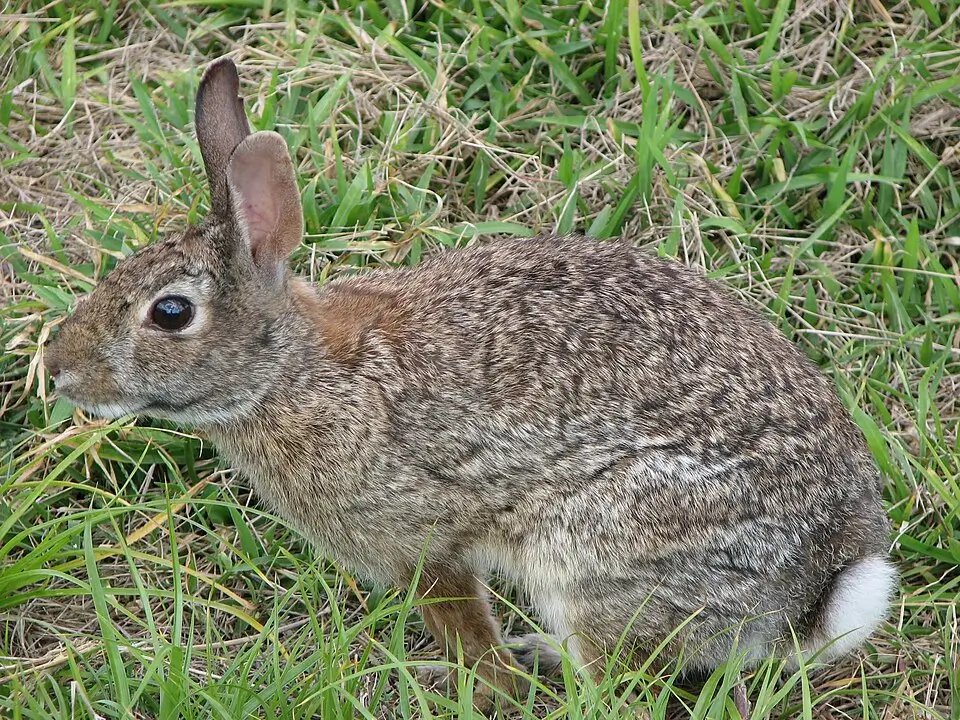
Cottontails are medium-sized mammals, typically compact and well-built for a life that demands both agility and endurance. Their most recognizable feature — the one that gives them their common name — is the fluffy, white underside of the tail, which flashes conspicuously as the animal bounds away from a perceived threat. This "cotton ball" tail is not merely an aesthetic curiosity; it may serve as a visual signal to other rabbits in the area, alerting them to potential danger.
The fur of a cottontail is typically a rich mixture of brown, gray, and buff tones across the back and sides, providing excellent camouflage against the leaf litter and brush of their preferred habitats. The belly is white, and there is often a rusty or orange patch at the nape of the neck. The ears are moderately long compared to true hares, well-suited for detecting the sounds of approaching predators. The large, prominent eyes are positioned on the sides of the head, giving cottontails an exceptionally wide field of vision — a crucial adaptation for prey animals that must remain constantly alert.
Cottontails are entirely herbivorous. Their diet shifts seasonally to take advantage of whatever vegetation is most available and nutritious. During warmer months, they consume a wide variety of grasses, clovers, wildflowers, garden plants, and agricultural crops. In winter, they rely more heavily on woody browse, including the tender bark and twigs of shrubs and young trees. Like all lagomorphs, cottontails practice a behavior known as cecotrophy — the consumption of special soft fecal pellets called cecotropes — which allows them to extract maximum nutrition from their plant-based diet through a form of hindgut fermentation.
Reproduction is perhaps the most impressive biological trait of the cottontail. These animals are extraordinarily prolific breeders, capable of producing multiple litters per year under favorable conditions. Females, known as does, construct shallow nests called forms in dense vegetation, lining them with grasses and their own soft fur. Litters typically contain several young, called kittens or kits, which are born blind and nearly hairless. They develop rapidly, however, and are capable of surviving on their own within a matter of weeks. This remarkable reproductive capacity allows cottontail populations to rebound quickly from losses due to predation, harsh weather, or hunting pressure — a characteristic that makes them one of the most resilient small game animals in North America.
The lifespan of a wild cottontail is generally short by mammalian standards. Predation pressure from hawks, owls, foxes, coyotes, bobcats, domestic cats and dogs, and numerous other predators means that most wild cottontails do not survive beyond their first year. However, those that do survive their vulnerable early weeks can live for several years in the wild. This high turnover rate, combined with high reproductive output, keeps cottontail populations dynamic and ecologically productive.
Habitat & Range
The genus Sylvilagus is distributed across an enormous geographic range, spanning most of North America and extending into Central and South America. In the United States, cottontail rabbits are found in virtually every state, adapting to an impressive diversity of habitats ranging from desert scrublands and coastal marshes to boreal forest edges and suburban neighborhoods.
The key to understanding cottontail habitat preferences lies in one concept: edge. Cottontails thrive where two or more habitat types meet — where open fields border dense brush, where agricultural land meets woodlots, where forest clearings provide feeding opportunities adjacent to the protective cover of shrubby thickets. This preference for edge habitat makes them highly adaptable to the human-modified landscapes that dominate much of eastern North America.
In West Virginia, the landscape is defined by the rugged ridges and hollows of the Appalachian Mountains. The state's diverse topography creates a mosaic of habitat types — hardwood forests, regenerating clear-cuts, agricultural bottomlands, overgrown pastures, and brushy stream corridors — that together provide ideal conditions for healthy cottontail populations. The Mountain State's abundant precipitation supports lush vegetation growth, ensuring that rabbits have both food and cover in plentiful supply throughout the year.
Brushy fence rows, briar patches, blackberry thickets, honeysuckle tangles, and regenerating timber cuts are among the most productive cottontail habitats in West Virginia. Hunters and wildlife watchers alike would do well to focus their attention on these transitional zones, particularly during the early morning and late afternoon hours when cottontails are most active.
Hunting Information
Cottontail rabbit hunting is one of the oldest and most beloved small game traditions in North America, and West Virginia is no exception. The state's rich tapestry of forest edges, brushy hollows, and rural farmland provides outstanding habitat for cottontails, making it a destination worth exploring for small game hunters seeking a classic Appalachian hunting experience.
West Virginia offers hunting opportunities for residents and non-residents alike, and purchasing a hunting license is described by the state as being more convenient than ever before, with options available for both residents and non-residents. The West Virginia Hunting Guide provides comprehensive information for those preparing to hunt in the Mountain State, and first-time hunters are encouraged to consult official resources before heading afield.
Cottontail hunting is traditionally pursued with small-caliber rifles, shotguns, or by the time-honored method of hunting with beagles. The sight and sound of a pack of beagles running a rabbit through a briar thicket on a crisp autumn morning is a quintessential Appalachian experience that has defined generations of small game hunters in West Virginia and across the eastern United States. Hunters without dogs can also be productive by walking slowly through dense cover and pausing frequently, encouraging hidden rabbits to flush from their forms.
For specific season dates, bag limits, and licensing requirements in West Virginia, hunters should consult the current West Virginia Hunting Guide and the official West Virginia Division of Natural Resources website, as regulations are subject to change from year to year.
Conservation
Despite facing constant predation pressure and the challenges of a rapidly changing landscape, cottontail rabbits remain abundant across much of their range and are not considered a species of conservation concern at the national level. Their adaptability, prolific reproduction, and broad habitat tolerance make them remarkably resilient animals.
Habitat management is the cornerstone of cottontail conservation. Maintaining and enhancing edge habitat — through practices such as allowing brushy field borders, managing early successional forest, and preserving hedgerows and briar thickets — benefits cottontails and a wide array of other wildlife species simultaneously. Conservation organizations, state wildlife agencies, and private landowners all play important roles in maintaining the landscape conditions that support healthy cottontail populations.
Hunting also plays a constructive role in cottontail conservation. Licensed hunters contribute financially to wildlife management through the purchase of hunting licenses and through federal excise taxes on firearms and ammunition collected under the Pittman-Robertson Act. These funds support habitat restoration, population monitoring, and research programs that benefit cottontails and countless other species.