Overview
Few birds capture the imagination of hunters and wildlife enthusiasts quite like the Common pheasant (Phasianus colchicus). With its dazzling plumage, explosive flush, and reputation as one of the world's most celebrated upland game birds, the Common pheasant occupies a special place in the hearts of sportspeople across the globe. From its origins in Asia to its successful introduction across Europe, North America, and beyond, this remarkable bird has proven itself both adaptable and enduring. For hunters in states like West Virginia, the Common pheasant represents an exciting quarry that combines challenging fieldwork, skilled marksmanship, and a deep connection to the outdoor tradition.
Whether you are a seasoned upland hunter or someone just beginning to explore the rich hunting heritage of "Almost Heaven" West Virginia, understanding the biology, behavior, and habitat preferences of the Common pheasant is the first step toward a rewarding experience in the field. This article explores everything you need to know about one of the most iconic game birds in the world.
Biological Traits
The Common pheasant, Phasianus colchicus, belongs to the family Phasianidae, a large and diverse group that also includes turkeys, grouse, partridges, and peacocks. The species name colchicus is a Latin reference to Colchis, an ancient region along the eastern coast of the Black Sea — modern-day Georgia — which is considered one of the bird's original native homelands.
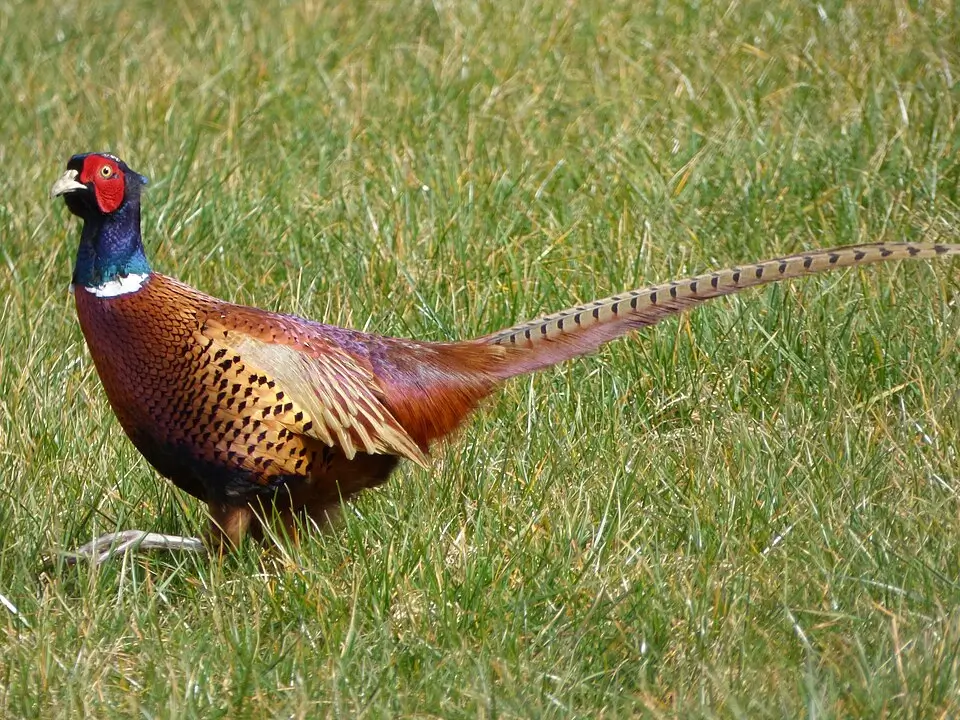
Perhaps the most immediately striking feature of the Common pheasant is its remarkable sexual dimorphism. Male pheasants, known as cocks or roosters, are among the most visually spectacular birds found in temperate regions of the world. They display richly iridescent plumage featuring a combination of deep copper, gold, chestnut, and green tones. The head is typically a rich, dark green with bright red facial wattles that flush even more vividly during the breeding season. Many males also sport a distinctive white neck ring, a trait particularly common in the subspecies most widely introduced to North America and Europe. Perhaps most notably, the cock pheasant carries a long, elegantly barred tail that can account for a significant portion of its total body length.
Female pheasants, or hens, are far more subdued in appearance — a trait common to many ground-nesting birds, where camouflage offers critical protection during incubation. Hens display mottled brown, tan, and buff tones that blend seamlessly with dry grasses, leaf litter, and agricultural stubble. While less visually dramatic than the males, hens possess their own quiet beauty and are essential to understanding the species' life history.
Common pheasants are polygynous, meaning a single dominant cock will typically mate with multiple hens during the spring breeding season. After mating, the hen takes sole responsibility for incubating the clutch, which typically consists of anywhere from eight to fifteen eggs, though larger clutches are not unheard of. The eggs are olive-brown to pale blue in color and are incubated for approximately 23 to 28 days. Once hatched, the chicks are precocial — meaning they are relatively mobile and independent from a very early age — though they remain under the hen's care for several weeks.
Adult Common pheasants are omnivores with a wide-ranging diet that shifts with the seasons. In spring and summer, insects, worms, and other invertebrates form an important component of their nutrition, especially for growing chicks that require high protein intake. As the seasons change toward autumn and winter, pheasants shift their diet toward seeds, grain, berries, and plant matter. This dietary flexibility is one of the reasons the species has thrived so successfully across such a wide geographic range.
The Common pheasant is a notably strong runner, preferring to move through cover on foot rather than take to the air when disturbed. However, when flushed — particularly by a dog working close cover — the bird erupts into flight with a characteristic cackling call and the rapid, thunderous beating of wings. This explosive flush, followed by a fast, low trajectory, is what makes pheasant hunting such an exhilarating and demanding sport.
Habitat & Range
The original native range of Phasianus colchicus extends from the Caucasus region of Eastern Europe across Central Asia and into China and Korea. The species has since been introduced — both deliberately for hunting purposes and through accidental escapes from captive populations — to virtually every continent except Antarctica. Today, the Common pheasant is one of the most widely distributed game birds on Earth.
In their preferred habitat, Common pheasants gravitate toward a mosaic of landscapes that offer a combination of open foraging areas and dense, protective cover. Agricultural landscapes are particularly favored, especially those featuring grain fields, hedgerows, brushy field margins, and wetland edges. The birds thrive where farmland meets woodland, using the tree lines and shrubby edges for roosting and escape cover while foraging in open areas nearby.
In states like West Virginia, the natural terrain presents both opportunities and challenges for pheasant populations. West Virginia is a mountainous, largely forested state located in the Southern and Mid-Atlantic regions of the United States, bordered by Pennsylvania and Maryland to the northeast, Virginia to the southeast, Kentucky to the southwest, and Ohio to the northwest. While much of the state is dominated by forested ridges and valleys — habitat more naturally suited to species like ruffed grouse and wild turkey — the state's agricultural valleys, river bottoms, and managed grasslands can provide suitable pheasant habitat where they occur.
It is worth noting that the Common pheasant is not native to North America. All populations present in the United States and Canada are descended from introductions, the earliest of which date back to the late 18th and 19th centuries. Wild-sustaining populations tend to be more concentrated in the grain-producing regions of the Midwest, Great Plains, and parts of the Pacific Northwest, where large expanses of agricultural land provide ideal foraging and nesting habitat. In states like West Virginia, pheasant hunting is often supported through stocking programs managed by state wildlife agencies, which release pen-raised birds to supplement or establish huntable populations.
Hunting Information
The Common pheasant is widely regarded as one of the premier upland game bird species in North America, and hunting pheasant carries a rich and storied tradition that spans generations of sportspeople. The experience of a pheasant hunt — the early morning fields, a well-trained pointing or flushing dog working the cover, and the heart-stopping moment of a rooster taking to the air — is something that every upland hunter should experience at least once.
In West Virginia, hunters interested in pursuing Common pheasant should consult the official West Virginia Hunting Guide, which provides up-to-date information on licenses, seasons, and regulations. The West Virginia Division of Natural Resources manages hunting regulations, and purchasing a valid West Virginia hunting license is a required first step for any hunter. The state's hunting guide is designed to help both resident and non-resident hunters navigate the licensing and regulatory process, and the Division has made purchasing licenses more convenient than ever before, with options available online and at numerous retail locations throughout the state.
For prospective hunters who are new to West Virginia, the state's wildlife agency provides resources specifically aimed at first-time hunters exploring "Almost Heaven" for the first time. Taking advantage of these resources, understanding local regulations, and hunting on appropriate public or permitted private land are all essential components of a responsible and rewarding hunt.
When it comes to equipment, pheasant hunting typically calls for a 12 or 20-gauge shotgun loaded with appropriate upland loads. Many hunters consider a well-trained bird dog — whether a pointer, setter, flushing spaniel, or retriever — to be an indispensable partner in pheasant country, as dogs dramatically increase a hunter's ability to locate, flush, and retrieve birds in dense cover.
Conservation
The Common pheasant presents an interesting conservation profile. As an introduced species across much of its current range, it does not face the same existential pressures as many native wildlife species. In its native range across Asia, habitat loss and changes in land use present ongoing challenges, as they do for most wildlife species worldwide.
In North America, the long-term health of pheasant populations is closely tied to the availability of suitable agricultural habitat, particularly nesting cover and winter food sources. Conservation programs such as the Conservation Reserve Program (CRP) in the United States have played an important role in providing and maintaining the grassland habitat that pheasants and many other wildlife species depend upon. Hunters, conservation organizations, and wildlife managers have long worked together to support pheasant habitat through voluntary land management initiatives, stocking programs, and research.
The Common pheasant also serves as an important indicator of the broader health of agricultural landscapes. Where pheasant populations thrive, it is often a sign that the land supports a diverse community of other wildlife as well.