Overview
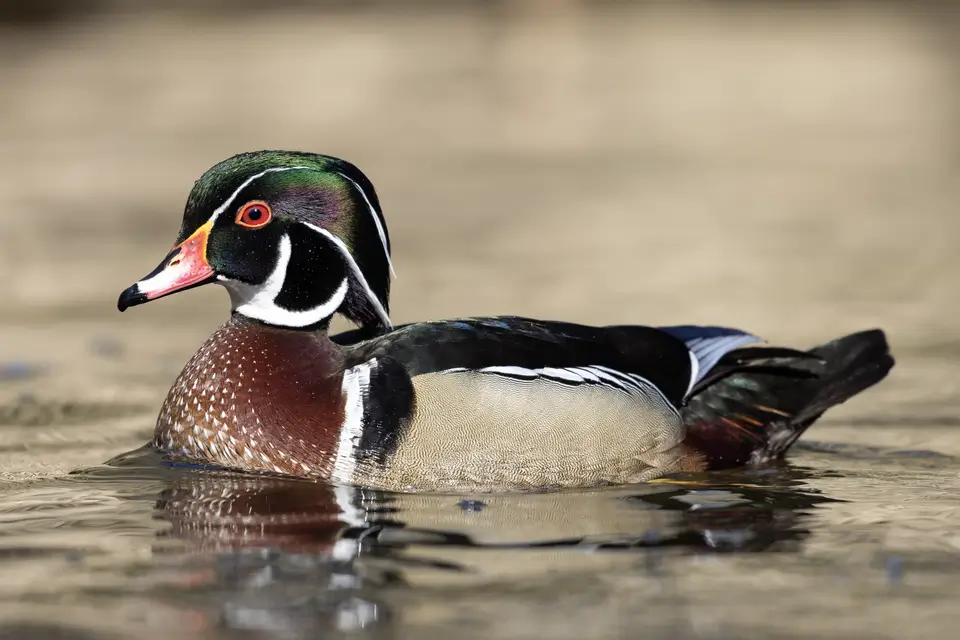
Few birds in North America command attention quite like the Wood Duck (Aix sponsa). Known among birders, naturalists, and hunters alike as one of the most visually striking waterfowl on the continent, the Wood Duck carries an almost otherworldly beauty that has inspired countless observers throughout history. The male of the species, dressed in iridescent greens, chestnuts, and crimsons accented by bold white markings, is widely regarded as one of the most ornate ducks in the world. But the Wood Duck's appeal extends far beyond its stunning plumage — it is a species of remarkable adaptability, fascinating biological traits, and deep cultural significance across much of North America, including the Pacific Northwest state of Washington.
For hunters and wildlife enthusiasts in Washington state, the Wood Duck represents a special kind of encounter. Washington, nestled in the Pacific Northwest and bordered by the Pacific Ocean to the west, Oregon to the south, Idaho to the east, and the Canadian province of British Columbia to the north, offers a diverse range of wetland and riparian habitats that are well-suited to this charismatic species. Whether you're padding a canoe through a forested stream corridor or standing in a cattail marsh at dawn, the sight and sound of Wood Ducks taking flight is a memorable experience in any season.
This article explores the biology, habitat, hunting traditions, and conservation story of the Wood Duck — a bird that serves as one of North America's most powerful examples of wildlife management success.
Biological Traits
The Wood Duck (Aix sponsa) belongs to the family Anatidae, the large and diverse family that encompasses all ducks, geese, and swans. Its genus, Aix, is shared with only one other species in the world — the Mandarin Duck of eastern Asia — and the two are considered among the most beautiful ducks on Earth. The species name sponsa is derived from Latin, meaning "promised bride" or "betrothed," a poetic nod to the bird's almost ceremonially beautiful appearance.
The male Wood Duck in breeding plumage is unmistakable. His head is adorned with an iridescent green and purple crest, framed by intricate white facial markings that trace elegant lines around the eye and throat. The chest is a rich chestnut color speckled with white dots, while the flanks display delicate buff and black patterning. The bill is multi-colored — red at the base, transitioning to yellow and then white near the tip — and the eyes glow a vivid red. In contrast, the female is more subtly patterned in brown and gray tones, with a distinctive white teardrop-shaped eye ring that helps identify her even at a distance. Her understated beauty serves an important biological purpose, providing camouflage during nesting and brooding duties.
One of the most remarkable features of the Wood Duck is its adaptation to forested environments — a trait highly unusual among North American waterfowl. Unlike most ducks that nest on the ground or in marsh vegetation, Wood Ducks are cavity nesters. They seek out natural tree hollows, old woodpecker holes, and nest boxes situated near water. Their feet are equipped with sharp claws that allow them to perch and cling to tree branches and the rough interior walls of nest cavities — another trait that sets them apart from most other duck species.
Perhaps the most dramatic moment in any Wood Duck's life occurs shortly after hatching. Ducklings, covered in soft down and not yet able to fly, must leap from their nest cavity — which may be positioned anywhere from a few feet to several dozen feet above the ground or water — to follow their mother. Their light weight and downy feathers allow them to survive this extraordinary plunge with little or no injury. Within hours of hatching, the brood is led to the water by the hen, beginning their lives as some of North America's most agile and adapted waterfowl.
Wood Ducks are omnivorous, feeding on a wide variety of plant and animal matter. Their diet includes acorns, seeds, berries, aquatic vegetation, insects, and invertebrates. Acorns are particularly important, especially during fall and winter when Wood Ducks congregate in forested bottomlands and swamps rich in oak trees. This preference for wooded, food-rich wetland environments shapes much of their ecology and behavior throughout the year.
Wood Ducks are also known for a behavior called "dump nesting" or "egg dumping," in which females lay eggs in the nests of other Wood Ducks. This can result in nests containing far more eggs than a single hen could incubate successfully. Despite this, Wood Ducks are productive breeders, with females typically raising one or two broods per year depending on geographic location and habitat conditions.
Habitat & Range
The Wood Duck is found throughout much of North America, with two primary population groups: one in the eastern United States and one along the Pacific Coast. The Pacific Coast population ranges from British Columbia in Canada southward through Washington, Oregon, and into California. Washington state, with its abundance of forested river valleys, wooded wetlands, beaver ponds, and riparian corridors, provides excellent habitat for this species.
Wood Ducks favor slow-moving or still bodies of water surrounded by mature forest. Wooded swamps, flooded timber, beaver ponds, river backwaters, and forested lakes are among their preferred environments. The presence of large, mature trees with natural cavities is essential for nesting, as is the availability of water with abundant aquatic vegetation, seeds, and invertebrates for foraging.
In Washington, Wood Ducks can be found across a variety of regions where appropriate habitat exists. The lowland river valleys of western Washington, with their alder and cottonwood galleries, beaver-flooded wetlands, and oxbow lakes, are particularly productive areas. Eastern Washington also supports Wood Duck populations in riparian zones along rivers and streams bordered by mature deciduous trees.
Wood Ducks are generally considered migratory, though the extent of migration varies by region and individual population. Birds in the Pacific Northwest may move shorter distances compared to those in more northern parts of the range, with some birds wintering locally in mild years. During fall and winter, Wood Ducks often form loose flocks and roost communally in wetland areas with dense vegetative cover.
Hunting Information
The Wood Duck holds an honored place in North American waterfowl hunting culture. Its combination of striking beauty, challenging flight through wooded corridors, and excellent table quality makes it a prized target for hunters across the continent. In Washington state, Wood Duck hunting takes place within the framework of federal and state waterfowl regulations, as Wood Ducks are managed under the Migratory Bird Treaty Act in coordination with the U.S. Fish and Wildlife Service and the Washington Department of Fish and Wildlife (WDFW).
Because specific season dates, bag limits, and licensing requirements for Wood Duck hunting in Washington are subject to annual regulatory review and may change from year to year, hunters are strongly encouraged to consult the official Washington Department of Fish and Wildlife website or the current Washington Migratory Waterfowl Hunting Regulations pamphlet for the most accurate and up-to-date information before heading afield. Regulations may vary by zone, and it is the hunter's responsibility to be fully informed.
From a hunting perspective, Wood Ducks offer a uniquely exciting experience. They are fast fliers, often weaving through timber and brush at high speed, and their early-morning and late-evening flights through wooded swamps demand quick shooting skills and familiarity with the habitat. Many hunters use small boats, canoes, or layout blinds positioned along forested waterways to intercept Wood Ducks during these flight periods. Decoys can be effective, and a good Wood Duck hen call can attract birds during the early season.
The early waterfowl season — often open before the main duck season in many states — frequently includes opportunities for Wood Ducks when they are still abundant and before migration concentrates other species. Washington's diverse wetland landscapes offer hunters access to quality Wood Duck habitat, and success often comes to those who scout diligently and learn the specific travel routes and roosting areas used by local birds.
Conservation
The conservation story of the Wood Duck is one of the most celebrated in North American wildlife management history. By the late 19th and early 20th centuries, unregulated market hunting and widespread deforestation had caused Wood Duck populations to collapse across much of their range. The species was considered by some observers to be potentially on the path to extinction.
The passage of the Migratory Bird Treaty Act in 1918 provided critical federal protection, ending commercial hunting and placing limits on recreational harvest. Simultaneously, conservation organizations and wildlife managers began promoting the installation of artificial nest boxes to compensate for the loss of natural tree cavities caused by logging and land clearing. These simple wooden structures, installed over or near water, proved enormously successful in providing Wood Ducks with safe nesting sites and driving a remarkable population recovery.
Today, the Wood Duck is one of the most abundant breeding ducks in North America, a testament to what thoughtful regulation, habitat protection, and public engagement in conservation can achieve. Nest box programs continue across the continent, including in Washington state, where volunteer efforts by hunting clubs, conservation organizations, and private landowners contribute meaningfully to maintaining healthy local populations.
The Wood Duck's recovery underscores a broader truth about wildlife conservation: when society commits to protecting species and their habitats, remarkable results are possible. For hunters and non-hunters alike, the Wood Duck stands as a living symbol of that commitment.