Overview
Few waterfowl species command the respect and admiration of hunters and wildlife enthusiasts quite like the American black duck (Anas rubripes). A robust, wary, and strikingly handsome dabbling duck, the American black duck has long been considered one of North America's premier waterfowl species. Whether viewed through a pair of binoculars from a marsh blind or studied in the pages of a field guide, this bird consistently captivates those fortunate enough to encounter it.
The American black duck holds a fascinating place in North American waterfowl culture. Renowned for its intelligence and wariness — traits that have made it a formidable quarry for generations of waterfowl hunters — the species has also become an important subject of conservation biology. Its story is one of ecological adaptability, biological complexity, and the ongoing relationship between wildlife management and responsible hunting traditions.
In this article, we explore what makes the American black duck such a remarkable species: its biological traits, its preferred habitats and geographic range, its significance to hunters, and the conservation efforts that help ensure future generations can enjoy this iconic bird.
Biological Traits
The American black duck (Anas rubripes) is a member of the family Anatidae, the large and diverse family of birds that includes ducks, geese, and swans. Within this family, it belongs to the genus Anas, which groups it alongside other closely related dabbling ducks such as the mallard (Anas platyrhynchos), the northern pintail, and the gadwall.
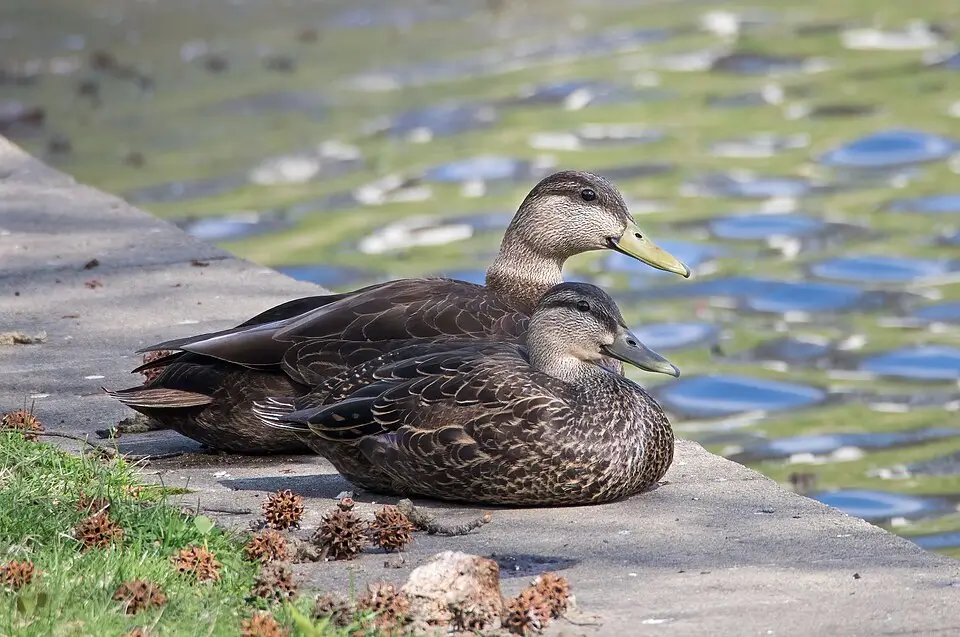
Despite its name, the American black duck is not truly black. Its plumage is a rich, sooty dark brown — almost chocolate in hue — that can appear very dark in low-light conditions, giving rise to the common name. The body feathers are dark with pale, buff-colored edges, creating a distinctive scalloped appearance when viewed up close. The head and neck tend to be noticeably paler than the body, providing a contrast that helps birders and hunters identify the species in the field.
One of the most striking features of the American black duck is its iridescent violet-blue speculum — a patch of color on the secondary wing feathers that flashes brilliantly in sunlight. Unlike the mallard, whose speculum is bordered by white bars, the American black duck's speculum is typically bordered by black, a key distinguishing feature. The bill of the male (drake) is typically yellow to olive-green, while the female's (hen's) bill is more olive or dusky in color. Both sexes display bright orange to red-orange legs and feet.
Compared to the mallard, the American black duck is similarly sized, making it one of the larger dabbling ducks found in North America. Drakes tend to be slightly larger and heavier than hens, a pattern common throughout the Anas genus. In terms of vocalizations, the American black duck sounds remarkably similar to the mallard — the female produces a classic, resonant "quack," while the male gives a softer, raspier call.
One of the most biologically interesting aspects of the American black duck is its tendency to hybridize with the closely related mallard. Where the two species overlap in range, hybrid individuals are not uncommon, and this hybridization has been a subject of ongoing scientific interest and some conservation concern. Researchers have studied whether hybridization, combined with other pressures, may affect the long-term genetic integrity of the American black duck population.
Like all dabbling ducks, the American black duck feeds primarily by tipping forward in shallow water to reach aquatic vegetation, seeds, invertebrates, and other food items below the surface. It is also capable of foraging on land, where it may consume agricultural grains, grasses, and berries. This dietary flexibility is one reason the species has proven adaptable across a wide variety of wetland environments.
Habitat & Range
The American black duck is, at its core, an eastern North American species. Its breeding range extends across a broad swath of the northeastern United States and eastern Canada, encompassing boreal forests, freshwater marshes, coastal wetlands, beaver ponds, and lakeshores from the Maritime Provinces of Canada westward through Quebec and Ontario, and southward through New England and the Great Lakes region.
During the winter months, American black ducks migrate southward and toward the coast, with significant wintering populations found along the Atlantic seaboard from New England down through the mid-Atlantic states and into the Southeast. Coastal marshes, estuaries, tidal flats, and freshwater wetlands along the Eastern Flyway serve as crucial wintering habitat for this species.
The American black duck shows a strong affinity for dense emergent vegetation in wetland environments. Cattail marshes, sedge meadows, alder swamps, and coastal salt marshes are all favored habitat types. This preference for dense cover is thought to contribute to the species' wariness — birds that rely on thick vegetation for shelter tend to be more alert and harder to approach than those that inhabit open water.
It is worth noting that the American black duck is primarily an Eastern Flyway species. Hunters and birdwatchers in the Pacific Northwest — including Washington state — are unlikely to encounter wild American black ducks with any regularity, as the species' natural range does not typically extend to the West Coast. Washington's waterfowl hunting opportunities are generally centered around species more common to the Pacific Flyway, such as mallards, wigeon, teal, and diving ducks. Rare vagrant sightings of American black ducks have been documented outside the normal range, but these are exceptional occurrences.
Hunting Information
The American black duck has a storied history as a game bird in North America, particularly in the northeastern United States and eastern Canada. For generations, waterfowl hunters from Maine to the Chesapeake Bay have pursued black ducks through salt marshes, tidal creeks, and freshwater swamps — often considering them the ultimate test of a hunter's skill and patience.
The species' legendary wariness sets it apart from many other dabbling ducks. Experienced hunters frequently note that black ducks are among the most difficult waterfowl to decoy successfully. They are quick to flare from spreads that appear artificial, and they respond to calling with considerably more caution than, say, a mallard. This makes the pursuit of American black ducks a deeply rewarding challenge — one that has helped shape the culture of Atlantic Coast waterfowl hunting for more than a century.
Traditional black duck hunting often takes place from layout blinds in coastal marshes, fixed blinds along tidal rivers, or with small, well-concealed decoy spreads in freshwater habitats. Hunters who specialize in black ducks typically pay close attention to natural-looking decoy placement, use high-quality calls sparingly, and rely on intimate knowledge of the birds' local movement patterns.
For hunters in Washington state, it is important to understand that the American black duck is not a species typically found in the Pacific Northwest. Washington's waterfowl seasons and regulations are managed by the Washington Department of Fish and Wildlife (WDFW) and are governed by federal frameworks established by the U.S. Fish and Wildlife Service. Hunters pursuing ducks in Washington should always consult current WDFW regulations for up-to-date season dates, bag limits, and licensing requirements. As with all migratory waterfowl in the United States, a valid federal Duck Stamp and appropriate state licenses are required for waterfowl hunting. Because the American black duck is not part of Washington's regular waterfowl assemblage, hunters in the state should focus their efforts on the many excellent Pacific Flyway species that do visit Washington's rich wetlands, coastal bays, and river systems each season.
Across the Eastern Flyway, where the species does occur, hunting regulations for American black ducks are carefully managed under the Migratory Bird Treaty Act and coordinated between the United States and Canada. Bag limits and season structures are set annually based on population assessments conducted by wildlife agencies on both sides of the border.
Conservation
The conservation status of the American black duck has been a topic of active discussion among wildlife biologists and managers for several decades. Historically, the species was among the most abundant dabbling ducks in eastern North America. Over the course of the twentieth century, however, population surveys indicated long-term declines in many parts of the range — declines attributed to a combination of habitat loss, changes in land use, and the spread of mallards into previously black duck–dominated territory (with associated hybridization).
In response to these concerns, wildlife managers in both the United States and Canada have implemented a range of conservation measures. These include targeted habitat protection and restoration efforts in key breeding and wintering areas, adjustments to hunting regulations, and ongoing population monitoring through the continent-wide Breeding Waterfowl Population and Habitat Survey conducted jointly by the U.S. Fish and Wildlife Service and the Canadian Wildlife Service.
Wetland conservation programs — including those supported by organizations such as Ducks Unlimited, the National Wildlife Federation, and various state and provincial wildlife agencies — have played an important role in maintaining and restoring the wetland habitats upon which the American black duck depends. Coastal marshes along the Atlantic seaboard, in particular, have benefited from concerted conservation investment, providing vital stopover and wintering habitat.
Hunters themselves have been active participants in conservation efforts. Through the purchase of federal Duck Stamps, contributions to conservation organizations, and support for public land acquisition programs, waterfowl hunters have helped fund habitat preservation that benefits not only the American black duck but the full suite of migratory waterfowl species that travel North America's flyways each year.
The relationship between hunting, science, and conservation exemplified by the management of the American black duck reflects a broader North American model of wildlife stewardship — one built on the principle that healthy, sustainable wildlife populations benefit both ecosystems and the communities that value them.
Conclusion
The American black duck (Anas rubripes) is a species defined by its wildness, its adaptability, and its deep roots in the wetland ecosystems of eastern North America. From its striking dark plumage and keen intelligence to its ecological significance as a wetland indicator species, the American black duck deserves its reputation as one of the continent's most respected waterfowl. For hunters in the Eastern Flyway, the black duck remains the ultimate challenge — a bird that rewards patience, skill, and a deep understanding of the natural world. For conservationists and wildlife enthusiasts, it stands as a symbol of the ongoing effort to protect and restore North America's precious wetland heritage.