Overview
Few animals embody the spirit of North America's wild waterways quite like the American mink (Neogale vison). Agile, tenacious, and perfectly adapted to life along streams, rivers, and wetlands, the American mink is one of the continent's most recognizable semi-aquatic mammals. Whether glimpsed darting along a mossy riverbank in the Cascade foothills or slipping silently beneath the surface of a quiet pond, this small but formidable predator has long captured the imagination of naturalists, trappers, and outdoor enthusiasts alike.
In Washington State — a land of extraordinary ecological diversity stretching from the rugged Pacific coastline to the high desert plateaus of the Columbia Basin — the American mink finds an ideal home. The state's abundant waterways, dense riparian corridors, and rich wetland systems provide everything this species needs to thrive. Understanding the biology, behavior, and ecology of the American mink offers valuable insight into the health of Washington's aquatic ecosystems, as well as the rich outdoor heritage that has shaped the Pacific Northwest for generations.
Biological Traits
The American mink is a member of the family Mustelidae, a diverse and successful group of carnivorous mammals that includes weasels, otters, ferrets, badgers, and wolverines. The species' scientific name, Neogale vison, reflects its taxonomic placement within this storied family. Like many of its mustelid relatives, the American mink is renowned for its sleek, elongated body, short legs, and dense, water-repellent fur — traits that make it supremely suited for both terrestrial and aquatic pursuits.
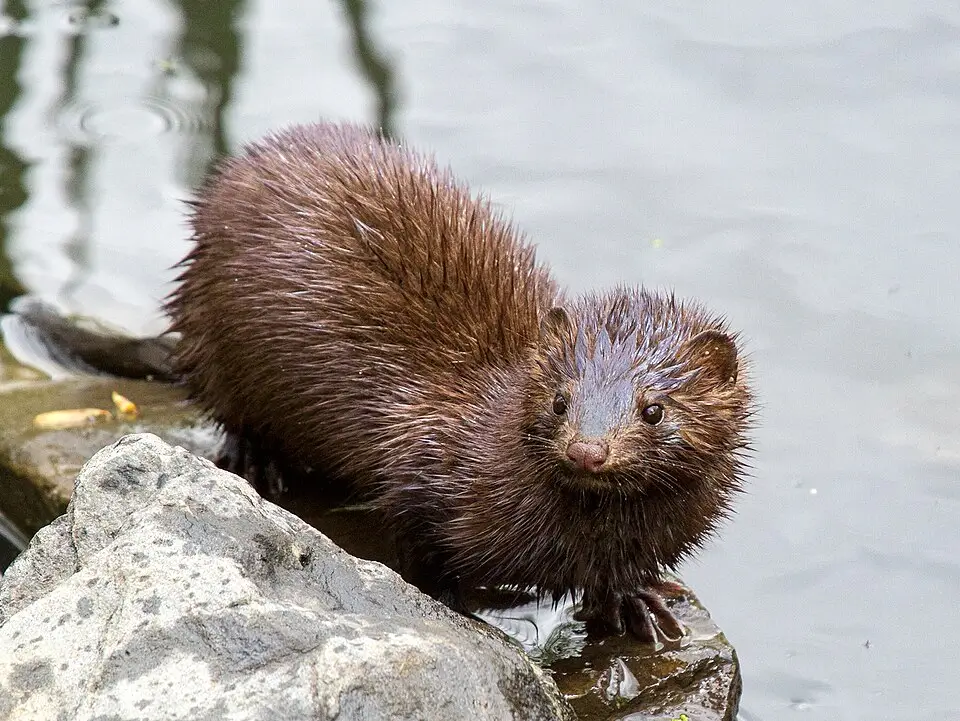
Physically, the American mink is a mid-sized mustelid. Males are noticeably larger than females, a characteristic known as sexual dimorphism that is common across the weasel family. The coat of a wild mink is typically a rich, glossy brown — sometimes approaching near-black — often with white or cream-colored patches on the chin and throat. The fur itself is extraordinarily dense, consisting of a soft, insulating underfur overlaid with longer, lustrous guard hairs. This dual-layer structure traps air close to the skin, providing excellent insulation in cold water and harsh weather conditions.
The American mink is equipped with partially webbed feet, which enhance its swimming ability considerably. It is a capable and swift swimmer, able to dive and pursue fish, amphibians, and other aquatic prey with impressive efficiency. On land, the mink moves with a characteristic bounding gait, often pausing to investigate burrows, root tangles, and hollow logs in its relentless search for food.
As a carnivore, the mink is an opportunistic and highly adaptable hunter. Its diet is broadly varied and shifts with the seasons and local prey availability. Common prey items include small mammals such as voles, mice, and muskrats; birds and their eggs; fish; crayfish; frogs; and various invertebrates. This dietary flexibility is a key reason for the species' success across such a wide range of habitats. Mink are also known for their bold, aggressive hunting style — they will readily take on prey that appears disproportionately large relative to their own body size.
Mink are largely solitary animals, maintaining individual home ranges that they patrol and defend against rivals of the same sex. They are primarily crepuscular and nocturnal hunters, though they can be active at any hour, particularly during the breeding season. Communication occurs through scent marking, with mink possessing well-developed musk glands that produce a potent secretion used to mark territory.
Breeding typically occurs in late winter, and like many mustelids, the American mink exhibits delayed implantation — a fascinating reproductive adaptation in which the fertilized egg does not immediately implant in the uterine wall. Actual gestation is relatively short, and females give birth to litters of several kits in the spring. The young are born helpless and dependent, but they develop quickly, and by late summer they are capable of independent survival.
Habitat & Range
The American mink is native to North America and enjoys one of the broadest distributions of any semi-aquatic mammal on the continent. Its range extends from the Atlantic coast to the Pacific, and from the southern United States well into Canada and Alaska. This remarkable geographic spread speaks to the species' ecological versatility and its ability to exploit a wide variety of freshwater and coastal environments.
In Washington State, the mink is a native resident found in suitable habitat throughout much of the state. Washington's geography is extraordinarily varied, encompassing the temperate rainforests of the Olympic Peninsula, the volcanic peaks and river valleys of the Cascades, the fertile lowlands of the Puget Sound basin, and the arid shrub-steppe of the Columbia Plateau. Wherever clean water and healthy riparian habitat exist, there is a good chance of finding American mink.
The species shows a strong affinity for riparian zones — the vegetated corridors that border rivers, streams, and lakes. These environments offer the mink an ideal combination of cover, hunting opportunities, and denning sites. Dense stands of willows, alders, and other riparian shrubs provide protective cover, while the adjacent water offers a year-round supply of fish, crayfish, and amphibians. Mink also make use of wetlands, marshes, estuaries, and even saltwater shorelines, demonstrating their adaptability to diverse aquatic systems.
Den sites are typically located close to water, often in natural cavities such as hollow logs, root masses, rock crevices, or the abandoned burrows of other animals such as muskrats. Mink do not excavate their own burrows but are adept at finding and adapting suitable existing structures. A mink's den is typically lined with fur, feathers, and other soft materials, providing a warm and secure refuge for resting, raising young, and storing food.
Washington's Pacific Northwest location gives resident mink access to an especially productive array of habitats. The state's countless rivers, creeks, and streams — many of them supporting robust populations of Pacific salmon, steelhead, and trout — provide exceptional foraging opportunities. The coastal and estuarine environments along Puget Sound and the Pacific coast further expand the range of potential prey available to mink in these areas.
Hunting Information
The American mink has a long and significant history in the North American fur trade, and trapping remains a traditional and regulated activity across much of its range. The mink's dense, luxurious pelt has been prized for centuries, and the species played an important role in the economic and cultural history of the Pacific Northwest, where Indigenous peoples and European trappers alike relied on the region's rich fur-bearing wildlife.
In Washington State, the taking of furbearing animals including American mink is regulated by the Washington Department of Fish and Wildlife (WDFW). Anyone interested in trapping or hunting mink in Washington should consult the most current regulations published by the WDFW, as season dates, licensing requirements, and legal methods of take can change from year to year. The source data consulted for this article does not specify current season dates or license requirements for Washington, so hunters and trappers are strongly encouraged to visit the official WDFW website or contact the agency directly for the most up-to-date and accurate regulatory information before pursuing this species.
Generally speaking, mink trapping in North America most commonly employs body-gripping traps, cage traps, and foothold traps set along waterways and near suspected den sites. Successful mink trapping requires a solid understanding of the animal's habits, movements, and habitat preferences — skills that have traditionally been passed down through generations of Pacific Northwest trappers. Reading sign such as tracks, slides, and scat along muddy or snowy riverbanks can help identify active mink territories and increase the likelihood of a successful set.
Washington's commitment to regulated, sustainable wildlife harvest reflects a broader conservation ethic that ensures wild populations remain healthy and viable for future generations. Trappers and hunters who pursue mink in Washington contribute to wildlife management data collection and support conservation programs through license fees and excise taxes.
Conservation
The American mink is currently classified as a species of least concern by the International Union for Conservation of Nature (IUCN), reflecting its wide distribution and generally stable populations across North America. While habitat loss, water quality degradation, and historical over-trapping have affected mink populations in some localized areas, the species as a whole remains abundant and resilient.
In Washington, the preservation of riparian and wetland habitats is the single most important factor in maintaining healthy mink populations. Conservation efforts that protect and restore streamside vegetation, improve water quality, and maintain connectivity between aquatic habitats benefit not only the mink but the entire community of species that share these ecosystems. Organizations working on salmon recovery, wetland restoration, and watershed health in Washington contribute meaningfully to the long-term viability of mink populations across the state.
Interestingly, the American mink's adaptability has also made it a subject of conservation concern in parts of the world where it has been introduced — most notably in Europe and South America, where escaped or released fur farm mink have established feral populations and impacted native wildlife. This aspect of the species' story underscores the importance of thoughtful wildlife management and the value of maintaining species within their native ranges.
In its home range of North America, and particularly in the rich and varied landscapes of Washington State, the American mink remains a vital and vibrant part of the natural community — a living symbol of the health and vitality of the region's waterways.