Overview
Few birds capture the imagination of American hunters and wildlife enthusiasts quite like the wild turkey. A symbol deeply woven into the cultural fabric of North America, Meleagris gallopavo stands as one of the most recognizable and sought-after game birds on the continent. With its distinctive appearance, complex social behavior, and remarkable comeback story from the brink of population collapse, the wild turkey represents one of wildlife conservation's greatest success stories.
In Washington State — a land defined by dramatic contrasts between rugged Cascade peaks, sprawling river valleys, and fertile agricultural lowlands — the wild turkey has carved out a thriving niche. Though not native to the Pacific Northwest in the way it is to the eastern woodlands of North America, the wild turkey has adapted impressively to Washington's diverse landscapes, providing outdoor enthusiasts and hunters with exceptional opportunities to engage with one of the continent's most intelligent and challenging game birds.
Whether you are a seasoned turkey hunter who has chased longbeards across multiple states, or a curious naturalist hoping to catch a glimpse of these magnificent birds strutting through an eastern Washington wheat field at dawn, understanding the wild turkey more deeply will only enhance your appreciation for this extraordinary animal.
Biological Traits
The wild turkey, Meleagris gallopavo, belongs to the family Phasianidae and is one of only two species in the genus Meleagris, the other being the ocellated turkey (Meleagris ocellata) native to the Yucatán Peninsula of Mexico. As the heaviest member of the order Galliformes in North America, the wild turkey is a bird of impressive stature and physical complexity.
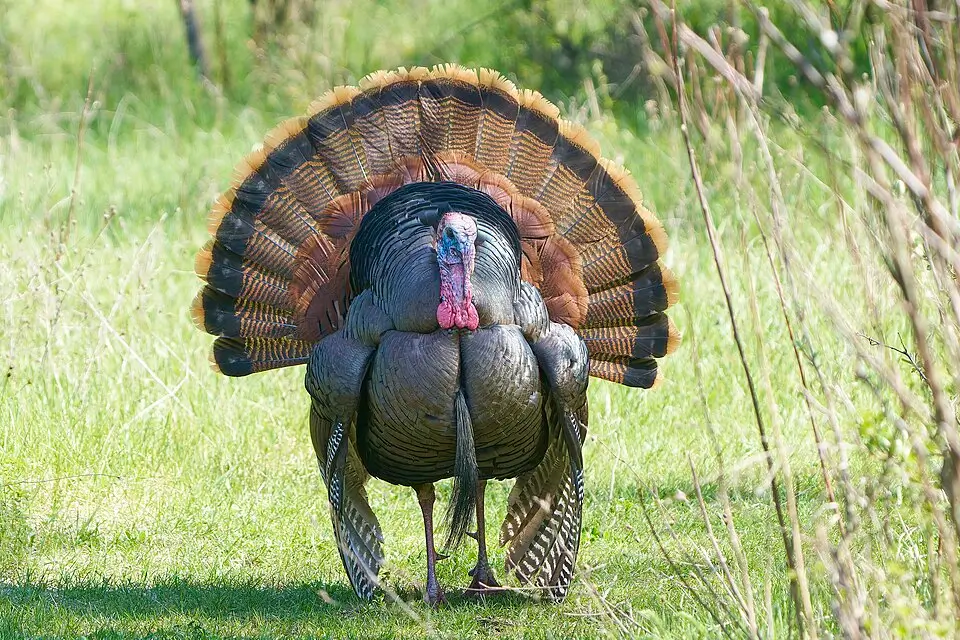
Adult males, known as "toms" or "gobblers," are renowned for their dramatic appearance. They display iridescent plumage that shimmers with hues of bronze, copper, gold, and green depending on the angle of light. One of the gobbler's most iconic features is its "beard" — a tuft of coarse, hair-like feathers that protrudes from the chest. These beards can grow quite long in older birds and are often used as a measure of age and trophy quality among hunters. Toms also possess sharp, bony spurs on the backs of their legs, which they use in combat with rival males during the breeding season.
The head and neck of the tom turkey are largely bare of feathers, revealing brightly colored skin that can shift between vivid shades of red, white, and blue — a biological display that intensifies during courtship and excitement. A fleshy protuberance called a "snood" hangs over the beak, and a loose flap of skin called a "wattle" drapes beneath the chin. During the breeding season, these features become engorged with blood, deepening in color as the bird struts and fans its tail feathers in an elaborate display designed to attract hens.
Female turkeys, called "hens," are considerably smaller and far less colorful than the males, a classic example of sexual dimorphism. Their plumage is primarily brown and buff-toned, providing excellent camouflage while they incubate eggs and tend to young poults. This cryptic coloration is essential for nesting success, as hens spend weeks on the ground in a vulnerable position.
Young turkeys are called "poults" and are precocial — meaning they are relatively mobile and self-sufficient shortly after hatching. Poults can leave the nest within hours of hatching and begin foraging on their own, though they remain closely bonded to the hen for protection and warmth during their early weeks of life.
Wild turkeys are omnivores with broad dietary preferences. They forage on the ground, consuming a wide variety of foods including acorns, seeds, berries, insects, small reptiles, and agricultural grains. Their powerful feet are well-suited for scratching through leaf litter and soil to uncover buried food. In winter months, mast crops such as acorns become especially critical to their survival.
Turkeys are also surprisingly agile in the air, capable of short bursts of flight that can carry them into the treetops to roost safely at night. Their eyesight is among the keenest in the animal kingdom, with wide-angle monocular vision and the ability to detect color and movement with extraordinary precision — a trait that makes them notoriously challenging to approach in the field.
Habitat & Range
The wild turkey is native to North America, with a historical range stretching across much of the eastern United States, parts of the Southwest, and into Mexico. Today, thanks to extensive wildlife management and reintroduction programs, wild turkeys have been established across virtually every state in the continental United States, as well as parts of Canada and Hawaii.
In Washington State, wild turkeys are not native but have been successfully introduced and have thrived across a variety of habitat types. The state's diverse geography — encompassing dry shrub-steppe in the east, dense coniferous forests in the Cascades and Olympics, and mixed agricultural and woodland zones throughout — provides suitable environments for turkey populations to flourish.
Turkeys generally favor areas where open, parklike woodlands meet agricultural fields or grasslands. They rely on mature trees for roosting at night and require access to reliable water sources, particularly during the hot summer months. Eastern Washington, with its ponderosa pine forests, river drainages, and wheat and grain-producing valleys, offers particularly productive turkey habitat. Western Washington, while more densely forested and wetter, also hosts turkey populations in areas where forest edges meet farmland or open terrain.
The species is adaptable and has demonstrated a remarkable capacity to colonize new areas when conditions are suitable. In Washington, turkeys are commonly observed in rural and semi-rural settings, and their expanding populations have made them a visible part of the state's wildlife landscape.
Hunting Information
The wild turkey is one of the most prized game birds pursued by hunters in the United States, and Washington State is no exception. Turkey hunting has a deep cultural tradition and requires a unique blend of woodsmanship, patience, calling skill, and intimate knowledge of the bird's behavior — qualities that make it a deeply rewarding pursuit.
Spring turkey hunting, which coincides with the breeding season, is considered the premier turkey hunting experience. During this time, toms are actively gobbling and responding to calls as they seek out hens, making them more susceptible to a well-placed hunter using mouth calls, box calls, or slate calls to mimic the sounds of a receptive hen. The challenge of luring a wary gobbler into range through calling is regarded by many hunters as one of the most exciting and skill-demanding experiences in all of upland bird hunting.
Fall turkey hunting, a more traditional style popular in many eastern states, involves locating flocks and either calling scattered birds back together or still-hunting through productive habitat. Both spring and fall seasons offer distinct and rewarding experiences.
Hunters pursuing wild turkeys in Washington should always consult the Washington Department of Fish and Wildlife (WDFW) for the most current and accurate information regarding season dates, licensing requirements, bag limits, and any zone-specific regulations. Hunting regulations in Washington can vary by region and are updated annually, so verifying current rules before heading afield is essential for ethical and legal hunting.
Turkey hunting in Washington typically requires a valid Washington State hunting license along with the appropriate turkey tag or permit. Public lands managed by the WDFW, the U.S. Forest Service, and the Bureau of Land Management provide accessible hunting opportunities, and many private landowners in turkey-rich areas of eastern Washington welcome hunters with proper permissions.
Conservation
The story of the wild turkey's conservation is one of the most inspiring chapters in North American wildlife management. By the early twentieth century, unregulated market hunting, widespread habitat destruction, and agricultural expansion had decimated wild turkey populations across the continent, reducing their numbers to dangerously low levels.
The recovery of the wild turkey is a direct result of dedicated efforts by wildlife agencies, conservation organizations, and hunters working together. Programs focused on regulated hunting, habitat restoration, and the live-trapping and relocation of wild birds to restock depleted or unoccupied ranges proved enormously successful. The National Wild Turkey Federation (NWTF), founded in 1973, has been a leading force in turkey conservation, contributing millions of dollars and acres of habitat to the cause.
Today, wild turkey populations across North America are robust and healthy, representing one of wildlife management's most celebrated achievements. In Washington, the species continues to expand its range and maintain strong populations, a testament to both the bird's remarkable adaptability and the ongoing commitment of wildlife managers and hunters to responsible stewardship of the resource.
Wild turkeys also play an important ecological role as seed dispersers, insect regulators, and prey for large predators such as coyotes, bobcats, and birds of prey. Their presence enriches the ecosystems they inhabit and adds to the biodiversity of Washington's landscapes.